Electricity and gas per Airbnb booking: the actual maths across a 2-bed Brighton flat at 60% occupancy
Hoststock Team
21 June 2026
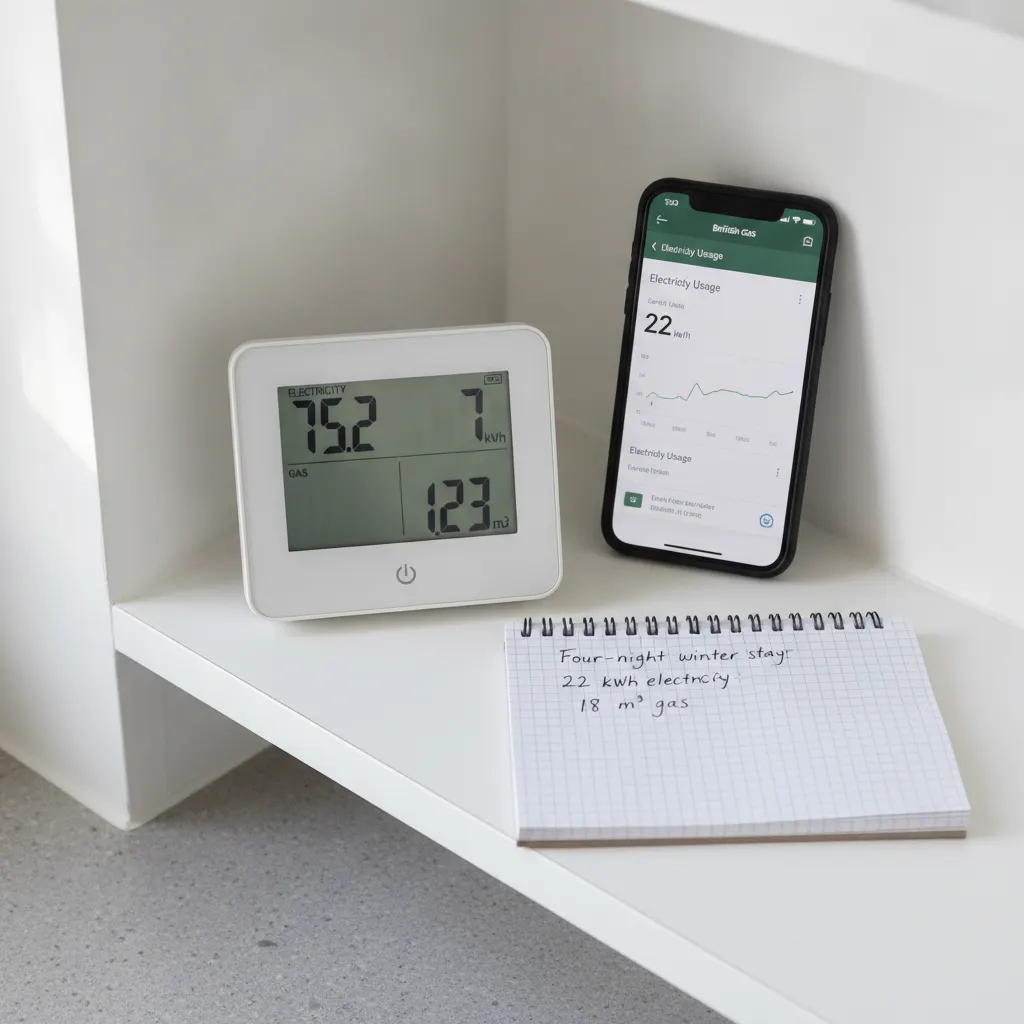
My first winter electricity bill for the Brighton flat was £380 for two months. I'd budgeted £200. I had absolutely no idea where the extra £180 had gone until I started actually tracking what the flat was using per booking, rather than just absorbing the quarterly bill as a general operating cost.
I started measuring utility costs per booking in early 2024. What I found wasn't shocking, but it was specific in a way that a quarterly bill isn't — and specific is what you need when you're trying to decide whether to raise a nightly rate, adjust a cleaning fee, or figure out whether a cheap winter booking actually covers its costs.
Why per-booking matters more than per-month
A monthly electricity bill doesn't tell you much about the cost of any individual booking. A four-night booking in December, with guests running the electric shower twice a day and the heating at 22°C, costs you considerably more in utilities than a two-night summer stay with the same number of guests using the windows instead of air conditioning. But both show up as undifferentiated usage in your quarterly bill.
If you're pricing dynamically — which, if you're using PriceLabs or setting seasonal rates manually, you probably are — understanding the utility cost per booking type is useful. A winter four-night booking at a lower nightly rate can easily cost you £15–20 more in electricity and gas than you've accounted for.
The method: smart meters and booking windows
If you have a smart meter (both electricity and gas), you can pull half-hourly or daily consumption data from your energy supplier's app. For my Brighton flat, I use the British Gas app which shows daily kWh usage for electricity and gas separately.
My method: note the meter reading (or pull the app data) on check-in day and again at checkout. The difference is that booking's consumption. Do this for fifteen to twenty bookings and you've got a reliable baseline for different stay lengths and season types.
If you don't have smart meters and are still on quarterly estimated bills, this level of granularity isn't available to you — but you can still estimate at the aggregate level using your annual bill and dividing by total guest-nights.
What a typical two-bed flat actually uses per booking
Based on my tracking across the Brighton flat (a 2-bed ground-floor conversion flat, 1960s build, double-glazed, gas central heating, electric shower):
Electricity: A two-night solo or couple booking in summer uses roughly 6–8 kWh of electricity. A four-night booking with two or three guests in winter uses 18–28 kWh. The electric shower is the single biggest variable — a 9kW shower running for eight minutes uses roughly 1.2 kWh per use, so four guests doing two showers each over a three-night stay adds around 14–17 kWh just for the shower.
Gas: Summer bookings in this flat use almost no gas — the hot water cylinder is heated by gas but guests barely use it in warm months. Winter two-night booking: roughly 8–12 cubic metres, which translates to about 90–135 kWh of gas energy (using the standard 11.1 kWh per cubic metre conversion). Four-night winter booking: 20–30 cubic metres.
At current rates (which move quarterly under the Ofgem price cap — check the current rate on Ofgem's website before using any figures here): electricity has been running at around 24–25p per kWh, gas at around 6–7p per kWh, plus daily standing charges of roughly 60p/day for electricity and 30p/day for gas.
Using those figures, a typical two-night summer stay in the Brighton flat has a utility cost in the range of £2.50–4.00. A four-night winter stay with three guests runs closer to £9–14. Add the standing charges for those days (about £3.60 for four days of combined electricity and gas) and the winter booking's true utility cost is £12–17.
The electric shower problem
I mentioned this above, but it's worth dwelling on. The electric shower is the highest single electricity draw in most domestic STR properties. A 9kW or 10.5kW electric shower is essentially a space heater the size of a lunchbox that runs while guests are in the bathroom. At 24p/kWh, a ten-minute 9kW shower costs around 36p. Not ruinous — but four guests taking two showers a day over three nights is getting on for 24 shower sessions: roughly £8.60 in electricity for the shower alone.
A combi boiler feeding a hot water tap to a power shower costs significantly less to run than an electric shower at equivalent output, which is why the Brighton flat (which has electric shower only) has higher electricity costs than my Edinburgh flat (combi boiler, thermostatic power shower). Worth knowing if you're doing any refurbishment work.
The Lake District cottage: different problem entirely
The cottage is on oil-fired central heating, not mains gas. That changes the calculation considerably. Oil prices are not covered by the Ofgem price cap and have been more volatile. I track heating oil cost separately and fold it into a per-booking fuel cost using my annual fill volume divided by annual guest-nights. It currently adds around £8–14 per booking in winter depending on how hard the heating runs. In summer it's essentially zero — the cottage doesn't need heating May to September.
Pricing it in: what I do
I don't add a utility surcharge line to my pricing — guests don't want to see that. Instead I fold the expected utility cost per booking into my minimum nightly rate when I'm calculating whether a price is viable.
Simple example: if a two-night winter booking in the Brighton flat has a utility cost of around £13, plus £35 cleaning, plus £8 consumables used during the stay, my floor cost before any nightly rate profit is around £56 for two nights — or £28 per night just in direct costs. Any nightly rate below that is costing me money on that specific booking before I've accounted for mortgage, insurance, or management overhead.
Most STR hosts I've spoken to have a vague sense of their cost floor but haven't broken it down to this level. The utility component is usually the bit that's just been absorbed into "running costs" without being explicitly attributed per booking. Once you attribute it properly, it tends to shift minimum rate calculations upward — usually by £3–8 per night in winter for a 2-bed property.
Tools that help
British Gas and OVO both have apps with daily smart meter data that export reasonably cleanly. Hive and Tado thermostats also log heating usage that you can correlate against bookings. If you're managing multiple properties, a spreadsheet that links booking dates to energy data is about as sophisticated as you need — I haven't found any STR management software that integrates utility tracking natively in a useful way.
The bottom line
Utilities add roughly £3–18 per booking depending on season, property type, and guest count. That's not nothing, particularly in winter at the lower end of your pricing. Understanding the actual cost per booking — rather than just absorbing the quarterly bill — lets you set pricing floors that reflect real costs, and it helps you identify where disproportionate consumption is happening. For me, that was the electric shower. For the cottage, it was leaving the heating at 19°C on timer even for one-night bookings in January where the guest arrived late and left early.
Worth an hour of your time to measure. Probably saves you that much per month in either pricing or consumption decisions.
Ready to streamline your inventory?
Start managing your rental inventory smarter with automated stock tracking.
Start Free Trial