How to Cut Supply Costs by 30% Without Sacrificing Guest Experience
HostStock Team
27 January 2026
How to Cut Supply Costs by 30% Without Sacrificing Guest Experience
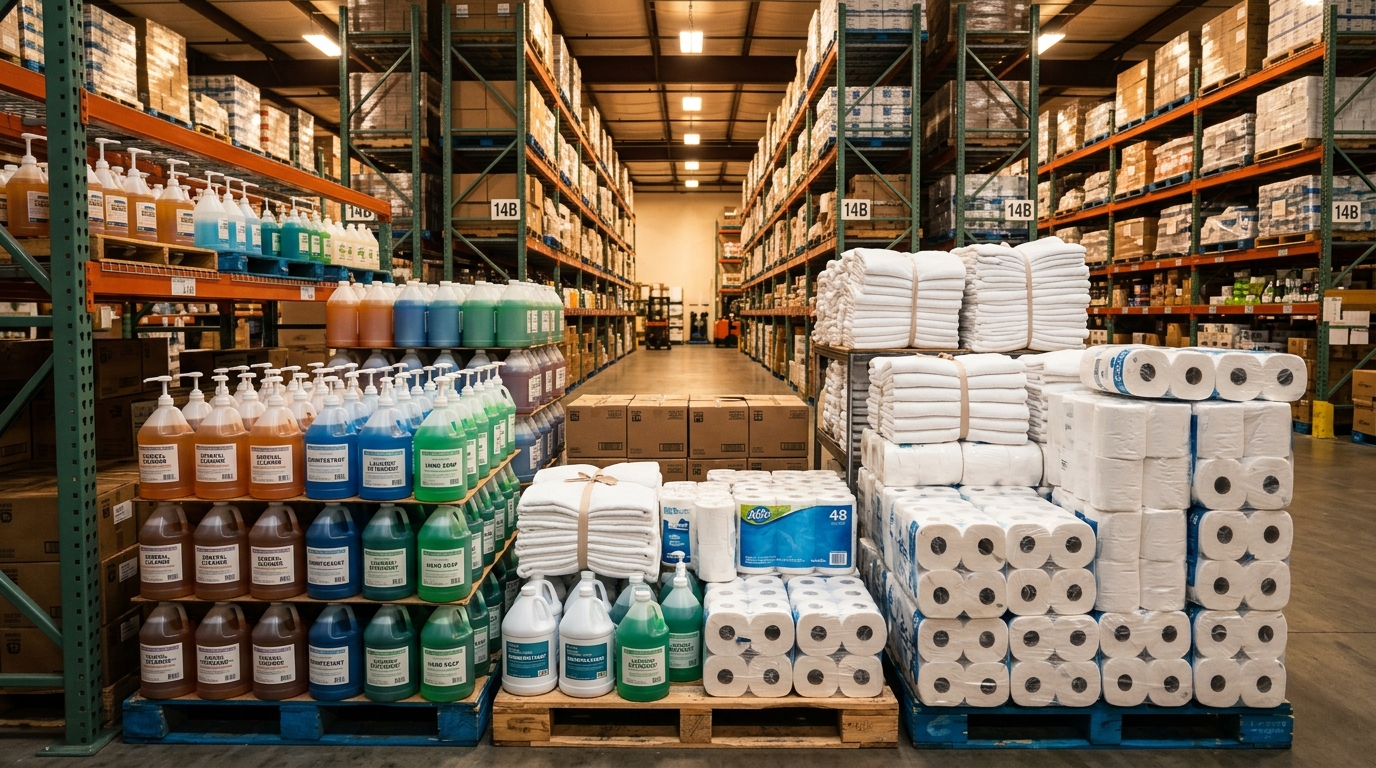
Supplies are one of those costs that creep up on you. A few quid here for toilet rolls, a tenner there for cleaning products, and suddenly you're spending hundreds a month across your properties. The thing is, most hosts are overpaying — not because they're buying the wrong things, but because they're buying them the wrong way.
Here are seven strategies that consistently save hosts 25-35% on supply costs. None of them involve switching to single-ply toilet paper.
1. Buy in Bulk (But Be Smart About It)
This is the obvious one, but there's a right way and a wrong way to do it.
The right way: Buy consumables you use consistently — toilet paper, bin bags, cleaning products, coffee, tea. These don't expire quickly and you know you'll use them.
The wrong way: Buying 200 luxury soap bars because they were on offer, then finding out guests prefer the dispensers. Now you've got a cupboard full of soap you can't use.
The savings are real:
| Item | Retail (per unit) | Wholesale (per unit) | Bulk (per unit) | Savings |
|---|---|---|---|---|
| Toilet rolls | £0.45 | £0.28 | £0.19 | 58% |
| Bin liners (per bag) | £0.12 | £0.07 | £0.04 | 67% |
| All-purpose cleaner (per litre) | £3.50 | £2.10 | £1.40 | 60% |
| Dishwasher tablets | £0.22 | £0.14 | £0.09 | 59% |
| Coffee pods | £0.35 | £0.22 | £0.15 | 57% |
| Bath towels | £12.00 | £7.50 | £5.50 | 54% |
| Fitted sheets (double) | £15.00 | £9.00 | £6.50 | 57% |
The catch? You need storage space and enough cash flow to buy ahead. Start with your top 5 highest-volume items and expand from there.
2. Negotiate With Your Suppliers
Most hosts never negotiate. They find a supplier, accept the listed price, and reorder on autopilot. But suppliers — especially local and wholesale ones — expect negotiation.
What to ask for:
- Volume discounts (order more, pay less per unit)
- Payment terms (net 30 instead of upfront)
- Free delivery above a minimum order
- Loyalty pricing after 3-6 months of consistent orders
You don't need to be aggressive about it. A simple "I'm ordering regularly — is there a better rate for repeat customers?" goes a long way. We cover this in more depth in our guide to building a supplier network.
3. Switch to Refillable Dispensers
This is one of the highest-ROI changes you can make. Wall-mounted dispensers for shampoo, conditioner, and body wash:
- Cost less per ml than individual bottles
- Look more professional
- Reduce plastic waste (guests notice this)
- Take seconds to top up vs. replacing individual bottles
A 5-litre refill of quality shampoo costs around £15-25 and fills roughly 100 guest servings. Compare that to buying 100 individual mini bottles at £0.80-1.50 each. The maths speaks for itself.
4. Adjust for Seasonal Demand
Your supply needs change with the seasons, and your ordering should too.
Summer peaks: More towels, more cleaning products, more laundry detergent, sunscreen, insect repellent, outdoor items.
Winter lows: Fewer turnovers, but guests stay longer — so you need more coffee, tea, heating-related items, extra blankets.
Shoulder seasons: This is when overstocking happens most. Hosts order at peak levels and then sit on excess stock through quiet months. Review your par levels at least quarterly and adjust down during slower periods.
5. Team Up With Other Hosts
If you're in a host community or local Facebook group, there's a good chance other hosts near you are buying the same supplies. Pooling orders gets you bulk pricing without needing bulk storage.
How to make it work:
- Start small — 2-3 hosts, 3-5 items
- Assign one person to place the order and split delivery
- Set a regular schedule (monthly works for most groups)
- Track who owes what (a shared spreadsheet or app)
Some hosts have formed informal buying cooperatives that save 30-40% compared to individual retail purchases.
6. Optimise Your Par Levels
Overstocking costs money just like understocking does. Every item sitting in a cupboard is money that's not in your bank account. Worse, some items expire or degrade — cleaning products lose effectiveness, linens fade in storage, food items go stale.
Set your par levels based on actual usage data, not worst-case scenarios. The goal isn't to have mountains of supplies "just in case." It's to have exactly enough to get you through to your next restock, plus a reasonable buffer.
If you're carrying more than 4 weeks of stock for any item, you're probably tying up cash unnecessarily.
7. Track Your Waste
You can't reduce what you don't measure. Start logging:
- Items that get thrown away unused (expired food, damaged goods)
- Items guests over-consume (are you leaving too many out?)
- Items your cleaning team uses excessively (do they really need that much cleaner per turnover?)
- Damaged items (are cheap towels costing you more in replacements?)
Two areas where waste tends to hide:
Guest consumption: If you leave 6 toilet rolls in a bathroom, guests will use more than if you leave 3 with spares under the sink. Presentation matters — make enough available, but don't encourage waste.
Cleaning products: Talk to your cleaning team about how much product they use per clean. Some cleaners use 3x more spray than necessary simply out of habit. A quick conversation and a measuring guide can cut cleaning product costs by 20%.
The Bottom Line
You don't need to do all seven at once. Pick the two or three that are easiest to implement for your setup and start there. Most hosts see a 15-20% reduction within the first month, growing to 30%+ as they optimise.
The key is tracking. If you don't know what you're spending per property, per item, per month — you can't improve it. An inventory checklist is a good starting point. Proper tracking software makes it automatic.
FAQ
Won't buying cheaper supplies hurt my reviews?
Not if you're smart about it. Cut costs on consumables (cleaning products, bin liners, coffee) where guests can't tell the difference. Keep quality high on things guests physically touch — towels, bedding, soap. The biggest savings come from buying the same quality at lower prices, not from downgrading.
How much should I be spending on supplies per property per month?
It varies hugely by property size and turnover. As a rough benchmark: £80-150/month for a 1-2 bed flat with 10-15 turnovers, £150-300/month for a 3-4 bed house. If you're significantly above those ranges, there's probably room to cut.
Is it worth switching suppliers to save a few pounds?
If the savings are consistent and the supplier is reliable, yes. But don't sacrifice reliability for price. A supplier who delivers late costs you more in emergency purchases than you save on the per-unit price.
Want to see exactly where your money's going? HostStock tracks supply costs per property with reorder alerts and spending analytics. See our pricing →
Ready to streamline your inventory?
Start managing your rental inventory smarter with automated stock tracking.
Start Free Trial