One of my properties is 40 minutes from the nearest shop. Here is how I keep it stocked.
Hoststock Team
12 April 2026
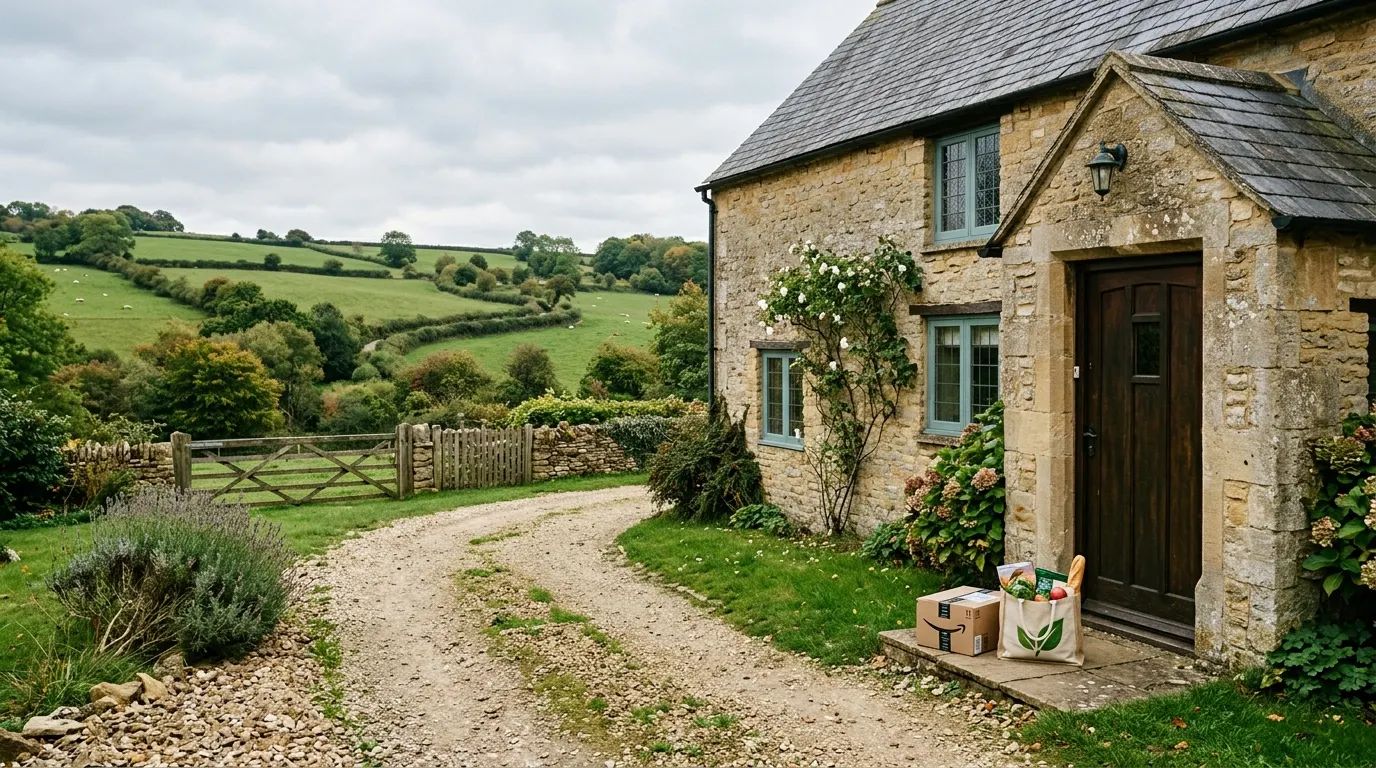
Four of my five properties are in towns. Canterbury, Margate, Ramsgate, Deal. They have supermarkets within walking distance, Amazon delivers next day, and if I run out of something mid-stay I can have a cleaner pop to the Tesco Express on the way over. Normal hosting logistics.
Then there is the barn.
The barn is a converted agricultural building outside a village called Wingham, about seven miles southeast of Canterbury. It is beautiful, guests love it, it commands £280 a night in peak season, and the nearest proper shop is a Co-op in Littlebourne which is 15 minutes by car if you catch the single-track lane without an oncoming tractor. The nearest Tesco is in Whitstable, about 40 minutes. Amazon delivers next day but not same day. There is no Deliveroo, no Uber Eats, no Just Eat. The village has a pub, a church, and a post office that opens four mornings a week.
Keeping this property stocked is a completely different game to the town ones and it took me about six months to stop winging it.
The fortnightly delivery run
I tried weekly runs at first but the driving was eating too much time. I now do a fortnightly supply run that covers the barn and usually coincides with a changeover so I am driving out there anyway. The run goes: storage unit in Whitstable (pick up any seasonal items or linen), Costco or Bookers (bulk consumables), barn property (unload, check, restock), back home. Door to door about three hours including the shopping.
The key was working out what to buy fortnightly versus what to order online. Fortnightly run items are the heavy or bulky stuff that costs too much to ship: kitchen towel (Plenty 12-pack), loo roll (36-pack from Bookers, £18.50), bin bags (Ecozone compostable 60-pack), cleaning chemicals (Method All-Purpose, 828ml, I buy four at a time), and any replacement towels or bedding that are due.
Online orders cover the smaller stuff: coffee pods (L'Or from Costco online, delivered to the barn in batches of 100), toiletry sachets (bulk order every two months from a hotel supplier in Manchester), batteries for the fairy lights and TV remotes, and any one-off replacements like a new kettle or a shower curtain ring.
The emergency box
This is the thing that saved me the most stress. I keep a plastic storage crate in the barn's utility room that I call the emergency box. It contains:
- 6 spare toilet rolls
- 2 spare bath sheets and 2 hand towels
- A full set of bedding in a ziplock bag (fitted sheet, duvet cover, two pillowcases)
- 12 spare coffee pods
- 4 spare bin bags
- A bottle of all-purpose cleaner
- A spare lightbulb for each fitting in the property (three different types, labelled)
- A basic first aid kit (plasters, paracetamol, antiseptic wipes)
- A torch with fresh batteries
- A spare front door key in a combination lockbox hidden in the utility room
The box gets checked and topped up on every fortnightly run. In two years I have dipped into it about nine times, mostly for toilet roll (guests use more than you expect when there is no corner shop to run to) and once for a full bedding set after a guest spilled red wine on the duvet cover at 11pm and texted me in a panic.
Without the box, each of those nine incidents would have been a 40-minute drive or a next-day Amazon delivery while the guest waited. At £280 a night, one bad review about "no spare bedding" would cost me more than the entire contents of the crate.
Working with the village
The post office in Wingham is run by a woman called Margaret who has been there since before the barn was even converted. She accepts Amazon parcels when nobody is at the barn, which happens more often than you would think because same-day delivery is not available and next-day timing is unpredictable in rural Kent. I pay her nothing for this. She does it because she is nice and because I buy milk and bread from her shop when I am on the supply run, which I suspect is the actual arrangement.
The pub does emergency milk. Twice a guest has arrived in the evening and realised there was no milk for the morning (my fault both times). I now leave a note in the welcome folder: "If you need milk or bread outside shop hours, the Red Lion does off-sales and Jim behind the bar will sort you out." Jim charges £2 for a pint of milk which is extortionate but also perfectly fair given the service.
There is also a farm shop about ten minutes away that stocks local eggs, cheese, and sourdough. I put a card in the welcome pack with their opening hours and a small map. Several guests have mentioned it in reviews as a highlight, which is funny because it has nothing to do with me or my property. I just told them it existed.
What the barn taught me about buffer stock
At my town properties I keep minimum stock at roughly 1.5x what a single turnover needs. At the barn I keep 3x. The difference is lead time. If I run out of coffee pods in Canterbury I can have more in two hours. At the barn the best case is next-day delivery and the worst case is waiting for the next fortnightly run. So I overstock by default and accept the slightly cluttered utility room.
I set the reorder thresholds in my inventory system to fire at 3x the per-turnover quantity for the barn, versus 1.5x for the town properties. When the cleaner does the restocking check on the handover sheet, she counts against the higher threshold. If coffee pods drop below 20 (versus 12 at the town flats), I get the alert and place the online order the same day.
Storage in a barn conversion
The barn looks gorgeous on Airbnb but functionally it is one large open-plan space downstairs with exposed beams and stone walls, which means no built-in cupboards. My storage solution is ugly but effective: two IKEA KALLAX shelving units in the utility room (£55 each), one for linens and one for consumables, plus the emergency crate underneath. Everything is labelled with a label maker. The guests never see the utility room so it does not matter that it looks like a stockroom.
The one thing I would change if I were starting again: I would have insisted on a larger utility room during the conversion. Mine is about 2m by 1.5m and it is packed. If you are converting a rural building into a short-term rental, make the utility space at least 3m by 2m. You will fill it.
Frequently asked
Is the barn more profitable despite the extra logistics?
Yes, comfortably. The nightly rate (£280 peak, £180 off-peak) more than compensates for the extra driving time and the higher buffer stock. My per-night profit after all costs is about 40% higher at the barn than at my best-performing town flat. The logistics are just the price of that margin.
Do rural guests expect different amenities?
They expect fewer amenities but higher quality ones. Nobody expects a Deliveroo menu in the welcome pack. They do expect good coffee, thick towels, a working fireplace if the listing mentions one, and decent Wi-Fi. The Wi-Fi is actually the most critical infrastructure item at a rural property. I pay £65 a month for a 4G broadband backup on top of the standard line because a broadband outage at the barn would generate more complaints than running out of coffee pods.
How do you handle same-day emergencies?
The emergency box covers most things. For anything outside the box (a broken appliance, a plumbing issue, a power cut), I have a local handyman on a retainer of £50 a month who lives about eight minutes from the property. He has a key and the alarm code. In two years he has been called out five times, all outside normal hours, all resolved before the guest had time to write a complaint.
Would you buy another rural property?
I would, but only if it had a utility room bigger than 2m by 1.5m and reliable broadband. The margin is too good to ignore. The logistics are learnable. The broadband is the thing you cannot fix with a fortnightly supply run.
Ready to streamline your inventory?
Start managing your rental inventory smarter with automated stock tracking.
Start Free Trial