Smoke alarms and CO detectors in UK short-term lets: the 2022 regulation change most hosts still haven't noticed
Hoststock Team
18 June 2026
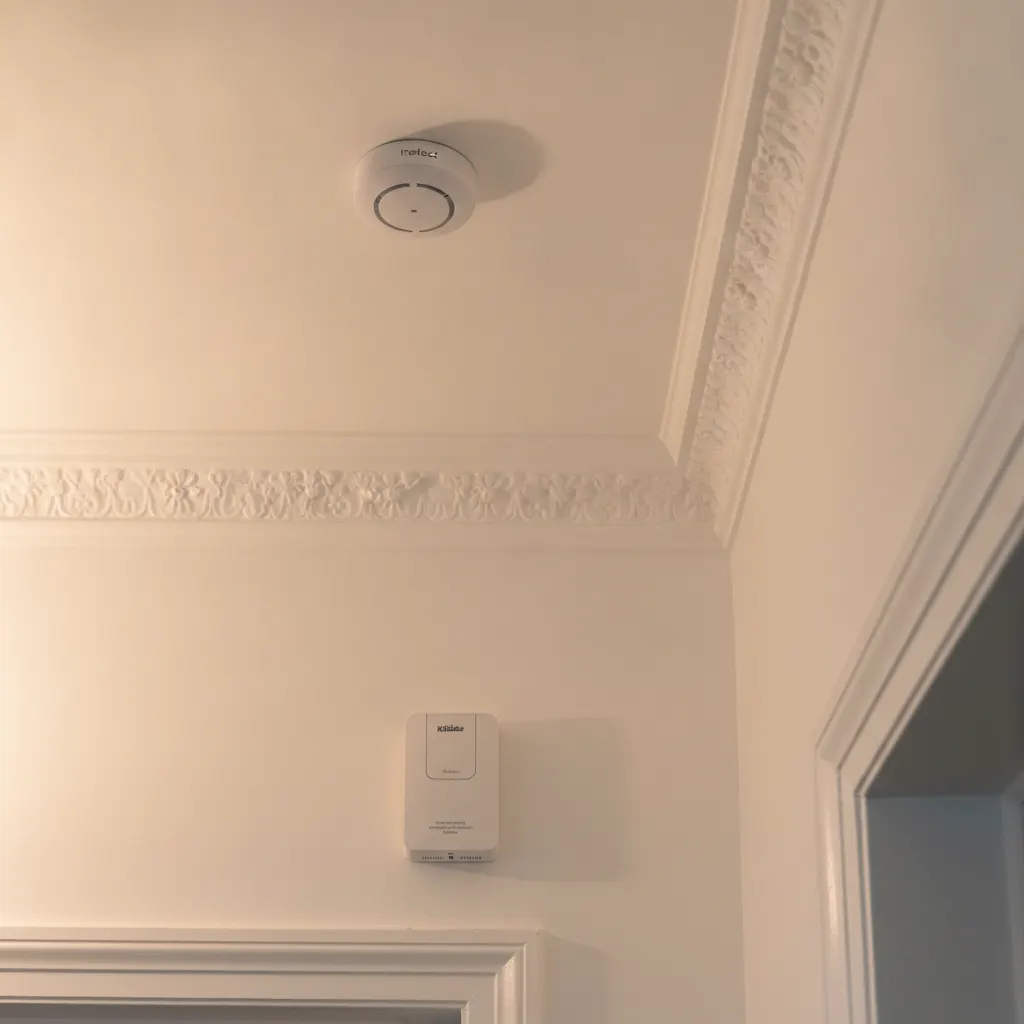
I got a letter from Brighton and Hove council in late 2022 about a routine fire safety check for short-term lets in the area. I spent thirty minutes beforehand checking every property I could access that week. In the Edinburgh flat, one of the smoke alarms had been unplugged — pulled out of the ceiling mount by a guest, presumably because it had triggered during cooking, and not replaced. It had been like that for at least two stays.
That was a useful reminder. Not the way I'd have chosen to get it, but useful.
Smoke alarms and CO detectors are one of those things where the legal requirements have tightened significantly in the last few years and a lot of hosts are still running on what they set up in 2019. So here's what the law actually requires in England, what Airbnb requires on top of that, and what I've ended up fitting across five properties.
What the law requires in England
The Smoke and Carbon Monoxide Alarm (England) Regulations 2015 — amended significantly from 1 October 2022 — are the primary legislation here. They apply to all private sector landlords including short-term let hosts.
The core requirements:
Smoke alarms: one working smoke alarm on every storey of the property that contains a room used as living accommodation. Bathrooms and toilets count as living accommodation for this purpose. So a two-storey flat needs at least two smoke alarms — one per floor. A three-storey townhouse needs three.
Carbon monoxide alarms: one working CO alarm in any room containing a solid fuel appliance (a wood-burning stove, open fireplace, Aga burning solid fuel). This was the original 2015 requirement. The October 2022 amendment extended it: CO alarms are now also required in any room containing a gas appliance — which in practice means any room with a gas boiler, gas fire, or gas hob. Cookers are sometimes discussed as a grey area but the regulation covers "gas appliances" without excluding them.
If you have a gas boiler in a utility cupboard, you need a CO alarm in that space. If you have a gas hob in an open-plan kitchen-living room, you need a CO alarm in that room. If you have both a gas boiler in a hallway cupboard and a wood-burning stove in the sitting room — as I do at the Lake District cottage — you technically need CO alarms covering both.
The regulations don't specify an exact type of alarm, but the guidance strongly points toward interlinked alarms (where triggering one triggers all) as best practice for larger properties.
What Airbnb requires on top of this
Airbnb's hosting standards ask you to declare whether your listing has a smoke alarm and a CO alarm. If you mark "no" or leave it blank, it shows in your listing as a missing safety feature — which guests can and do filter on.
Airbnb has periodically run campaigns pushing hosts to fit alarms, and in some markets has started making smoke alarm declarations mandatory to maintain listing visibility. As of early 2026, UK listings with no smoke alarm declaration are flagged in search results. I don't know exactly what the algorithmic impact is, but it's not a flag you want.
Airbnb's requirements don't replace or override UK law — they sit on top of it. You can be compliant with Airbnb policy and still be non-compliant with the 2022 regulations if, for example, you declared a CO alarm but it's only covering the bedroom and not the room with the gas boiler.
Scotland and Wales have different rules
If you're hosting in Scotland, the Tolerable Standard requirements are stricter — interlinked smoke alarms in the living room and every hallway and landing, a heat alarm in the kitchen, and CO alarms where required. These came into force for all Scottish homes (including STRs) from February 2022. The detail is worth checking via the Scottish Government's own guidance rather than my summary, because the Scotland rules are more prescriptive about interlinked systems than the England rules.
Wales introduced separate regulations in late 2022 that broadly mirror the England requirements with some additions. If you're hosting in Wales, check the Welsh Government guidance directly.
What I've actually fitted
My setup varies by property based on what made sense at the time and what I've replaced since.
Brighton flat — two Kidde 10LLCO combination smoke/CO alarms (one per storey). These are mains-powered with a ten-year sealed battery backup. They cost around £25–30 each. I fitted them when I took on the flat in 2020 and have tested them quarterly since. The combination unit covers both requirements in one fitting per storey, which simplifies the setup considerably.
Edinburgh flat — one Nest Protect per storey (two floors). The Nest Protect is around £100–119 each, considerably more expensive, but the app integration is genuinely useful for a remotely managed property. If a Nest Protect triggers while the property is occupied, I get a push notification on my phone within about thirty seconds. I also get a low-battery notification before the alarm starts chirping at 3am and irritating guests. That alone is worth the price difference for me.
Lake District cottage — a Kidde combination alarm in the main living area (which has the wood-burning stove), a separate smoke alarm in the upstairs landing, and a standalone CO alarm in the cupboard where the gas boiler lives. The cottage is single-storey plus a mezzanine sleeping area, so the upstairs landing alarm covers the sleeping space.
The battery vs mains argument
Mains-powered alarms with battery backup are generally considered better for rental properties: they don't rely on a guest or a cleaner having changed the battery, and they don't produce false low-battery alerts that lead guests to remove the alarm. The downside is that fitting a mains-powered alarm requires a qualified electrician and some properties don't have a convenient ceiling rose to tap into.
Sealed ten-year battery alarms — like the Kidde 10-year units or the Aico 3000 series — are a reasonable alternative: the battery is sealed in and non-removable, rated to last ten years, which means the alarm itself needs replacing rather than the battery. These are my default recommendation for properties where a mains installation isn't practical.
Avoid the cheap 9V battery smoke alarms that cost £4 from a hardware shop. The battery replacement interval is too short, guests remove them when they trigger during cooking, and they're impossible to monitor remotely.
The guest-tampering problem
Guests remove smoke alarms. This happens more than you'd think — usually because the alarm triggered when they were cooking and they couldn't work out how to silence it. A combined smoke/CO alarm with a 'hush' button that temporarily silences it for ten minutes is much less likely to get removed than an alarm with no visible mute function.
I now include a short note in my welcome information: "The smoke alarm has a 'hush' button on the front — pressing it silences the alarm for ten minutes if it triggers during cooking. Please don't remove it from the ceiling." It's a one-sentence addition to the house guide. It's reduced the number of times I've found an alarm pulled from its mount.
I also check every alarm at every property inspection visit — which I do between longer stays. Takes two minutes. Worth it.
Testing and record-keeping
The regulations require landlords to test alarms at the start of each new tenancy. For short-term lets with multiple guests per month, that requirement would be impractical to meet literally — but the intent is clear: alarms should be working. I test quarterly, note the date in a simple property log, and replace any alarm that fails to test immediately rather than noting it down for later.
Keep records. If there were ever an incident and a question about when alarms were last tested, a dated log entry is the difference between a defensible position and a very bad conversation with an insurer or local authority.
The cost of getting this right
Across five properties: roughly £300–350 in alarms all told, spread over the last few years as I've upgraded older units. That includes two Nest Protects in Edinburgh, combination alarms in Brighton, and standalone units at the cottage.
Annual replacement budget going forward: probably £40–50 as units age out or fail tests. Not a meaningful line in the budget.
Getting it wrong — particularly the CO detector requirement — isn't primarily about the fine (up to £5,000 from a local authority, under the regulations). It's about what happens if a guest is harmed and the alarm wasn't there or wasn't working. That's not a calculation I want to make in retrospect.
Ready to streamline your inventory?
Start managing your rental inventory smarter with automated stock tracking.
Start Free Trial