Annual deep clean for Airbnb: the schedule I run between seasons and what I pay per property
Hoststock Team
20 August 2026
What a turnover clean actually misses
My turnover cleaner is excellent. She does the flats on a tight schedule — two hours for a one-bed, three for a two-bed — and the properties come up clean every time. But a turnover clean is triage. It's making the flat look right for the next guest, not hunting for the things that accumulate over months.
The moment that made this obvious was finding, during a deep clean last March at my Edinburgh Old Town two-bed, a dried pasta shell behind the washing machine. Not dramatic. But the washing machine had been there for fourteen months and that pasta had presumably been there for at least some of that time. My turnover cleaner moves quickly. Moving the washing machine is not on her list.
Since then I've done a proper annual deep clean at each property, coordinated to fall in the shoulder season when I have a gap in bookings I can work around. And the list of things found, addressed, or replaced during those cleans has changed how I think about property maintenance entirely.
Why March specifically
March is my lowest-occupancy month across all five properties. Post-Christmas, pre-Easter. Brighton slows down. Edinburgh slows down. The Lake District barn, which does reasonable winter trade from walkers and skiers heading to Scotland, quiets down in March when the snow's gone and it's not quite spring.
I block a week per property for the March deep clean. Not a full week of work — the deep clean itself takes one to two days per property — but a week of blocked calendar means I'm not rushing it around a booking. I've made the mistake of trying to fit a deep clean into a two-night gap between bookings. It doesn't work. You end up cutting corners because you're watching the clock.
Some hosts do their deep cleans in January. I tried this once and found that January bookings dried up faster than I expected after I blocked the week, and then I'd blocked revenue unnecessarily. March has reliably been my natural trough.
What I actually deep clean — the full list
I use a specialist deep cleaning service for three of my five properties — a company that does end-of-tenancy and deep cleaning across Brighton and has a team in Edinburgh I use for the Old Town flat. The Lake District barn I do with my property manager there, partly because no specialist service will drive forty minutes from the nearest town, and partly because the barn is a different beast — it's got flagstone floors and exposed beams and standard domestic cleaning methods don't transfer.
The deep clean covers everything a turnover doesn't:
- Behind and under appliances: washing machine, fridge, oven (pulled out from the wall). The amount of dust and debris that collects behind a washing machine in twelve months is genuinely alarming.
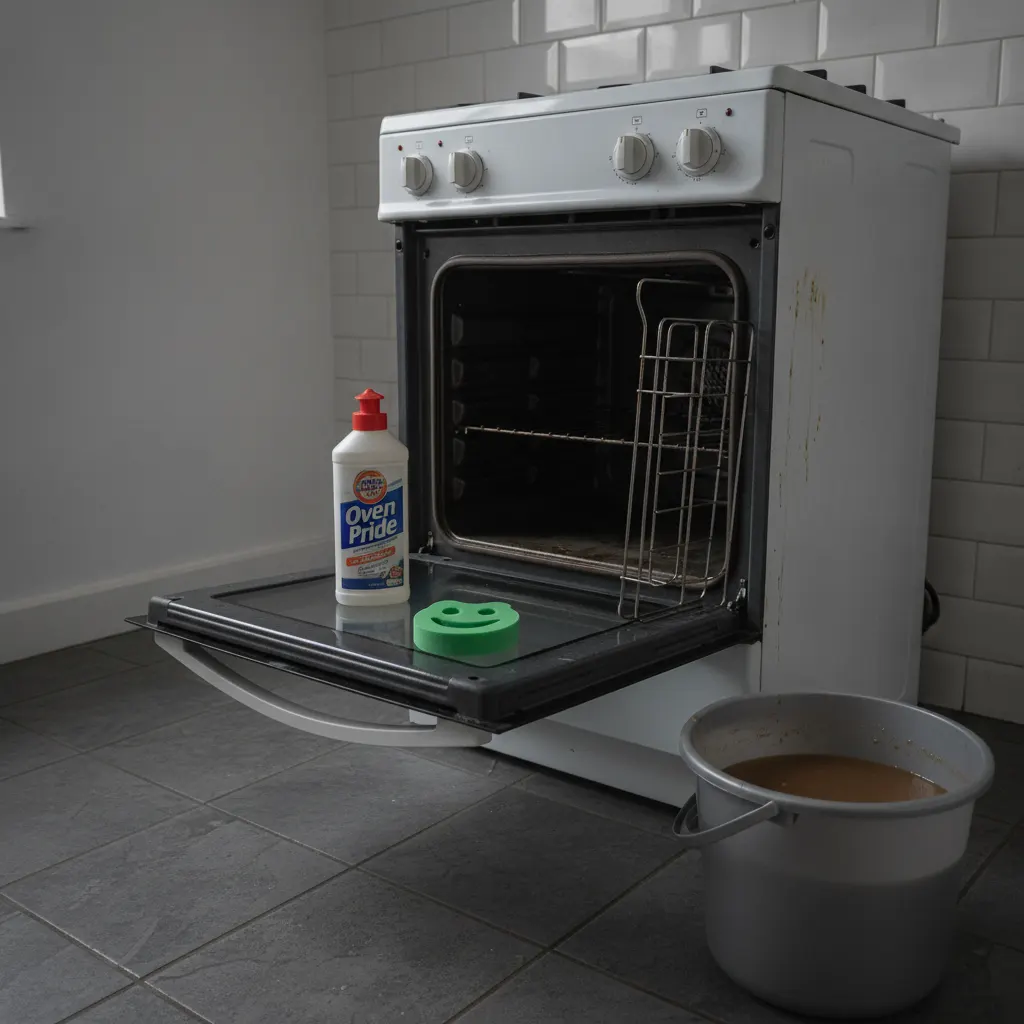
- Inside oven: not just wiped, chemically stripped. I use a professional oven cleaning service for this rather than asking cleaners to do it — specialist oven cleaners are faster and better than anybody doing it as part of a broader clean.
- Window frames and sills: inside and out where accessible. Mould around window seals is a common Edinburgh problem — old sash windows in Victorian tenements don't always seal perfectly and condensation builds up during winter.
- Mattresses: vacuumed with an upholstery attachment, checked for staining, rotated. Anything that looks compromised gets replaced.
- Pillows and duvets: checked for smell and firmness. I replace all pillows on a rolling 18-month schedule; the deep clean is when I log the age of each set and flag anything due for replacement.
- Sofa and upholstered chairs: cushions removed, vacuumed underneath, fabric checked for staining. My Edinburgh flat has a light-coloured linen sofa that I've nearly replaced three times. The annual deep clean includes a professional fabric clean on that sofa — around £80, well worth it.
- Grout and tile: bathrooms get their grout checked for mould and re-grouted where needed. This is something I do myself with a grout pen for minor areas and bring a tiler in for anything significant.
- Kitchen cupboard interiors: emptied, wiped down, shelf liners replaced where sticky or discoloured. This is where you find the single crouton that's been at the back of the dry goods shelf since September.
- Extractor fan filter: cleaned or replaced. Nobody ever does this on a turnover. After twelve months of cooking it's genuinely grim.
- Light fittings and ceiling: dusted, checked for dead bulbs, shades cleaned.
What I do myself vs what I pay for
For the properties with specialist deep clean services, I don't try to supervise every task. I send the list, agree the scope, and pay a fixed price per property. For my Brighton flat — a two-bed with two bathrooms — the deep clean costs me approximately £280-320 depending on scope (more if they do the upholstery, less if it was done within the last year). For my Edinburgh Old Town two-bed, roughly £260-300.
The oven cleaning is separate — around £60-75 per oven through a specialist. Worth every penny. A professionally cleaned oven looks noticeably better in listing photos, guests comment on it, and an oven that hasn't been properly cleaned in 18 months is a fire risk in a way that the end-of-season deep clean prevents.
On top of the cleaning cost, March is when I do my annual property walk with a maintenance checklist — I'll cover that in a separate post. But the deep clean is the trigger for identifying what needs fixing. My deep clean provider has a brief for flagging anything that looks like a maintenance issue: silicone seals around baths and sinks, loose door handles, grout cracking around the shower, anything that looks damp. I use their notes to build my March maintenance list.
What I've found during deep cleans that I'd never have known about otherwise
This is the part I find genuinely useful to think about. In three years of annual deep cleans across five properties:
- Found mould behind the back panel of a washing machine drum at my second Edinburgh flat. Would have eventually become a smell problem guests would notice.
- Found the bathroom extractor fan at my Brighton flat was barely functioning — the filter was completely blocked. The bathroom had slightly worse condensation than it should have for about eight months and I'd attributed it to the old window frames.
- Found three broken plug socket covers. Not a safety risk, but something a guest would notice and a maintenance check should have caught.
- Found a sofa cushion with a significant stain on the underside. No idea who, no idea when. The cushion was reversed in use so you'd never see it. But the deep clean found it, and I replaced the cushion rather than leave it to be discovered by a more eagle-eyed guest.
None of these were disasters. All of them were things that a guest might have noticed before I did, and that would have cost me in either a review mention or a refund request.
The annual cost across five properties
Total spend on deep cleaning services and associated oven cleaning across my five properties runs to roughly £1,400-1,600 per year. I treat this as a maintenance cost, not a cleaning cost — it goes in my annual maintenance budget rather than my operational cleaning spend, because it's about the long-term condition of the property rather than between-guest presentation.
For that spend, I get: properties that stay in genuinely good condition for longer (lower replacement and maintenance costs over five years), better review scores on cleanliness (my cleanliness sub-score is consistently 4.9-5.0 across all properties), and the peace of mind of knowing what's actually happening in the parts of the flat that turnovers don't reach.
It's not glamorous. It's the accommodation maintenance equivalent of changing the oil in a car. You do it on a schedule, you don't think about it, and you avoid a much larger problem that would have developed if you'd skipped it.
Ready to streamline your inventory?
Start managing your rental inventory smarter with automated stock tracking.
Start Free Trial