Airbnb host emergency contact sheet: what I give cleaners, guests, and myself for a 9pm crisis
Hoststock Team
12 October 2026
At 9:14pm on a Wednesday in February, my Brighton cleaner messaged to say the boiler at the Kemptown flat wasn't working. Guests were arriving at 4pm the next day. The plumber I usually use didn't pick up. The emergency plumber I found via Google quoted me £280 for a call-out after 8pm, said he could come Thursday morning, and eventually arrived at 11am — forty minutes before check-in.
The worst part of that evening wasn't the cost or the stress. It was the twenty minutes I spent trying to remember: who else do I call? What's the Airbnb emergency line? What do I tell the guests? I had all of this information somewhere. It wasn't in one place. It wasn't somewhere I could find it at 9pm with my heart rate elevated.
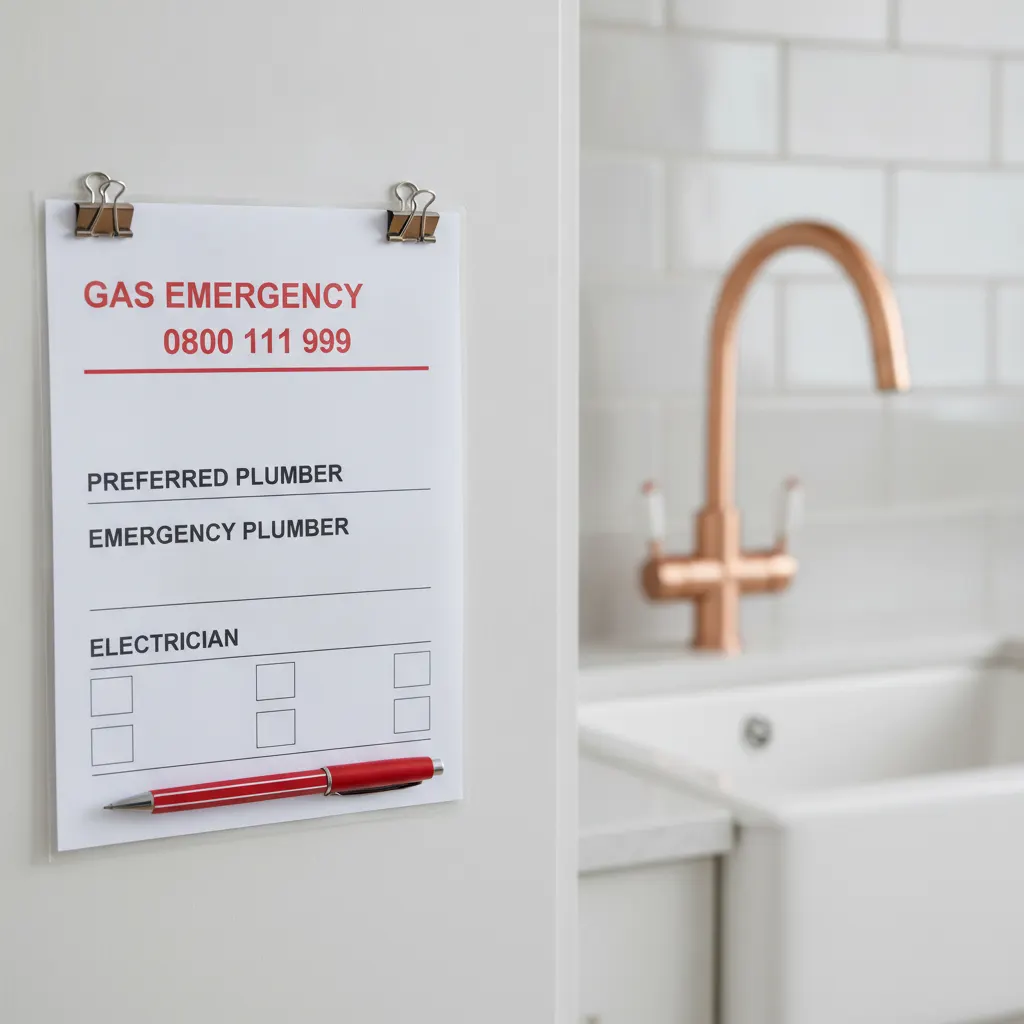
I now have an emergency contact sheet for each property. It takes about thirty minutes to build the first time and almost no maintenance after that. Here's what's on it, and why each item is there.
The sheet structure
One A4 sheet per property. Laminated (£1 per sheet at Ryman, or use a laminator if you have one). One copy inside the property — the kitchen drawer, or wherever the guest welcome file lives. One copy with my cleaner for that property. One digital copy in a shared Google Drive folder that I can access from my phone. That last one is the important one, because at 9pm on a Wednesday I'm not at the property.
Section 1: Property essentials
Utility stop cocks and isolators. Where is the stopcock to turn off the water supply? Where is the main gas isolation valve? Which consumer unit (fuse box) circuit controls which part of the property, and where is it? This sounds obvious but it took me three years of hosting to actually write it down per property. My Edinburgh Bruntsfield flat has the stopcock under the kitchen sink and the gas isolation valve in a cabinet to the left of the front door. My Kemptown flat has both in the airing cupboard on the second landing. Without the sheet, this information is somewhere in my head, approximately.
Also: Wi-Fi network name and password (guests' first port of call for any problem is messaging me via their phone), key-safe code for each entry point, and the make/model of the boiler with its service status date and the engineer who last serviced it.
Section 2: Emergency utilities contacts
Gas emergency: the National Gas Emergency Service is 0800 111 999, available 24 hours. If there is a smell of gas in a property, this is the number. I have it on both the laminated sheet and in my phone under "Gas Emergency." If a guest or cleaner messages about a gas smell, the first instruction is always: leave the property, don't operate any switches, call 0800 111 999. The sheet makes sure this number is always available without anyone having to look it up.
Electricity emergency (power cut, not an electrical fault): National Grid's power cut line is 105, which connects to the relevant regional distributor. If it's an electrical fault — smell of burning, visible damage, RCD tripping repeatedly — the right call is an electrician, not the power line.
Water supply emergency (burst pipe, no water): contact the relevant regional water company. In Brighton, that's Southern Water; in Edinburgh, it's Scottish Water. Both have 24-hour lines.
Section 3: Contractors
The categories I have filled in per property:
- Preferred plumber: name, mobile, hourly rate. Daytime vs emergency rate if different. Mine charges £65/hour daytime, £95/hour evenings and weekends, minimum 1-hour call-out. Knowing this in advance means no negotiation in a panic.
- Preferred electrician: same format. Gas Safe certificate number if applicable.
- Emergency plumber (backup): the one you use when your preferred plumber doesn't answer. I have one per city. Yes, they're more expensive. Yes, having the number ready is still cheaper than the forty minutes I wasted searching at 9pm in February.
- Locksmith: for guest lockouts, broken locks, or key safe failures.
- Boiler service engineer: the one who serviced it last, who knows the system.
Emergency call-out rates vary but as a rough guide in Brighton and Edinburgh (2026): independent emergency plumber typically £150–250 for an evening or weekend call-out. Electrician similar. Gas Safe boiler engineer on emergency: £180–300 depending on timing and complexity. Having the preferred tradesperson's number means you usually avoid the emergency premium — most are willing to advise on urgency over the phone even when they can't come immediately.
Section 4: Airbnb host emergency contact
Airbnb doesn't publicise a direct emergency phone number prominently, but there is one: +44 203 318 1111 is the UK contact number for Airbnb hosts (or use the Help Centre's call-back function). For urgent issues involving guest safety or an active emergency, Airbnb's Trust & Safety team can be reached via the resolution centre within a booking or by phone. Have this number on the sheet alongside the booking reference format so anyone referring to it — including a cleaner — knows what information to have ready.
Section 5: Who to call and in what order
The sheet ends with a simple decision tree. A printout like this takes thirty seconds to work through in a panic and thirty seconds is enough to prevent the wrong call being made first:
Gas smell → Leave, 0800 111 999
No power → Check consumer unit first; if tripped, reset; if not, call 105
No water → Check stopcock; if isolated, open; if burst pipe, stopcock off + [plumber name]
Heating failure → Call [boiler engineer] if in hours; [emergency plumber] if after 6pm
Guest locked out → [Locksmith name]
Serious guest injury → 999 first, then Airbnb: +44 203 318 1111
Giving it to your cleaner
The cleaner's copy matters. A cleaner arrives at a property to start a turnover and finds a maintenance issue — a ceiling damp patch, a bathroom window that won't close, a washing machine making a grinding noise. If they have to message me to ask who to call, time is lost. If they have the sheet, they can either message me the issue with context (property, what they found, which contractor on the sheet to use) or, for something urgent, call the contractor directly.
I've had Emma in Brighton handle two minor maintenance situations — a dripping tap, a fused bathroom light — without needing to involve me at all, because she had the sheet, knew the plumber, and could get a ten-minute visit booked for the same afternoon. That's what the sheet is for. Not just for my 9pm emergencies. For everyone who touches the property and needs to know what to do when something goes wrong.
Ready to streamline your inventory?
Start managing your rental inventory smarter with automated stock tracking.
Start Free Trial