Bathroom cabinet in an Airbnb: what I keep in it, what UK law says, and what my insurer told me
Hoststock Team
12 September 2026
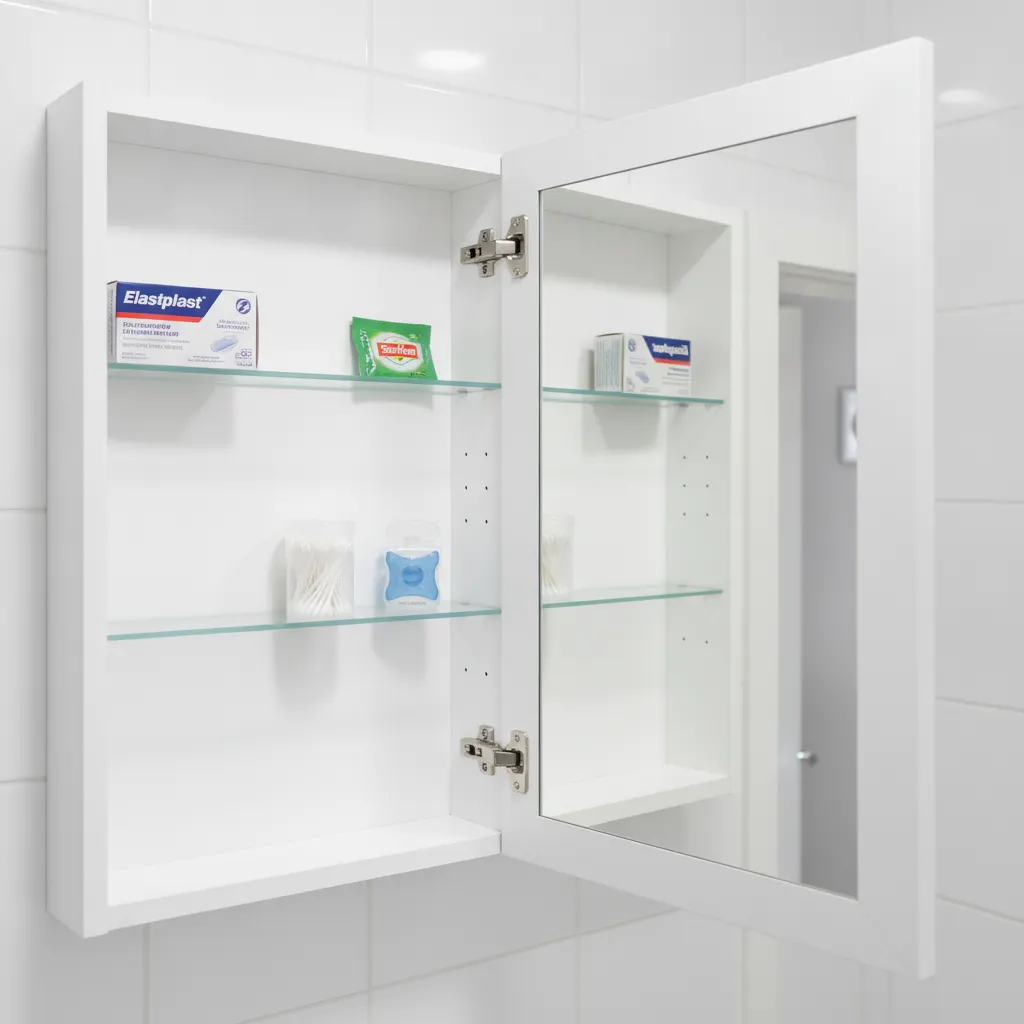
For two years I put a small first aid kit in each bathroom cabinet. Plasters, antiseptic wipes, paracetamol, ibuprofen. It seemed like a hospitable thing to do. Guests would appreciate it. Nobody would complain about finding medication.
Then I rang my property insurer about something unrelated and mentioned it in passing. The conversation that followed was not reassuring.
What UK law says about medicines in holiday lets
There is no specific regulation that prohibits or requires a host to provide over-the-counter medicines in a short-term let. Unlike food service, accommodation providers aren't regulated by the Medicines and Healthcare products Regulatory Agency (MHRA) on what they can leave out. A bottle of paracetamol in a kitchen cupboard is not, in itself, a legal violation.
But the liability picture is more complicated. The key question my insurer raised was not whether it's legal to leave medication, but whether providing it creates an assumption of duty of care that my standard host liability policy was designed to cover. Short answer: not always. It varies by policy.
My policy, with a major UK specialist short-term let insurer (I use a specialist product, not standard home insurance — if you're using standard home insurance for a let property, that's a separate conversation you need to have), explicitly excludes claims arising from guest consumption of medication or supplements left by the host. Their position: by providing medication, you've made a clinical decision, and clinical decisions are not covered under standard host liability. This may not be universal — check your own policy — but it's a real exclusion that exists in the market.
What I changed
I removed the paracetamol and ibuprofen from all five properties. I kept the plasters and antiseptic wipes — these aren't clinical intervention; they're basic wound management and there's no dosage question involved.
I added to the guidebook a paragraph on the nearest pharmacy for each property. For the Edinburgh flat it's a Boots on Princes Street, three minutes' walk. For the Lake District barn it's a Lloyds in Keswick, twelve minutes' drive. For the Brighton flat, a Superdrug two streets away. Guests who need medication know where to get it — they don't need me to have stocked a medicine cabinet, they need to know where to go.
I also added a small note in the bathroom: 'If you need medical supplies, the nearest pharmacy is [name], [distance] away.' This has been mentioned positively in two reviews — 'helpful local info' type comments — and has generated zero complaints.
What I do keep in the bathroom cabinet
Post-reorganisation, my bathroom cabinets hold:
- Plasters: a mixed-size box, fabric ones rather than the standard plastic. I buy Elastoplast from Amazon Business in boxes of 40. Per turnover cost: roughly 8p assuming one per three stays.
- Antiseptic wipes: Savlon sachets, individually wrapped. About 12p each at bulk purchase.
- Cotton buds: Regardless of what guests bring, they use what's there. Cosmetic ones, not medical. Standard Boots own-brand.
- Dental floss: One packet. Stays for about three stays before disappearing. About 80p a time from Amazon Business in bulk.
- Spare razor: I buy Gillette Mach3 disposables in a multipack and leave one at each property. About 45p per razor.
- Shower cap: The type you find in hotels. A pack of 50 from Amazon Business costs about £6. Guests use about one every four stays, so about 12p per turnover.
Nothing in the cabinet that requires dosage judgement. Nothing that I'd need to brief a guest about. Nothing that creates a question about whether I'm responsible for what happens next.
The first aid kit lives elsewhere
I keep a proper first aid kit — plasters, bandages, sterile gauze, safety pins, eye wash, disposable gloves, first aid guidance card — in a labelled box in the kitchen cupboard at each property. Not in the bathroom cabinet. I reference it in the house guidebook. The box is clearly marked 'First Aid'.
This is a separate post about first aid requirements. Short version: there's no UK law requiring a first aid kit in a residential short-term let (unlike some commercial hospitality operations). I keep one because it's reasonable and it's the kind of detail that guests notice and appreciate. Not in the bathroom cabinet, because the bathroom is where you go for a shower, not to manage a cut.
The actual conversation with my insurer
I ring my insurer every April to review my policy and ask about anything that's changed in my operation. Insurers quite like this — you're showing diligence. I told them about the bathroom cabinet contents. They did not panic or threaten to void my policy. They explained the medication exclusion, suggested I remove prescription items (I didn't have any) and over-the-counter analgesics as a precaution, and confirmed that basic first aid supplies like plasters and antiseptic were fine.
One thing they were very clear about: document what you have and what you do. If you make a conscious decision about what's in your property — on liability grounds, or any other grounds — write it down somewhere dated. Email yourself. Note it in your property management records. If a claim ever arises, the fact that you made a reasoned decision and recorded it is your protection. Being vague about what was where and why is not.
What other hosts do
I've asked about this in a couple of the Airbnb UK host groups I'm in. Answers range from 'full first aid kit in every room' to 'nothing, guests are adults' — with most people in the middle, doing roughly what I was doing before the insurer conversation. Very few had specifically checked their policy terms on this. I'd suggest doing that before next season.
Call it risk management or call it paranoia. I call it not wanting to find out what the exclusion clause means the hard way.
Ready to streamline your inventory?
Start managing your rental inventory smarter with automated stock tracking.
Start Free Trial