Bathroom silicone resealing in Airbnb properties: the maintenance cycle that stops the mould photos
Hoststock Team
27 September 2026
The mould photo
Nothing ends a stay's review potential quite like a photo of a black mould corner on bathroom silicone landing in the three-star review. I've received two. Not because I run unhygienic properties — I don't — but because bathroom silicone, in any property with hot showers and imperfect ventilation, will eventually go. And I didn't have a schedule for checking it, let alone replacing it.
The first time it happened was in my Edinburgh Old Town flat. Victorian building, second-floor bathroom, extractor fan that had worked when I first bought the property and gradually reduced to something that moved slightly less air than opening the door. The silicone around the bath had been there, as far as I could tell, since before I bought the flat. It was fine when I took over. It was not fine three years later. A guest with sharp eyes, good phone camera, and strong opinions gave me a three-star review in which the mould corner featured prominently alongside the phrase "not acceptable."
They were right. I sorted it. And then I built a proper maintenance schedule around it so I'd never have to receive that review again. Here's what I know now that I didn't know then.
Why bathroom silicone fails in short-term rentals
Bathroom silicone in normal domestic use — a family home with one or two people showering regularly — typically lasts between five and ten years before it needs replacing, depending on ventilation, the quality of the original application, and whether the grout lines around it have any movement. That's widely cited by sealant manufacturers as standard guidance, and it's roughly what I've found in my own domestic bathroom.
In a short-term rental with multiple guests using the shower daily, turnover cleaning that involves wiping the silicone with various chemical cleaners, and ventilation that depends entirely on the guest using the extractor fan or opening the window (which many don't, particularly in winter), that timeframe compresses significantly. I'd put it at two to four years as a realistic expectation for a busy STR — and less if the extractor fan isn't working properly.
The failure modes are: discolouration (yellowing or greying), surface mould (which cleaning can temporarily address but not cure), cracking along the joint as the building moves seasonally, and separation from the bath or tile surface leaving a gap that water gets into. All of these look bad to guests. The last one — separation — can also cause water ingress behind the bath panel or wall tiles, which is a property maintenance issue beyond just the cosmetic.
The maintenance schedule I now run
Every property on a quarterly visual inspection cycle. Specifically:
I — or the cleaner, with a checklist — check the silicone in every bathroom and wet room for: surface mould that won't wipe off, cracking, discolouration, and gaps or separation from the adjacent surface. The checklist is on the same laminated card system I use for other property maintenance items, physically at the property rather than in a digital system I might not check.
Findings get photographed and logged. Minor surface mould that responds to cleaning: treated and logged. Mould that doesn't clear after two cleaning attempts, or any cracking or separation: scheduled for replacement. I give myself a six-week window to get any replacement done, which is typically enough time to schedule a handyperson around guest bookings.
The target is never having silicone that's older than three years in any of my properties. This is somewhat arbitrary, but it's a simple rule that's easier to follow than a case-by-case assessment of condition. I record the replacement date on the property maintenance log, set a three-year reminder, and it becomes a known recurring cost rather than a surprise.
DIY or trade?
Silicone removal and replacement is genuinely DIY-able if you have the tools and patience. The right process:
- Remove the old silicone completely using a silicone remover product (Unibond, Everbuild, and similar brands all make these — around £5–8 for a tube) and a plastic scraper. Do not leave old silicone under the new application. This is the most common DIY mistake and it causes the new silicone to fail early because it can't bond properly to the surface.
- Clean the substrate (bath or tile surface) with white spirit or isopropyl alcohol to remove any residue. Let it dry thoroughly — at least 24 hours ideally, or overnight minimum.
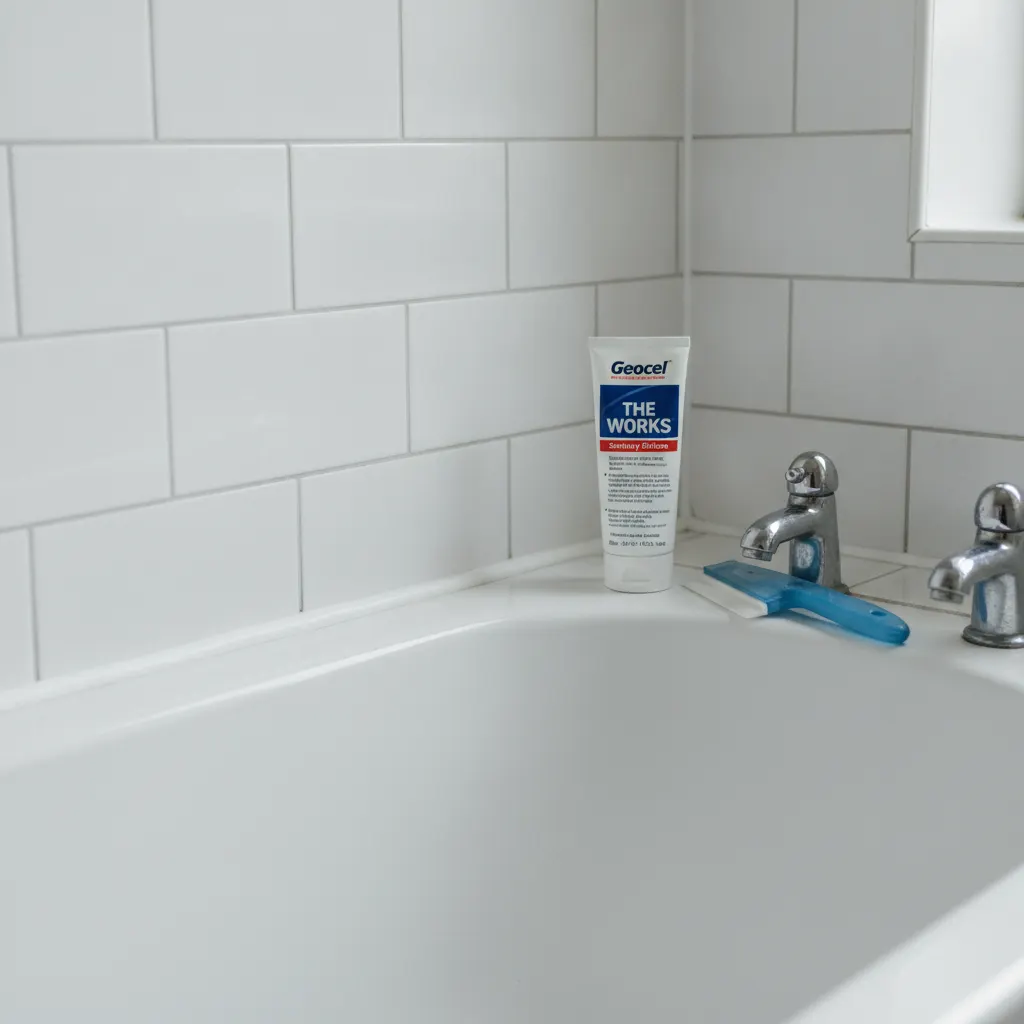
- Apply new silicone in a single continuous bead. Bathroom-grade silicone (specifically mould-resistant formulations — every major brand including Sika, Geocel, and Unibond make these) applied smoothly with a finger dipped in washing-up liquid solution gives a neat finish.
- Allow to cure — typically 24 hours minimum before the shower is used, with some formulations requiring 48 hours. Check the specific product curing time.
The problem with DIY in a rental context is access. You need at least 48 hours with no guests in the property. For busy properties, this is hard to schedule. I've done the silicone work myself in off-season gaps (January is ideal for my Scottish properties). For in-season replacements, I use a handyperson rather than trying to schedule the work myself.
Handyperson cost for bathroom resealing: typically £60–150 depending on location and bathroom size, covering one to two hours of work plus materials. In Edinburgh, I pay around £90 for a full bathroom reseal including bath and shower tray. In Brighton, the equivalent is around £110–130. These are rough figures that vary significantly by location and who you use — get three quotes when you're first setting this up.
Mould-resistant silicone: worth specifying
Not all bathroom silicone is the same. Standard silicone is fine for waterproofing but has no particular resistance to mould growth on the surface. Mould-resistant formulations contain anti-fungal additives — typically fungicidal agents — that slow the surface mould development significantly. They're more expensive (around £8–15 for a 290ml cartridge versus £4–8 for standard) but they extend the realistic replacement interval meaningfully.
Brands I've used: Sika-flex Sanitary, Geocel Trade Mate Sanitary Silicone, Unibond Anti-Mould. All of these have worked well. The Geocel Trade Mate range is what my current handyperson uses and I've had no complaints about the result. Always specify sanitary grade rather than general-purpose silicone for bathrooms — it's formulated for the humidity environment and will last better.
Colour: white is almost always the right answer for rental bathrooms. It looks clean, it photographs well, and any discolouration shows clearly (which means you catch it before guests do, rather than after). I had one property with a renovated bathroom where the previous owner had used grey silicone to match grey grout. Fine aesthetically, terrible practically — surface mould on dark silicone is invisible until it's a serious problem.
The extractor fan: the thing that makes the silicone question almost irrelevant
Good bathroom ventilation is the biggest single factor in silicone lifespan. A properly functioning extractor fan — one that removes moist air quickly after shower use — dramatically reduces the moisture loading on bathroom surfaces including the silicone joints.
Check your extractor fans work. Hold a piece of tissue paper near the grille when the fan is running — if it's pulled toward the fan, it's working. If not, the impeller may be clogged with dust (cleaning is possible and worth trying), or the motor may be failing. A replacement bathroom extractor fan is typically £30–80 for a standard unit; installation by an electrician (required for hard-wired units under Part P of the Building Regulations) adds cost but isn't expensive.
I've put extractor fan checks on the same quarterly maintenance cycle as silicone inspections. They're related — a failed fan accelerates silicone failure — and doing them together makes sense.
One more thing: I include a note in the guest welcome information asking guests to run the extractor fan during and for 10 minutes after shower use. Whether they do is another matter. But in properties where I've tracked guest behaviour (noise monitors give you some data on bathroom usage patterns), asking for it does seem to shift compliance rate slightly. Every bit helps.
What the economics look like
Resealing one bathroom every three years at £90–130 per reseal across five properties is roughly £150–220 per year spread across the portfolio. That assumes one bathroom per property — some of mine have two, which doubles the maths. It's not a trivial cost but it's completely predictable once you're on a schedule.
The alternative — reactive resealing after a guest complaint, or after a review mentions mould — involves the same cost plus: a potential three-star review, the revenue impact of guests who would have booked but saw the negative review, and the stress of responding to damage during a busy period. The scheduled approach is cheaper in every dimension including the one that doesn't show up in accounts: peace of mind.
I run the same logic across most of my property maintenance. Things that fail slowly and predictably — silicone, extractor fans, appliance filters, mattress protectors — get replaced on a schedule before they become a guest complaint. It's not glamorous operations management. But it's the difference between a property that stays at 4.9 stars and one that oscillates.
Ready to streamline your inventory?
Start managing your rental inventory smarter with automated stock tracking.
Start Free Trial