Bleach in short-term rental cleaning: the five uses that work, and what it ruins if you get it wrong
Hoststock Team
4 October 2026
I ruined twelve towels in one go during my first winter as a host. Not just discoloured — turned orange, patchy, ruined. I'd been watching a YouTube video about hotel-style laundry and somewhere in the comments someone mentioned bleach as the secret to bright white towels. I added it to the wash. Hot cycle. Everything came out looking like it had been attacked with tie-dye.
The problem was threefold. The towels were 100% cotton terry with a coloured stitched band — even a diluted bleach cycle attacked the dye in the band and wicked into the rest of the fabric. The bleach concentration was too high. And I'd mixed it with a detergent that contained ammonia, which produces chloramine gas and is not a chemistry experiment you want to run in your utility room.
Since then I've learned when bleach is actually useful in a rental context, when it's actively harmful, and what to use instead. It's not complicated, but the default assumption that "bleach = clean = good" causes more damage than it prevents.
When bleach is the right tool
Toilet pan and seat. Bleach-based toilet cleaner — Harpic Active Fresh, Flash Disinfecting Toilet Gel, or straight bleach thinned with water — is the most effective option for the toilet interior. The chlorine oxidises organic residues and kills bacteria that survive most surface cleaners. Use it at every turnover. Leave for ten minutes before brushing and flushing. This is one area where the "bleach is too aggressive" argument doesn't apply — the toilet pan can take it and nothing else gets the same result reliably.
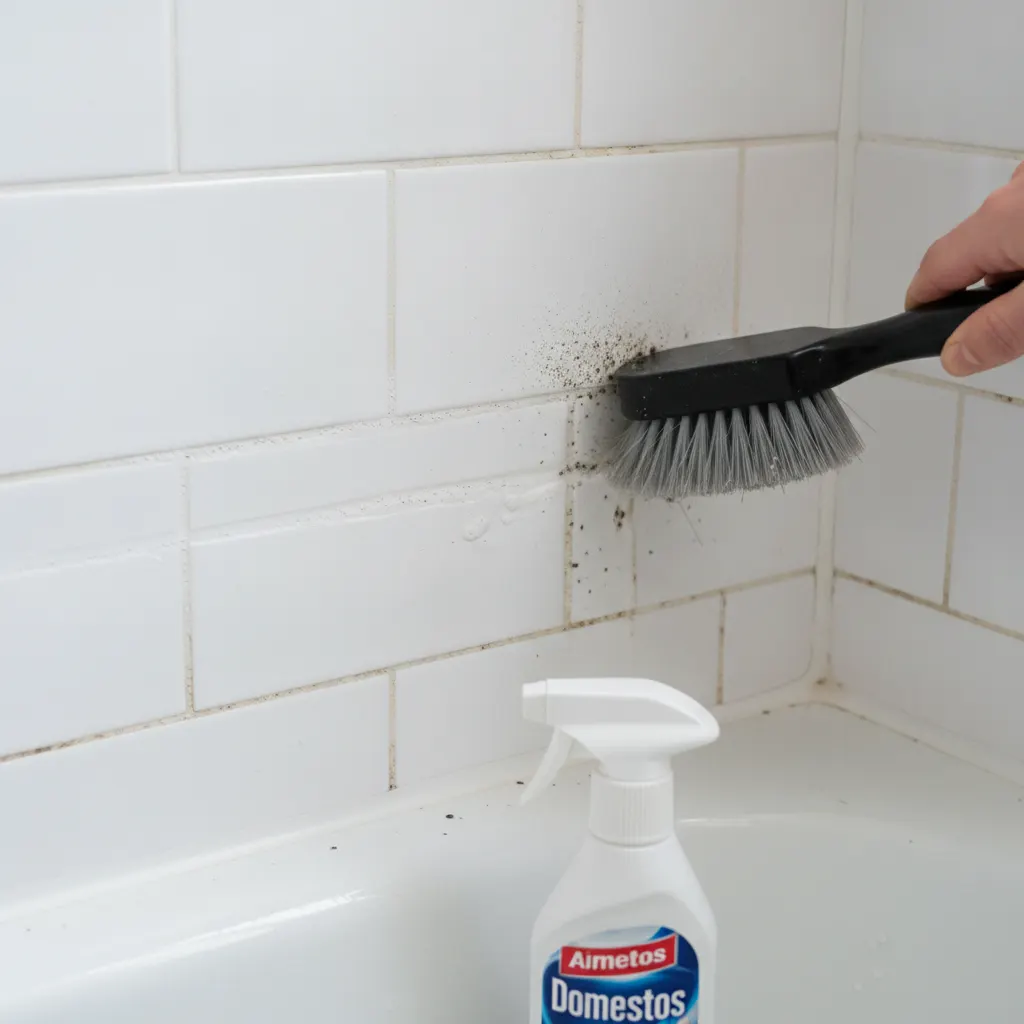
Bathroom grout. Old grout with black or grey mould spores responds to bleach in a way that most other cleaners don't touch. A solution of 1 part bleach to 10 parts water, applied with an old toothbrush and left for 30 minutes, will shift surface mould on ceramic grout. Important: ventilate the room properly (open a window, run the extractor fan). Don't mix with vinegar, ammonia, or any acidic cleaner — the chlorine gas produced from bleach-acid combinations is genuinely harmful in a confined bathroom.
External hard surfaces: patio slabs, decking, wheelie bin areas with persistent mould. Diluted bleach solution (about 1:20 with water) applied and left for 20 minutes, then rinsed, removes green algae and surface mould from concrete and paving. I do this to the patio on my Brighton flat once a year in October. Takes 20 minutes. Works better than anything else I've tried.
Drains. A capful of neat bleach into the shower drain and bath drain, once a week on turnovers, prevents the bacterial biofilm that causes drain smell. Not a substitute for physical drain clearing if there's a hair blockage, but good maintenance chemistry.
When bleach causes damage
Coloured or patterned fabric. Any textile with synthetic dye is at risk from bleach, even at low concentrations. This includes towels with coloured borders, sheets with decorative stitching, bathrobes with a logo or branding, and anything in a non-white colour. The oxidising action of bleach doesn't distinguish between organic soil and the organic molecules in fabric dye. It attacks both. Keep bleach away from anything that isn't white.
White towels: safer but not risk-free. Pure white cotton towels can handle occasional diluted bleach use if you're trying to restore brightness. But repeated bleach washes degrade the cotton fibre — it becomes thinner, less absorbent, and starts to feel rough. The towels grey and yellow faster, not slower, with bleach cycling. Hydrogen peroxide (H2O2) is the correct whitening agent for regular use on white textiles — OxiClean White Revive or Vanish Gold Oxi Action Crystal White, added to the wash at the dosing rate on the pack.
Stainless steel. Bleach pits and discolours stainless steel surfaces over time. Don't use bleach to clean kitchen sinks, draining boards, or hob surrounds. Bar Keepers Friend powder or Method Daily Granite Spray are both better options. I've seen hosts destroy a lovely Blanco undermount sink with repeated bleach cleaning. The pitting is irreversible.
Stone and marble worktops. Bleach is acidic once diluted and reacts with calcium carbonate in stone, causing dull etch marks. Granite, marble, limestone — bleach will permanently damage these surfaces. Method Stone cleaner or a neutral pH spray (plenty on Amazon labelled for natural stone) only.
Rubber seals and silicone. Prolonged bleach exposure degrades silicone and rubber seals. The bathroom sealant around baths and shower trays eventually discolours and softens with repeated bleach exposure. This accelerates the mould-hiding-under-sealant problem rather than solving it.
The "hotel white" towel question
Hotels keep towels white through a combination of industrial laundry equipment, precise chemical dosing, and very high temperatures. Typically 60–85°C washes with commercial detergent containing optical brighteners, sodium hypochlorite (bleach) at specific concentrations, and precise mechanical agitation. They're also replacing towels constantly — the turnover rate means individual items are in service for far shorter periods than your rental towels.
Replicating this at home with a domestic machine isn't really possible. What works for rental towels in a domestic setup: wash at 60°C with a good non-bio detergent (Persil Non-Bio Liquid or similar), add an OxiClean or Vanish sachet for every other wash, and dry in direct sunlight when possible — UV whitens white fabric naturally. That combination keeps towels looking fresh without the degradation that bleach causes over time.
Drying in sunlight sounds fanciful in Edinburgh in November. Agreed. But in Brighton from March to October, line drying is genuinely effective and I've extended the life of a set of towels by 6 months using it versus tumble-drying every cycle.
What my cleaner uses and why it matters
When I first started using a professional cleaner, I assumed she knew the chemistry. She didn't — she was using neat Flash bathroom spray containing bleach directly on my stainless steel draining board and had been since she started. The pitting took about 8 months to become visible. By then it was done.
I now have a specific products-approved list in the cleaner information pack for each property. Not prescriptive — I don't tell her exactly how to clean. But it specifies: no bleach-based products on worktops, sinks, or textiles. Toilet pan: fine. Grout: in rotation with other products. Drains: yes. Everything else: no bleach.
The pack lives in the utility cupboard alongside the products I want her to use. It's a laminated A5 sheet. Two columns: "Use these" and "Not for this property." Cleaner turnover is my biggest operational risk — each new person may have different habits. The laminated sheet is faster than training from scratch each time.
The dilution issue
If you're going to use bleach at all — on toilets, grout, external surfaces — dilute it correctly. Neat bleach has a sodium hypochlorite concentration of around 3–5% in most UK domestic brands (Domestos, Ace, supermarket own). For general disinfection of hard surfaces, a 1:10 dilution (one part bleach in nine parts water) is effective. For toilet pans, you can use it more concentrated because the surface is designed to handle it. For grout work, 1:10. For external paving, 1:20.
The instinct to use it neat because "it'll work better" doesn't hold. Neat bleach on a toilet seat oxidises the plastic faster, causing yellowing and brittleness. Neat bleach in a drain can react with organic matter and produce unpleasant gas. More is not better. Correct dilution and correct contact time (minimum 10 minutes for disinfection) is better.
Products I actually keep in each property
The cleaning kit under each sink in my properties: Harpic Power Plus for the toilet (bleach-based, appropriate), Flash Spray with Bleach specifically for grout spots only (labelled), Method All-Purpose Antibacterial spray for surfaces (no bleach), Method Daily Granite for the one property with granite worktops, and Ecover bathroom spray for general bathroom surfaces. That's it. Five products, each with a clear purpose.
The "five products" approach came from a conversation with a cleaner who'd been doing holiday lets for 15 years. She said the hosts who have the best properties aren't the ones who buy every product — they're the ones who have the right five products and know what each one is for. She was right. The bleach confusion generally comes from having one product (usually Domestos) and using it for everything. That's where the orange towels come from.
Ready to streamline your inventory?
Start managing your rental inventory smarter with automated stock tracking.
Start Free Trial