Airbnb bookkeeping for UK hosts: the monthly 30-minute system that keeps my accountant happy
Hoststock Team
7 October 2026
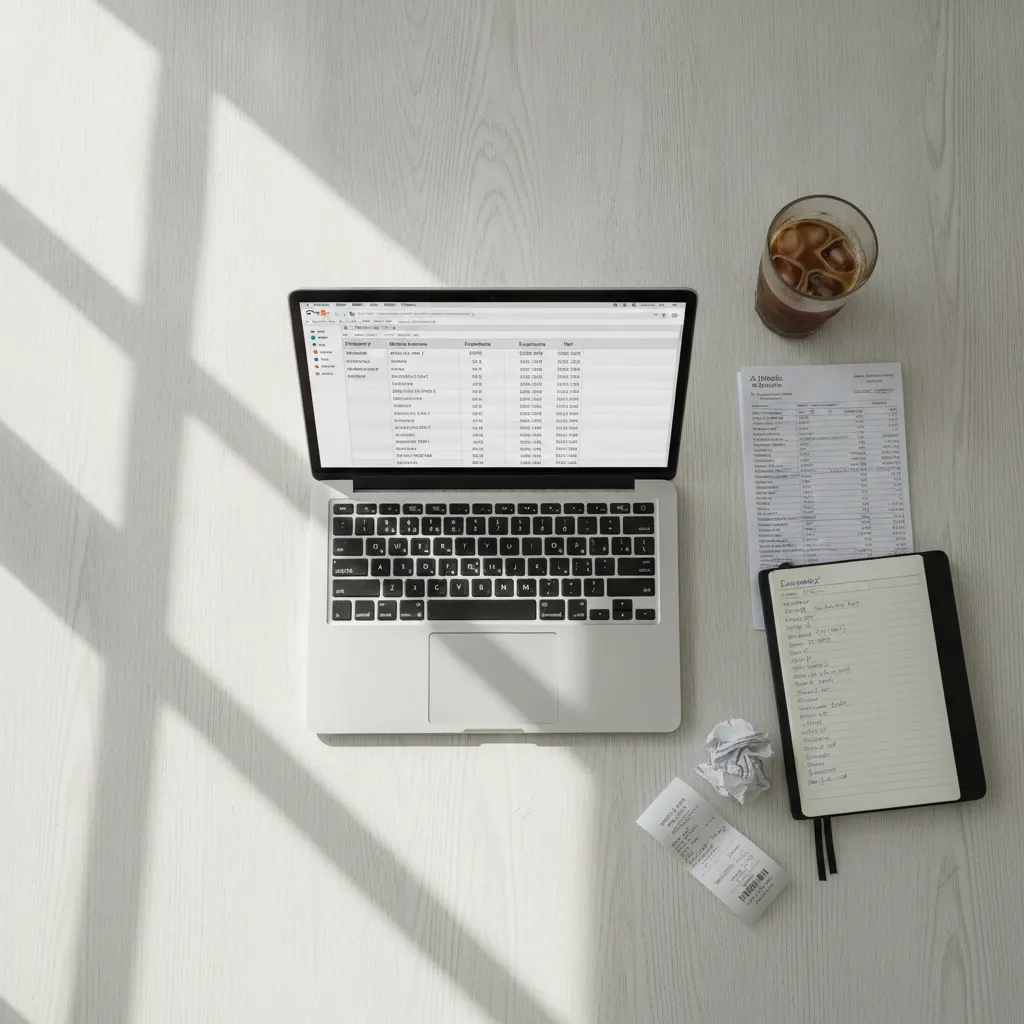
I started my first Airbnb year treating the bookkeeping as something I'd sort out in January. Come January, I had a shoebox of receipts, three bank accounts to reconcile, and absolutely no idea which property had generated which income.
My accountant — a patient woman in Hove who does the books for about forty STR hosts in the South East — told me she spends roughly twice as long on files from hosts who haven't tracked properly through the year. That time comes out of my pocket. So in year two, I built a monthly routine. Thirty minutes, first weekend of each month, same process every time. It's not glamorous. It has saved me a significant amount of money in accountant hours and a meaningful amount of stress.
What changed after April 2025
If you're still running your STR finances under the old Furnished Holiday Lettings rules, you need to update your thinking. The FHL tax regime was abolished on 6 April 2025.
Under FHL, you could offset mortgage interest against rental income in full and access capital allowances on furnishings. Both of those are gone. Mortgage interest is now treated the same as a standard residential rental — you get basic-rate tax relief only (currently 20%), not full deduction. Capital allowances for furnishings are replaced by the Replacement of Domestic Items relief, which only applies when you replace something, not when you initially kit out a property.
For hosts who financed their properties, the effective tax rate on STR income will have gone up. This makes accurate bookkeeping more important, not less — because replacement relief and allowable expenses are the levers you still have.
The 30-minute monthly routine
I run this on the first Saturday of each month. No spreadsheet heroics. Just four steps.
Step 1: Reconcile Airbnb payouts (5 minutes)
Download your payout statement from Airbnb for the previous calendar month. Match each payout to your bank statement. Note the gross booking value, Airbnb's host fee (typically 3%), and the net amount you received. Put these in three columns in a Google Sheet — one row per payout, one sheet per property. The gross figure is your income for tax purposes, not the net.
Step 2: Capture expenses (10 minutes)
I use a folder in Google Photos per property, labelled by year. Every receipt I get — cleaning supplies, light bulbs, replacement bath mats, a new shower head — goes in with a photo straight from my phone. At the end of the month I open the folder and type the amounts into a second sheet: date, description, amount, category. Categories I use: cleaning supplies, linen/towels, maintenance, utilities, insurance, platform fees, professional services.
Allowable expense categories under UK property income rules (post-FHL): cleaning and maintenance, insurance, legal and professional fees (accountant, property management contracts), advertising/platform costs, utilities where paid by you, replacement of domestic items. If you're unsure whether something qualifies, take a photo and ask your accountant — it costs far less than missing a legitimate deduction.
Step 3: Mileage log (5 minutes)
If you drive to your properties — to restock supplies, check in after a maintenance call, meet a cleaner — mileage is deductible at HMRC's approved rate (45p per mile for the first 10,000 miles per tax year, 25p after that). I keep a Google Sheet with date, destination, purpose, and miles. Phone GPS makes this trivial. Most hosts I know either never claim this or claim it without keeping records — both are wrong.
Step 4: Reconcile Stripe/PayPal if you take direct bookings (10 minutes)
If you have any direct bookings — a booking.com payment, a Stripe payment from your own site — reconcile those too. Bank transfers from guests should have a reference that ties to a booking. Keep it.
What to send your accountant and when
The UK self-assessment tax year runs April to April. The deadlines for the 2025-26 return are: paper return by 31 October 2026 (11:59pm), online return by 31 January 2027 (11:59pm), and payment of any tax owed also by 31 January 2027. If you've not yet registered for self-assessment, the deadline for registering for a new tax year is 5 October — so 5 October 2026 for the 2025-26 year.
Send your accountant a summary sheet in October or early November. Not the shoebox of receipts. A sheet: one row per property, gross income column, expenses by category column, mileage, mortgage interest paid. The supporting receipts go as a zip of photos if they ask for them.
Property income in the UK is reported on form SA105, which your accountant or the HMRC self-assessment portal will use as the supplementary pages to your main SA100 return.
The expenses most hosts miss
These are legitimate deductions that frequently get overlooked:
- Platform fees and subscription software — Airbnb host service fees, PriceLabs subscription, Hostaway, Minut, Tado monthly costs — all allowable as professional fees or advertising expenses.
- Replacement of domestic items — towels, duvets, crockery, cookware, any item that replaces something used by guests. Keep the receipt for the replaced item and the replacement. Both matter for the relief.
- Professional photography — listing photo shoots count as advertising.
- STR insurance premiums — fully allowable.
- Keyholding and locksmith costs — yes, allowable maintenance expense.
What's not deductible: capital improvements (a loft conversion, adding a bathroom, extending the property — these are capital expenditure and will affect CGT when you sell, not income tax now). The line between repair/maintenance and improvement isn't always obvious — ask your accountant, don't guess.
The one thing that changes everything
A separate bank account for each property. I know, I know — it sounds like overhead. But having income and expenses for your Kemptown flat go through a different account than your Lake District cottage means reconciliation takes ten minutes a month instead of an hour. Every time I've talked to a host who finds bookkeeping painful, it's because they're running everything through one personal current account and trying to untangle it at the end of the year.
Starling Bank's personal account has a Spaces feature that lets you route income and expenses to separate pots. It's not a perfect substitute for separate accounts, but it's better than nothing and it's free. A proper business account for each property is better still — and some banks now offer STR-specific accounts with categorisation tools.
Thirty minutes a month. First Saturday. Add it to your calendar now and it won't feel like a job — it'll just be part of running the operation properly.
Ready to streamline your inventory?
Start managing your rental inventory smarter with automated stock tracking.
Start Free Trial