Extension leads and USB hubs for Airbnb: the cable setup that stopped three socket-complaint reviews
Hoststock Team
9 September 2026
Four double sockets. Eight plug points. Every single one of them behind the sofa, accessible only if you moved a piece of furniture that's bolted to the wall. I lived with this for sixteen months. Three guests mentioned it. One left a 4-star review with 'limited accessible sockets' in the notes.
This is one of the most obvious and most consistently ignored problems in Airbnb setups. Old Victorian flats and converted cottages particularly. Sockets are where the electrician put them in 1987, and nobody's moved them since.
The problem with cheap extension leads
Walk into any pound shop or Poundland and you'll find a three-socket extension lead for £3.99. These are not safe for permanent guest use. They're not surge-protected. They don't have the thermal fuse required under BS 1363. And guests — because guests — will pile adaptors on top of adaptors and run six devices from one socket.
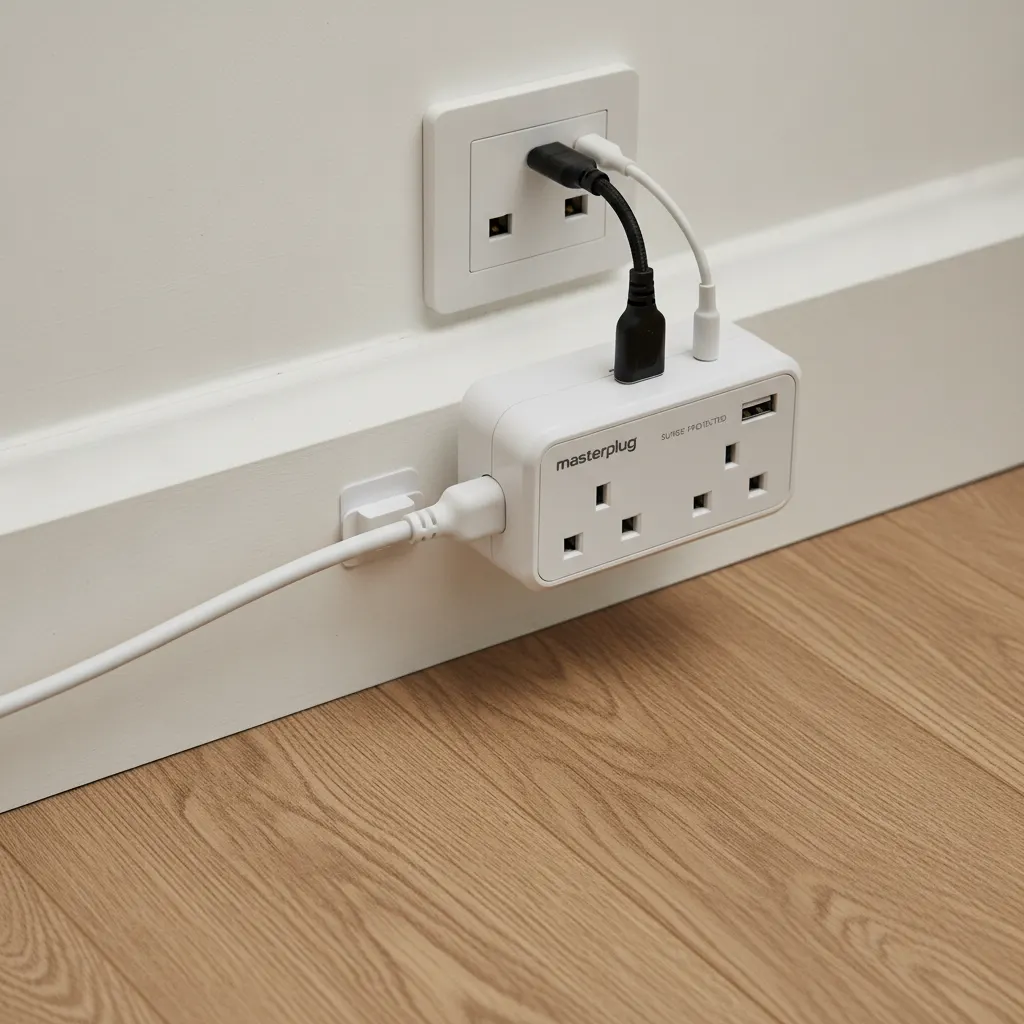
I don't use any extension lead I didn't buy from a brand with a name I can look up. Primarily: Masterplug, Belkin, and Anker. All have surge-protected multi-socket leads with individual switches, 13A fuses per socket, and overload protection. The Masterplug 4-socket surge-protected lead with USB ports is around £18–22 on Amazon. It's what I use in the living rooms.
Every lead I put out has a BS 1363 mark on it. I check the cable for damage on every turnover visual. I replace any lead that shows fraying, discolouration around the socket, or has been yanked at the cable. This is not paranoia — this is the minimum standard for something that's going to be used by strangers unsupervised.
What I put in each room
Bedrooms: One Anker 6-in-1 USB hub at the bedside, with USB-A and USB-C outputs, plus two mains sockets. Plugs into a single wall socket and gives them four charging points without looking industrial. I've tried cheaper hubs; they've all eventually burned out or gotten hot enough to worry about. Anker's been reliable across three properties for two years now.
Living room: One Masterplug 4-socket surge-protected lead, positioned on the media console near the TV. Guests need to charge phones while watching Netflix. This is not a niche use case. The lead is run along the skirting board with a cable clip — not taped down, not trailing across the floor — and plugged into the closest available socket.
Kitchen: One double socket near the worktop is usually enough, but I add a two-socket adaptor with USB-A if the property only has singles. Cost: about £6.
Desk/workspace: Three of my five properties have a desk or table that guests use as a workspace. Each one gets a Belkin surge-protected 6-socket lead with a 2m cable. Two metres is important — the wall socket is never right where you'd want it.
USB-C specifically
I had a guest in 2024 message me to ask if there was a USB-C plug anywhere in the flat. There wasn't. He'd brought a MacBook Air and his phone and both charged via USB-C, and the only charging leads out were USB-A. I drove twenty minutes and dropped one off. He left a 5-star review and mentioned it in the notes.
Lesson: every extension lead I now buy includes at least one USB-C port. This is not optional in 2026. USB-C is the charging standard. If you're still putting out USB-A only, you're already behind.
The cable management piece
An extension lead sitting in the middle of the floor is a trip hazard and it looks terrible. I run all leads along walls, behind furniture, or across the top of skirting boards with white plastic cable clips (about £4 for 100 from Amazon). The clips are removable without marking the paint if you use the right adhesive-backed ones — specifically the 3M removable clip strips, not the permanent ones.
One property had a fireplace alcove with sockets behind a chair. I ran the lead up the back wall, along the top of the alcove, and down the other side to a side table, all clipped and hidden. Took about forty minutes with a coffee break. A guest said the flat looked 'thoughtfully designed' in their review. I didn't mention the cable clips.
What guests actually do
They travel with their own cables. They don't travel with charging bricks or extension leads. They assume the property has what they need. If there's no accessible socket, they will message. If they don't message, they'll leave a passive note in the review. Either way, you've created friction you didn't need.
I had a guest — couple in their early 60s, lovely message afterwards — who asked for an extension lead because they each had a CPAP machine and there was only one socket near the beds. I now ask during the booking process (via my pre-arrival message) whether guests have any specific power or accessibility requirements. It takes fifteen seconds. It has saved me several awkward messages.
Cost per property
Fully kitted out — bedroom hub, living room lead, kitchen adaptor, desk lead, all cable-clipped and installed properly:
- Anker bedroom hub: £22
- Masterplug living room lead: £20
- Belkin desk lead: £24
- Kitchen adaptor: £6
- Cable clips: £4 (shared across install)
Total per property: around £76. One-off cost. Leads last 3–4 years with normal use. That's £19–25 per year per property, or roughly 5–7p per night at 60% occupancy. A fraction of the cost of one refund for a negative review.
My Brighton flat has had zero socket-related review comments since I did this. The seventeen reviews since the fix have included 'felt like a proper home', 'really well equipped', and, from someone who must have had a very specific previous experience: 'great charging options throughout.'
Ready to streamline your inventory?
Start managing your rental inventory smarter with automated stock tracking.
Start Free Trial