Furniture scratch and scuff repair between Airbnb turnovers: the kit I keep at every property
Hoststock Team
18 September 2026
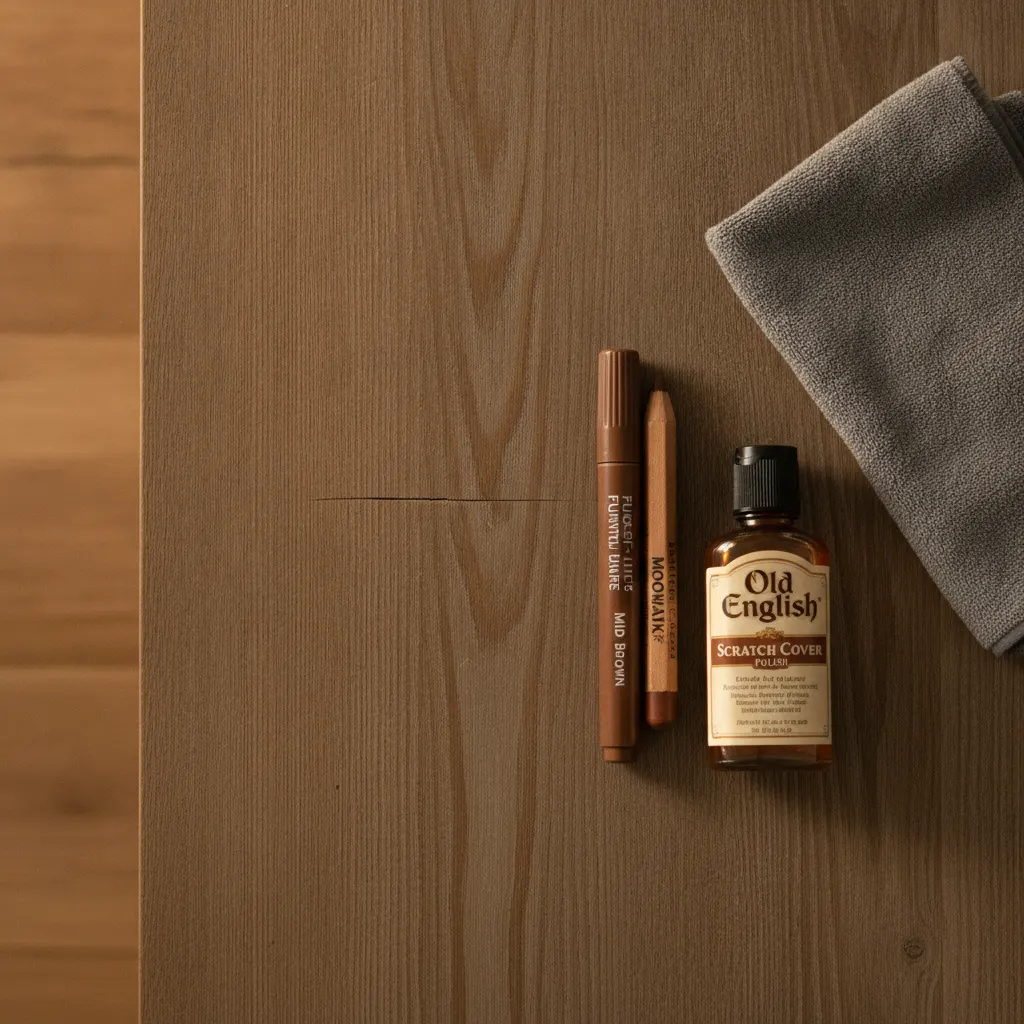
Let me be honest: I threw away perfectly decent furniture for the first two years of hosting because I didn't know you could fix it. A scratched pine coffee table at the Edinburgh flat — binned. A scuffed bedside table at Brighton — donated, which I later regretted because the replacement cost me £65 more. A dining chair with a gouge in the leg — replaced the whole set of four because I'd slightly lost the plot by that point.
All of these things could have been repaired. Not restored to showroom condition, but repaired enough that guests don't notice, don't comment, and don't take points off the listing score for 'accommodation quality'. Which is what matters.
I now keep a furniture touch-up kit at every property. Here's what's in it and why.
The scratch and scuff kit
The core of it is furniture touch-up markers. I use two brands: Furniture Clinic Touch Up Markers (available on Amazon and their own site) and a set of Mohawk Finishing Products Blend-Fil pencils for slightly deeper scratches. The Furniture Clinic markers are water-based, come in a set of eight wood tones from light pine to dark walnut, and are genuinely easy to use — you drag the marker along the scratch, let it dry for thirty seconds, buff it with a cloth. They cost about £12 for a set. I've had mine for over a year and they're still going.
The Mohawk pencils are wax-based and fill deeper scratches rather than just colouring them. You run the pencil along the scratch, buff with a cloth. They don't match perfectly — nothing does — but they take the visual impact of a scratch from 'eyesore' to 'barely noticeable'. A set of six is around £15.
White furniture is its own problem. White painted furniture gets scuffed rather than scratched, and a furniture marker in 'antique white' or 'off-white' is hit-and-miss for matching. What I use instead: Rustoleum Touch-Up paint pens in white. They dry quickly and the finish is close enough for a bedside table leg or a wardrobe edge. About £8 per pen. I keep one per property that has white furniture.
The other things in the kit
Beyond the markers and pencils, the kit has: a bottle of Old English Scratch Cover Polish (dark wood version — roughly £5 from most hardware shops or Amazon), a few sheets of fine sandpaper (240 grit and 400 grit) for anything that needs smoothing before you colour, and a pack of clean microfibre cloths.
The Old English Scratch Cover is one of those old products that sounds like a con but actually works reasonably well on dark-stained wood. Wipe it on, buff it off, it darkens shallow scratches and slightly evens the finish. For a quick pre-check-in pass on a dark wood dining table, it takes about two minutes and the result is noticeably better.
What can and can't be fixed
Scratches up to about 3–4mm deep: fixable. Surface-level scuffs on painted furniture: fixable. Discolouration from heat marks on a dining table: partially fixable with the right approach (there are specific heat mark removers, though results vary). Water ring marks on wood: sometimes fixable with a hairdryer and the Old English, sometimes not.
What's not fixable with a touch-up kit: anything structural. A crack in a table leg, a broken hinge that's failing, a wardrobe rail that's coming away from the wall. Those are actual repairs. I keep a handyman contact for each location for anything structural — I'm not going to DIY a wardrobe rail into a guest's chest of drawers.
And some things just need replacing. If a surface has thirty small scratches and the overall visual impression is 'battered', a marker pen isn't going to save it. I have a mental threshold: if I'm spending more than twenty minutes on touch-up repairs in one turnover, the item probably needs replacing within the next three months.
When I do the touch-up check
I don't do it every turnover. My cleaner isn't doing furniture touch-ups — that's not what I'm paying her for and it's not a reasonable expectation. What she does do is flag obvious new damage in her post-turnover message to me.
I do the touch-up round on my monthly property visit. Takes about thirty to forty minutes across a full flat: walk every room, get down to furniture level and look at legs and edges, hit anything significant with the marker, give the dining table a pass with the Old English. It's methodical and slightly meditative and I find I notice other small maintenance things at the same time — a loose handle, a blind cord that needs adjusting — that I'd miss on a flying visit.
Costs saved
Conservative estimate: I've avoided replacing about £600 of furniture in the past eighteen months by fixing things instead of binning them. A scratched IKEA Hemnes bedside table (RRP £80) that I'd have replaced is now repaired and fine. Two coffee tables, a wardrobe, a set of dining chairs — all still in use, all touched up. The kit costs me about £40 total and I haven't restocked it in fourteen months except replacing one marker.
None of this is perfect. Guests who get down on the floor and look at furniture legs closely enough to notice the touch-up repairs are presumably also the guests who leave detailed reviews. So far: no review has mentioned furniture condition negatively since I started doing this properly. I'll take that.
Ready to streamline your inventory?
Start managing your rental inventory smarter with automated stock tracking.
Start Free Trial