Heated towel rails in Airbnb bathrooms: electric vs plumbed and what I've fitted in four flats
Hoststock Team
13 August 2026
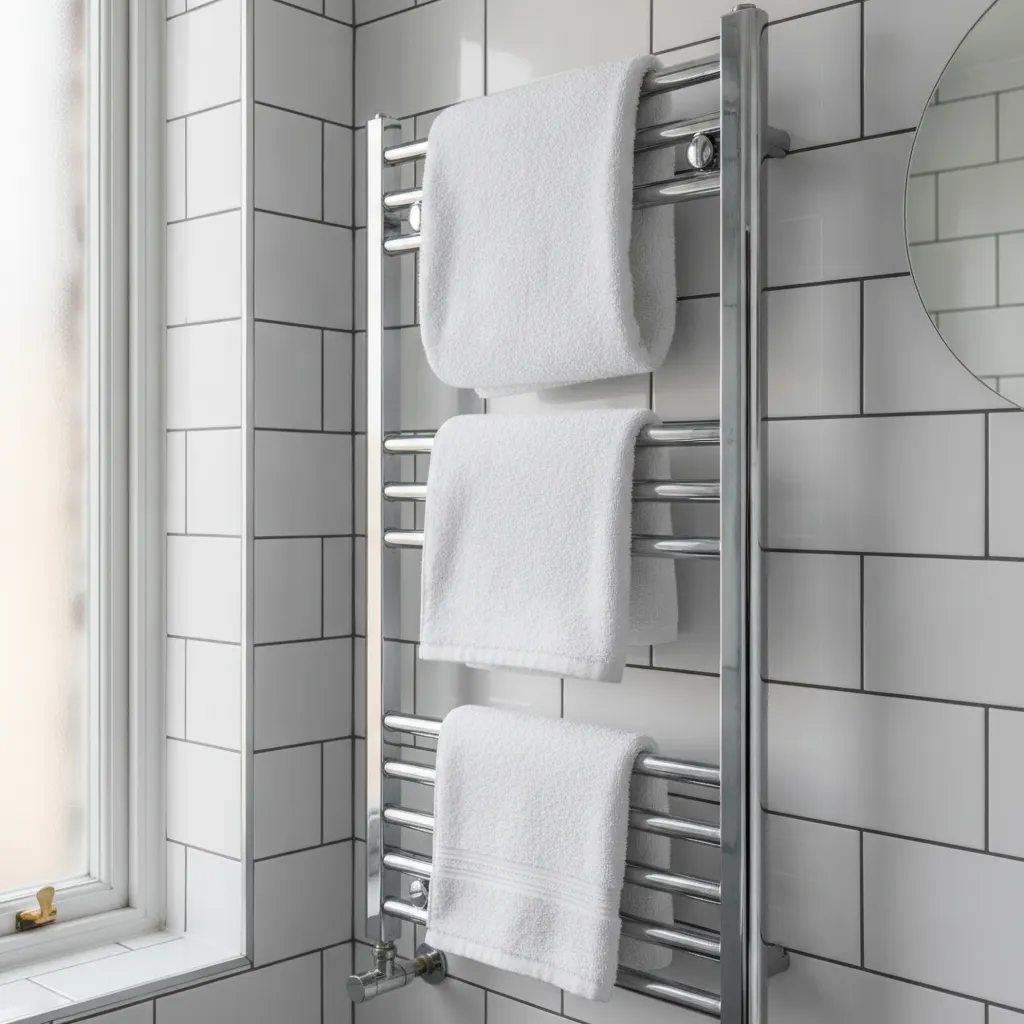
Three of my five Airbnb properties have electric heated towel rails. One has a plumbed rail on the central heating system. One has nothing and guests haven't mentioned it.
That last property is a first-floor flat in Brighton with south-facing windows and a bathroom that never really gets cold. The others — two Edinburgh flats, one Lake District barn — all needed something. And the difference between plumbed and electric, which sounds like a simple infrastructure question, turned out to matter quite a bit in practice.
Here's what I've installed, what I'd install differently, and why the wattage question is the thing most people don't think about until they have a guest complaining about cold towels in January.
Plumbed vs electric — the practical difference
A plumbed towel rail is connected to your central heating circuit. It runs when the heating is on and costs almost nothing extra to operate — the heat that would otherwise flow through a radiator is flowing through the towel rail instead. The downside: it only works when the heating is running. In a mild October, or during a summer booking when no guest is putting the heating on, the towel rail is cold.
An electric towel rail is independent of the central heating. It runs on a timer or manually, heats up in 20–30 minutes regardless of season, and can be left on a low overnight setting between turnovers to keep the bathroom from getting damp. The downside: it uses electricity, which costs money, and it requires installation by a qualified electrician because bathroom electrical work is notifiable under Part P building regulations in England and Wales. You can't just wire it yourself and call it done.
The Marchmont Edinburgh two-bed has a plumbed rail that predates my ownership. It works fine but goes cold in mild weather when guests don't use the central heating. I've thought about adding an electric element to it — dual-fuel rails exist — but haven't got around to it. The barn has a plumbed rail that works very well because the heating is on almost constantly from October through April. For the Edinburgh studio and the Brighton properties, I went electric.
Wattage — the question that actually matters
This is what most buying guides skip over or bury in a footnote. The wattage of your electric towel rail determines how warm it gets and how quickly. For a typical Airbnb bathroom — 4 to 8 square metres — you're looking at 60W to 150W being the sensible range.
60W is fine in a small, well-insulated bathroom. It won't heat the room but it'll keep towels warm. 100–120W is what I'd recommend for most STR bathrooms — it gets warm enough to take the chill off the room as well as dry towels, and it won't look alarming on an electricity bill. 150W and above starts to feel like a design choice as much as a practical one, and the running costs accumulate faster.
Running costs: a 100W electric towel rail running for eight hours a day costs roughly 35–40p per day at typical UK electricity rates. Over a month that's around £10–£12. For a busy Airbnb where the rail runs most days, that's a running cost you need to factor in. It's not huge, but it's real — and it adds up differently across five properties than it does in a single home.
I run mine on a 24-hour plug-in timer set to 6am to 10pm. That drops the daily running time and means the rail isn't running at full temperature overnight when no one is using it. A good few towel rail brands now include built-in programmable timers, which is cleaner than a plug-in timer and worth paying for if you're buying new.
IP ratings and bathroom zones
Any electrical fitting in a bathroom in the UK needs to meet IP (Ingress Protection) ratings appropriate to its zone. Briefly: the area directly above and around the bath or shower requires IP65 or higher. The general bathroom zone requires at least IP44. A towel rail on a wall away from the bath or shower typically needs IP44 minimum.
This matters because cheap imports sometimes don't meet UK bathroom IP requirements. Buy from a UK retailer with proper documentation and ask your electrician to confirm the rating before installation. They'll tell you — it's basic professional practice. If the installer doesn't check or doesn't know, find a different electrician.
Brands I've used
Towelrads is the brand I keep coming back to. UK company, reasonable prices — the Senator range sits between £80 and £180 depending on size — and the build quality has been solid across three installations over three years. No peeling chrome, no element failures, good timer options on some models. Their phone support when I had a query about the element on an older model was actually useful, which I can't say for every supplier in the white goods space.
JIS Europe I used once in the Edinburgh studio. More expensive — around £200 for the model I chose — and I can't honestly say it's noticeably better than the Towelrads in the same property. It looks marginally more premium. The chrome is slightly deeper. A guest once commented that the bathroom looked "nice" but I can't attribute that to the towel rail specifically.
Budget options from Amazon third-party sellers: I tried one. It was £55. The element stopped producing heat at month 11. The returns process was an adventure I won't repeat. For guest properties, buy from a retailer that has an actual physical returns process. The £55 saving is not worth the month-11 conversation with your cleaner about the cold bathroom.
Installation costs and what to expect
Electric towel rail installation is bathroom electrical work and requires a Part P registered electrician in England and Wales. Don't let anyone tell you otherwise, and don't try to DIY it in a rental property.
I've paid between £95 and £175 for installation across my three electric rails, depending on the property and how close the existing circuit was to where I needed the new fitting. One Edinburgh job was straightforward — the sparks could spur off an existing circuit near the bathroom with minimal cable run. One Brighton job required running cable across a ceiling and cost more.
Get three quotes. In all three cases I found a 30–40% price spread between the cheapest and most expensive quote, for what was essentially the same job.
Whether guests notice
Yes, occasionally. Three mentions in reviews across three years: two positive ("warm towels, nice touch"), one neutral ("bathroom rail was on when we arrived which was thoughtful"). Nobody has complained about a cold towel rail in a property that has one, which is the real metric.
What I notice is the absence problem. The one Edinburgh property I manage for a friend — no towel rail at all, towels draped over a standard bathroom radiator — gets more "bathroom felt damp" mentions in feedback than my own properties with dedicated rails. Correlation is not causation, but the difference is consistent enough that I've mentioned it to the owner twice.
If you're fitting out a new property or doing a bathroom refresh, put one in. The all-in cost — rail plus installation — sits between £175 and £350 for most setups. That's less than a single bad review costs in lost future bookings.
Ready to streamline your inventory?
Start managing your rental inventory smarter with automated stock tracking.
Start Free Trial