Airbnb house rules: I rebuilt mine after year two — what stayed, what I cut, and what I wish I'd set on day one
Hoststock Team
21 July 2026
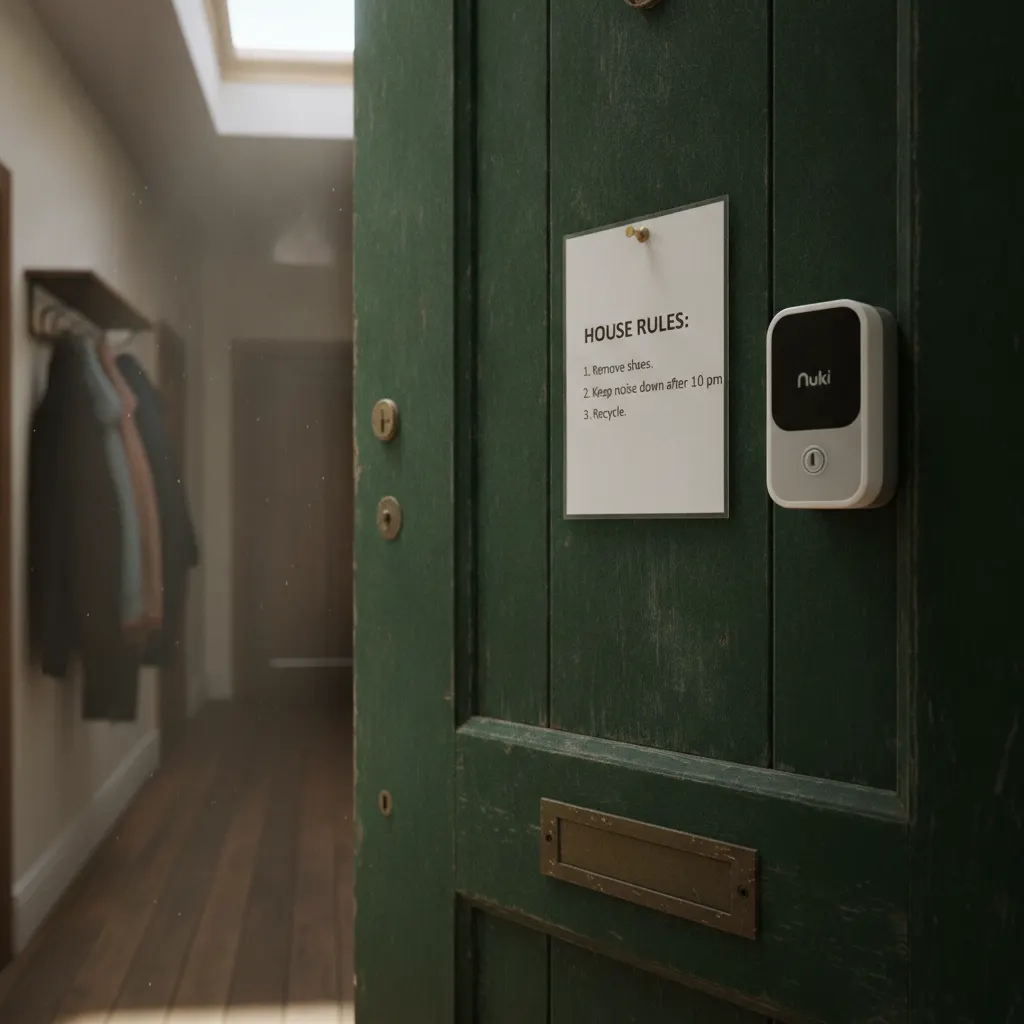
My first set of Airbnb house rules was eight bullet points and the energy of a warning label. No parties. No smoking. Respect the neighbours. Reasonable, I thought. Also almost completely useless when anything actually went wrong.
Year one was fine. Year two was not.
I had a group book my Edinburgh flat as "friends visiting for a weekend." Eight of them. What arrived was a stag do. Nothing catastrophic — nobody ended up in A&E, the neighbours only messaged twice — but the flat needed two extra hours of cleaning, I found a half-eaten pizza behind the sofa, and someone had used one of my decent bath towels to clean what I assume were their shoes. The stag group gave me four stars. A neighbour sent me a message I won't repeat here.
That was the moment I sat down and actually thought about what house rules are for.
Rules are filters, not contracts
I had this completely backwards. I'd been writing rules as though they'd protect me legally if something went wrong. They don't — not in any meaningful way. Airbnb house rules are terms guests acknowledge when they book. They're not enforceable documents. The actual protection is your photos, your documentation, and AirCover. What the rules actually do is shape who decides to book in the first place.
A stag group doesn't read house rules. They tap the book button. But a specific, serious-sounding rules list does shift the mix of guests who complete the booking. Not dramatically. But enough to matter over time.
I'd assumed short rules meant more bookings. And yes — sometimes. But short rules also meant a stag do in my Edinburgh flat.
Five things I added
Maximum occupancy, stated twice
Not just in the listing configuration where it's easy to miss. In the rules themselves, in plain English. "Maximum six guests. If more people are present than listed on the booking, I'll request you leave and the booking may be cancelled." I've never had to enforce it. But since adding that line, two groups have messaged before check-in asking whether a thirteenth or fourteenth person could join. Both times I said no. Both times they said fine. Zero issues at check-in either time.
The people who ask are the people who'll respect a boundary. That's also information about the people who don't ask and just turn up.
No parties or events — with a definition attached
Airbnb has their own community disturbance policy and prohibits open-invite events at the platform level. But their wording has enough wiggle room that twelve people calling it a birthday dinner doesn't technically qualify as a party. My rules now say: no gatherings including people not listed on the booking. That's it. No ambiguity about what counts as a party. I've had no arguments about it because the framing isn't about party definitions — it's about who's physically allowed in the flat.
Check-out at 10am. Not "by 11am-ish."
For eight months I had "please check out by 11am" in the rules. Guests read this as 11am being the target. My cleaner starts at 11am. Three times she arrived to find guests still in bed. I changed it to 10am, backed it up in the checkout message sent the night before, and have had one late checkout since. One.
"By" doesn't help. "Check-out is 10am" is cleaner than "please try to check out by 11am." I genuinely don't know why it took me eight months to figure that out.
No smoking — including vaping
Had "no smoking" from day one. Added vaping after my cleaner flagged a smell in my Lake District cottage she couldn't quite place. Not cigarettes. Updated the rule. No repeat of it since. Obvious in hindsight, but most things about running short-term lets are obvious in hindsight.
Quiet hours from 10pm to 8am
Not original. Not clever. But it needs to be there. My Edinburgh flat transmits noise efficiently and the neighbours notice. Stating quiet hours means I have standing when I follow up with a guest about noise. Without it, any message I send is just opinion. With it, it's a rule they agreed to.
Two things I deleted
No shoes inside
Four separate guests messaged before check-in asking about this rule. Where should outdoor shoes go? Should they bring slippers? Is there a shoe rack? Three of those four were long-stay bookings — four nights or more — which are exactly the bookings I most want. The friction was completely self-inflicted.
I removed it. No carpet problems since. The guests who'll ruin your carpet with outdoor shoes aren't reading to the end of your house rules anyway.
"Please leave the property as you found it"
Completely meaningless. I kept it for a full year before I noticed it did nothing. What does "as you found it" even mean? Dishes done? Towels hung up? Furniture repositioned? Fridge cleared?
I replaced it with specific checkout instructions: dishes in the dishwasher, used towels in the bath, food out of the fridge. Those live in the checkout message now, not in the rules. Rules filter who books. Instructions shape behaviour. Different jobs.
The rule I nearly added that would have cost me good guests
For about six months I was going to add a £50 administration fee for early check-in or late checkout arranged outside the standard window. I'd seen it on other listings. Seemed fair.
A host I know in Brighton — runs ten properties, been at it since 2015 — talked me out of it. Corporate travellers message about early check-in, she told me. Not to take advantage. Because they're on a schedule. Those guests are usually the ones who leave five-star reviews and cause no problems. A penalty in the house rules signals you're suspicious of them before they've done anything wrong.
The better approach: say yes when the timing works, no when it doesn't, and charge for it directly when it requires a cleaner to come earlier. Don't put a fee in the rules. You'll filter out exactly the guests you want to keep.
I've said yes to early check-in about thirty times in the last two years. Charged for it four times when it needed a dedicated cleaner visit. The other twenty-six were just timing that worked.
Platform rules that sit above yours
Some things in your booking page aren't rules you write — they're enforced by Airbnb at the platform level regardless of what you put in the free-text field. Their community disturbance policy prohibits open-invite events across all listings. Their non-discrimination policies apply to all hosts. Certain smoking, pet, and age-related settings flow through the listing configuration rather than the rules text.
If you write a house rule that conflicts with a platform policy, the platform wins. And you don't need to duplicate the platform rules in your text — doing so adds no protection and just makes your list longer.
How long should the rules actually be?
Mine have been three different lengths: eight lines at the start, nineteen lines during my post-stag-do paranoid period, eleven lines now.
The nineteen-line version included: no filming for commercial purposes, no illegal activity, no additional guests under any circumstances, no loud music, no gatherings of any kind including family dinners, minimum guest age of 25, late checkout by prior arrangement only with potential fee applicable. All of it written in the immediate aftermath of the Edinburgh incident.
Booking pace dropped slightly. Can't say for certain it was causal — might have been seasonal — but it was noticeable. A host who manages eight flats in Brighton told me something that stuck: a very long rules list puts off the careful, organised guests who actually read it and think "this person is going to be a nightmare." The guests who'll actually cause problems usually stop reading at line three.
So I cut back to eleven. Specific where specificity matters. Silent where silence serves me better.
What the rules can't fix
The stag do would have happened with almost any set of rules I could have written. Guests who damage or disrespect a property aren't deterred by text they scrolled past to hit the book button.
What rules give you is standing in a dispute. They tell Airbnb's support team what the guest agreed to. They filter the guests who read before booking. They reduce the "I didn't know" argument from guests who'd otherwise use it.
But the bigger levers are elsewhere. Good photos — not distorted by a wide-angle lens, not staged with furniture you've since replaced — cut expectation mismatches more than any rule. A check-in message that's specific about the flat and the area sets the tone before anyone arrives. And checking a guest's profile and message history before you confirm a borderline booking does more work than fifty house rules.
I look at every booking now before I confirm. Large group, very short stay, someone with no reviews, a profile that was created last week — I message first. "Quick question — what brings you to Edinburgh this weekend?" You learn a lot from the answer. And even when I can't see a flag, I send a welcome message within the first hour on confirmed bookings. It changes things. You go from being a faceless property to being a person they've spoken to. Most people treat a person differently from a property.
My eleven rules are the filter. The messages are the relationship. The photos are the expectation management. It took me two years and one stag do to understand which job each of them actually does.
Ready to streamline your inventory?
Start managing your rental inventory smarter with automated stock tracking.
Start Free Trial