Irons and ironing boards for Airbnb: Philips vs Tefal and the board I've had for four seasons
Hoststock Team
11 August 2026
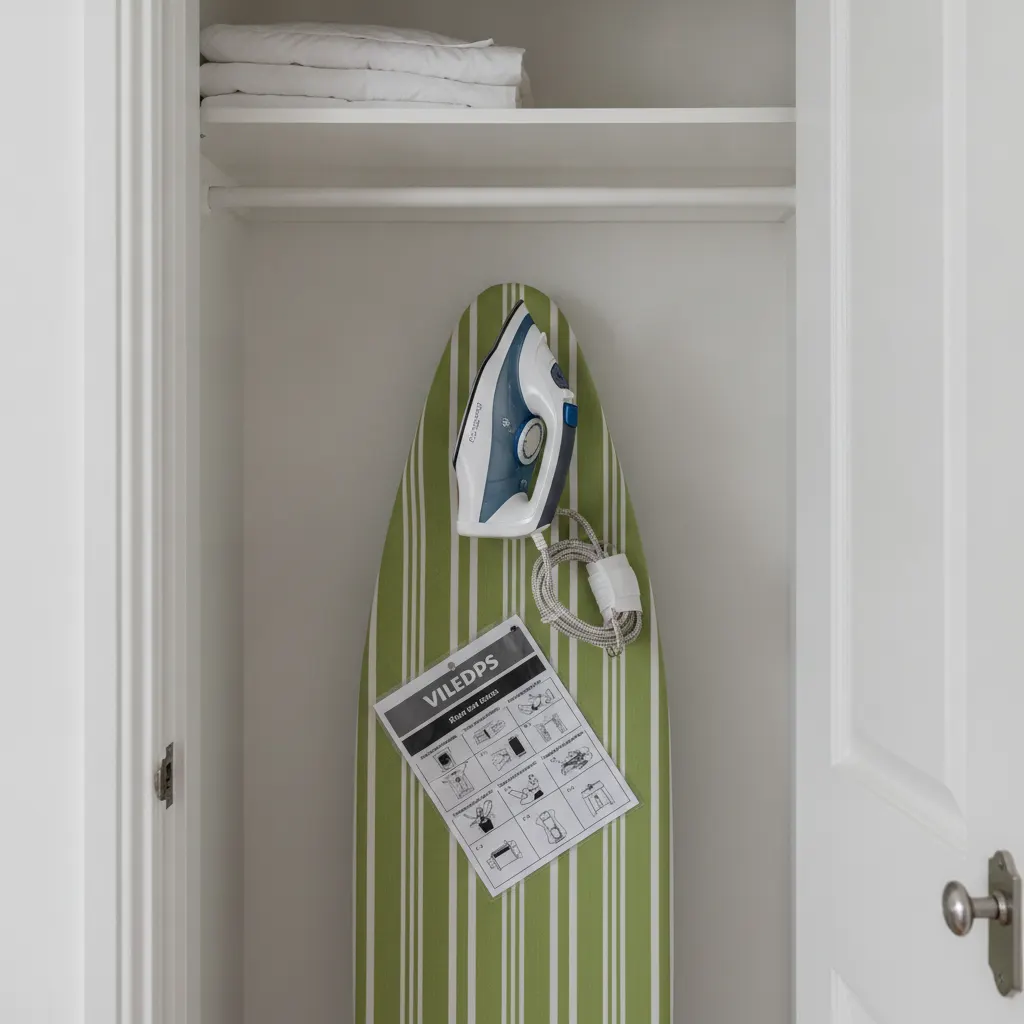
An iron is one of those things you don't think much about until a guest messages you about it at 7am on a Sunday. Then you think about it quite a lot.
I've bought seven irons across five properties over four years of Airbnb hosting. Three of them are no longer functional. One was left on a linen press by a guest and scorched the shelf. One had the cord yanked out at an angle until the connection failed. One the soleplate scratched so badly it dragged on fabric. The other four are still going, though one of them makes a sound like it contains a small trapped animal when it produces steam.
Here's what I've learned.
Do you have to provide an iron?
No. Airbnb doesn't list an iron as a mandatory amenity. But guests expect one. Not every guest — plenty of people on a two-night trip are fine without — but enough that the absence gets mentioned in reviews if you're hosting business travellers or longer stays. I have one listed property popular with professionals travelling to Brighton for work. The iron gets mentioned positively in reviews when it's there. Short answer: provide one. You can add it to your Airbnb amenities list, which helps with search. The cost of a decent iron is £35–£60. The cost of a single cancelled booking over a bad review is considerably more.
Steam iron or steam generator?
Standard steam irons for guest properties. Always. Steam generators are excellent for commercial pressing but they're bulky, the water tanks need filling and emptying, and the setup is complicated enough that three-night guests simply won't bother. I tried a Philips steam generator in the Edinburgh two-bed. Guests mostly didn't use it and one left the water tank full for three weeks over winter. I switched back to a standard steam iron.
Travel irons are tempting — compact, cheap, easy to store. They're also weak. The steam pressure isn't sufficient for cotton bedding or heavier fabrics, and guests who need an iron for work shirts are the guests most likely to notice. I had one in the Brighton one-bed for a while. A business guest left a review mentioning the iron "struggled with linen." Replaced it with a full-size Philips within the week.
Which brand
Philips and Tefal are the two brands I keep coming back to. Not because they're dramatically better than everything else, but because the parts are available, the service network exists, and the price-to-reliability ratio is reasonable.
The Philips DST3020/20 — around £35 at most retailers — is what I put in three of my five properties and what I've reordered twice. It's not fancy. The soleplate is smooth enough not to snag fabrics, the steam output is consistent, and the cord is long enough to reach a typical bedroom outlet without an extension. The one that made the steam-animal noise was a Philips that had been filled with tap water in a hard water area for eighteen months without descaling. My fault entirely.
Tefal is where I go when I want to spend slightly more. The Tefal Express Steam line — around £50–£55 — has higher steam output and an anti-scale system that genuinely extends soleplate life in hard water areas. Brighton has notoriously hard water. The Tefal in my Brighton seafront flat has lasted three years without the soleplate degrading visibly. Worth the extra £15.
Rowenta I tried once. Excellent quality, but when a guest broke it I couldn't justify the replacement cost ongoing. I'm not running a boutique hotel. Rowenta irons belong in owner-occupied homes where they're treated with care.
Russell Hobbs: budget option I've used twice. One lasted eighteen months without issues. One failed at month seven. Not consistent enough for me to recommend as a default.
What breaks and how to slow it down
Soleplates scratch if guests iron rough surfaces or leave the iron face-down on fabric when it's hot. I now include a laminated card on the ironing board: Iron face-up on the stand when not in use. Don't iron over zips or buttons. Descale quarterly using the self-clean cycle or white vinegar. That last instruction is aspirational — guests won't descale — but it means my cleaners do it quarterly and the irons last noticeably longer.
Cords fail when irons are wrapped by yanking rather than coiling. I store irons with the cord loosely coiled, not wrapped tight around the base. I also switched to irons with a 360-degree swivel on the cord connection — the Tefal Express range has this — which reduces stress on the cord entry point. It's a small thing but I've had two irons fail exactly at the cord entry and both were models without a swivel.
The steam trigger takes regular abuse. I've had two irons fail at the trigger — the button mechanism simply wore out. Both were budget models. The Philips and Tefal mid-range have held up better there.
Ironing boards
Four boards across five properties. Three are Vileda. One is a Brabantia.
The Brabantia is in the Edinburgh flat and it's four years old. Frame and leg mechanism are solid. The cover has been replaced twice — the original faded and the second was damaged by a guest who left a hot iron on it — but the board itself is fine. Brabantia boards are around £80–£100. The build quality is genuinely better: legs don't wobble, board surface is thick enough to iron on properly, cover clips are robust.
The Vileda boards in the other three properties cost around £30–£40 each. The padding compresses over two to three years of use and the cover wears faster. But at that price difference you can replace a Vileda twice for the cost of one Brabantia and end up roughly equivalent. For most properties I buy Vileda. Replace them every two to three years. Covers every eighteen months.
One thing I changed: I used to hang ironing boards on door-mounted hooks. One fell on a guest. Nothing dramatic — it fell outward when the door opened and caught the guest on the arm. But we had an uncomfortable conversation and I switched to under-bed storage and wall-mounted horizontal brackets. Either is fine. Hanging full-size boards on doors is just asking for the incident I had.
Where to store everything
Hallway cupboard or wardrobe if the property has one. Not under the bed — guests don't look there. Not behind the bedroom door.
I put it in the house guide: Iron and ironing board are in the hallway cupboard. Sounds obvious. But I had three guest messages asking about the iron location before I added that line. After: zero.
The summary
Standard steam iron, Philips or Tefal mid-range, £35–£55. Replace when the soleplate or steam trigger fails rather than attempting repair. Descale quarterly during the turnover clean. Vileda ironing board for most properties. Brabantia if you're fitting out somewhere higher-end and want a board that won't need replacing for a decade.
Don't go too cheap. A £15 iron from a supermarket will last six months in a guest property and cost you the same money over three years while generating complaints. Don't go Rowenta unless you're running a luxury property where the price point is genuinely justified by your nightly rate and your guest profile.
And tell guests where the iron is. Twice — once in the listing amenities and once in the house guide. The number of "is there an iron?" messages I used to get was almost exactly proportional to how clearly I'd listed it. Which, initially, was not clearly at all.
Ready to streamline your inventory?
Start managing your rental inventory smarter with automated stock tracking.
Start Free Trial