Airbnb mattress topper: I added them to three flats and tracked what happened to review scores
Hoststock Team
31 August 2026
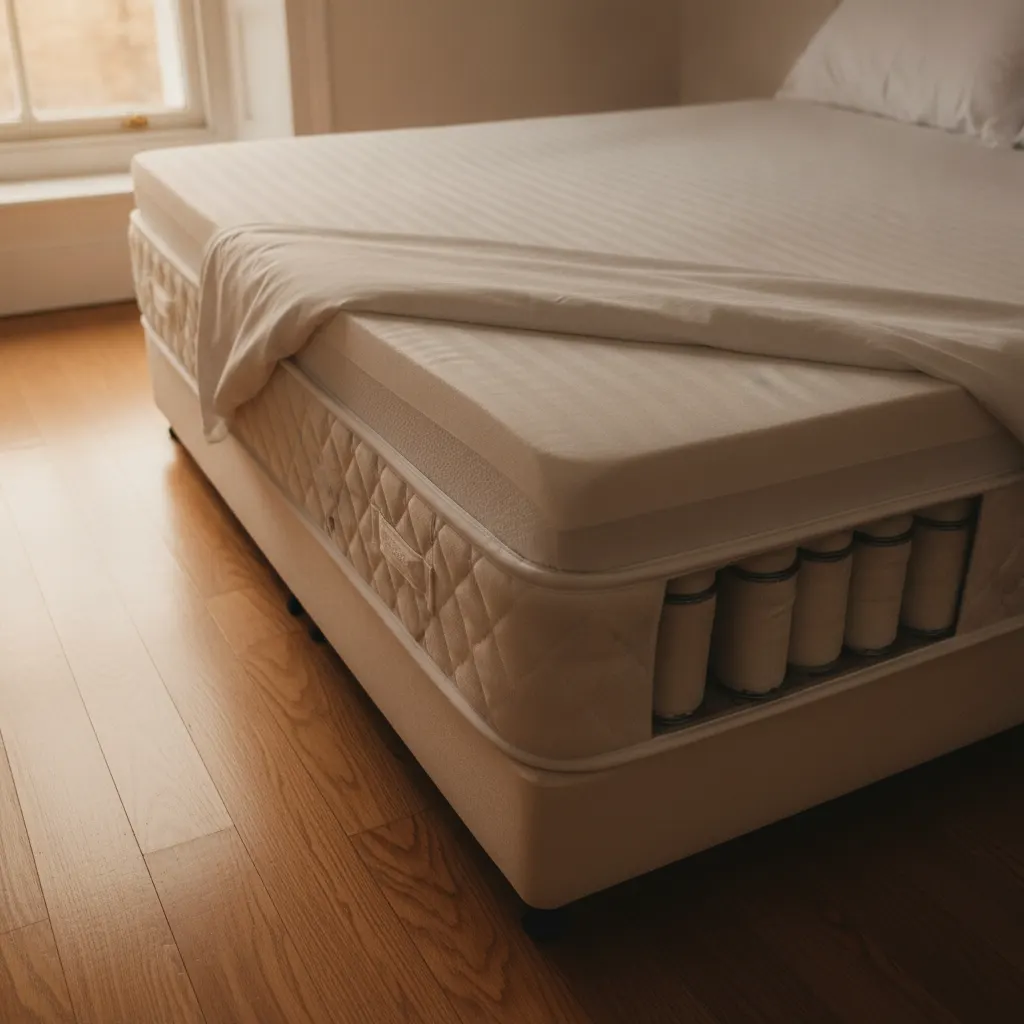
A decent mattress doesn't automatically need a topper
I spent two years assuming mattress toppers were a no-brainer upgrade. Add a 5cm memory foam layer, guests sleep better, reviews improve. It's the kind of logic that sounds reasonable at 11pm when you're reading hosting forums and second-guessing every buying decision you've ever made.
Then I actually tested it. Properly. Three flats, six months, every comfort-related review phrase tracked in a spreadsheet. And the results were — how to put this — more complicated than I'd like.
What I added and where
Last October I fitted toppers to three of my five properties. Two Edinburgh flats and the Brighton ground-floor apartment. The Lake District barn and my other Edinburgh flat stayed as controls — same mattresses, nothing added.
The toppers: a 5cm memory foam from Dunelm (around £55 for a king) in the Edinburgh one-beds, and a 7.5cm hybrid foam from Emma (£109 with their perpetual discount code) in the Brighton double. I chose those based on the mattresses underneath. The Edinburgh ones are Silentnight Miracoil — firm, supportive, fine for most guests, but a bit unforgiving if you're used to something squishier. The Brighton mattress is a pocket spring thing from IKEA that I bought in year one and always felt slightly guilty about.
Fitted them myself on a Sunday afternoon. The Emma one took about fifteen minutes and weighs as much as a small sofa. The Dunelm ones were easier. Strapped to the mattress at the corners — important, that, because if a topper migrates in the night and bunches under a sleeping guest, you will hear about it in the review.
What happened to the reviews
Six months later. Here's what I found.
Edinburgh flat one: no change in comfort mentions. The Silentnight was already doing fine. Three guests mentioned the bed specifically, all positive, and that was consistent before and after the topper went on. If anything, I had one slightly negative comment about the mattress feeling "too soft now" — which I hadn't expected. Pocket sprung + memory foam can land in that odd territory where it feels neither bouncy nor properly firm.
Edinburgh flat two: same story. No meaningful shift. The Miracoil underneath is doing the heavy lifting and the topper just... sits there. I'm not sure it's doing anything except adding a washing problem (more on that below).
Brighton: this one moved. The IKEA pocket spring was the weak link, and guests had periodically mentioned the bed being "comfortable but not exceptional" — which, if you know Airbnb guests, is code for "the bed was fine but I'm docking half a star." After the Emma topper went on, two guests in four months specifically mentioned how well they slept. One said "the bed was genuinely the best sleep I've had in an Airbnb." I'll take it.
The washing problem nobody mentions
Toppers need covers. Obviously. But what nobody tells you when you're buying them is that topper covers — especially the memory foam ones — are a nightmare to wash in a domestic machine if you've got anything under 10kg drum capacity.
My Edinburgh machines are both 8kg. The Emma topper cover fills the drum completely and comes out still slightly damp after a 60°C cycle. I now send them to the laundry service on the Leith Walk quarterly rather than trying to do them in-house. That adds about £9 per topper per quarter. You have to factor that into the calculation.
The Dunelm covers are thinner and wash fine. But the actual topper — the foam itself — can't go in a machine at all. If something spills through the cover onto the foam, you're spot-cleaning and hoping. I had one incident in March where a guest spilled something (wine, I think, based on the colour) and the topper had to come out. I dried it over a heated rail for two days and it's been fine since, but it was a moment.
If you're going to add toppers, protect them properly. The waterproof cover on top is non-negotiable. I use the John Lewis waterproof quilted ones — about £22 for a king — and then a standard fitted sheet over that. Guests don't notice the extra layer, and it's saved me twice.
Which mattresses actually benefit
Here's what I've concluded after the test, and it's less exciting than the hosting forums would have you believe: toppers make a meaningful difference only if your underlying mattress has a problem. Either it's too firm, or it's starting to sag in the middle, or it's genuinely just a bit rubbish.
If you've got a decent medium-firm pocket spring at 1000 count or above — a Silentnight, a Hypnos, a John Lewis own-brand — the topper probably doesn't move the needle. The mattress is already doing the job.
If you've got a flat foam mattress, or a budget pocket spring that's been in the flat for two or three years, or — worst case — a sprung interior mattress from before 2019, then yes. A 5–7.5cm topper is probably the fastest upgrade you can make to that room's comfort score without buying a whole new mattress. Which, at £300–600 for something reasonable, is a much bigger spend.
My current rule: I'll replace a mattress before I add a topper. But if a mattress is borderline — decent enough to keep but not great — a topper is a £55–120 experiment worth running. Just track the reviews properly rather than assuming it helped.
What I'd buy now
For a 2-bed property turning over twice a week: I'd avoid memory foam for the durability and washing reasons. A latex topper lasts longer, doesn't compress as badly with use, and the covers wash more easily. The downside is cost — expect to pay £90–140 for a king. But across 100+ turnovers it probably makes more sense than replacing a memory foam topper every two years.
For the budget end: the Dunelm 5cm memory foam has held up well across eight months and several dozen turnovers. The cover is replaceable. It's genuinely fine. I'd rather have that than nothing on a struggling mattress.
For any property where the mattress is genuinely good: save the money. The topper won't show up in reviews if the bed is already comfortable. Spend it on blackout blinds or a better pillow set — both of which affect review scores in ways you can actually track.
The bottom line on comfort reviews
I track every comfort mention across all five properties in a simple notes file — guest name, month, the phrase they used, whether it was positive or negative. It's about as glamorous as it sounds. But after two years of doing it I know exactly which rooms have comfort problems and which don't, and I can see whether a change I've made is actually shifting anything.
For mattress toppers: one improvement (Brighton), two no-changes (both Edinburgh), two untested (the controls). That's not a blanket endorsement of toppers as a category. It's a case for testing on the specific property where the mattress is the weak point.
And if you're not tracking comfort reviews separately? Start. It's the only way to know whether the £109 you just spent on an Emma topper actually did anything.
Ready to streamline your inventory?
Start managing your rental inventory smarter with automated stock tracking.
Start Free Trial