Outdoor BBQs for UK Airbnbs: gas vs charcoal, what breaks first, and the Weber I've kept for three seasons
Hoststock Team
16 August 2026
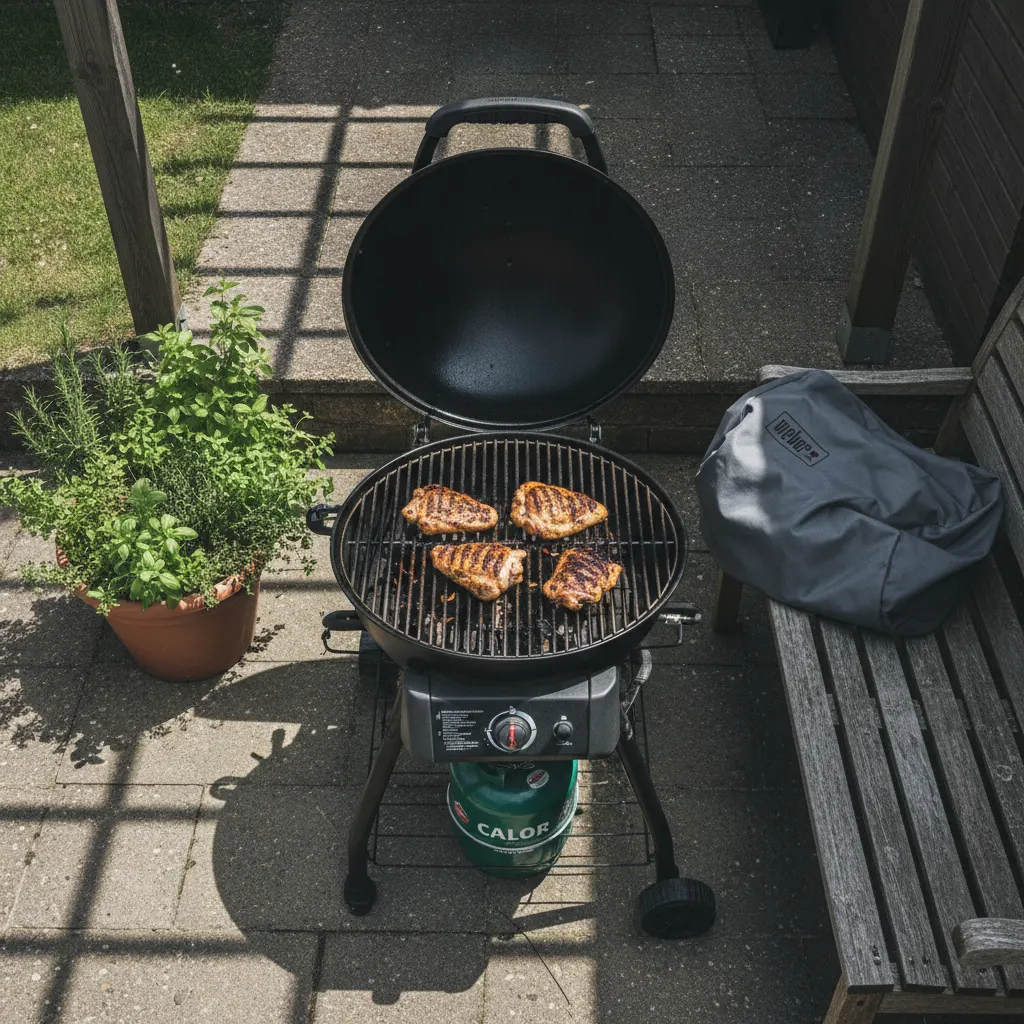
Two of my five properties have outdoor space. The Brighton seafront flat has a small south-facing patio. The Peak District barn has a garden. Both have had BBQs. Not always the same BBQs — the first rounds of purchases were educational in ways I could have done without.
Here's what I've learned from six years of outdoor cooking equipment across two very different property types, including the budget BBQ that collapsed with a guest's dinner on it, and the one I've now had for three seasons without a problem.
Gas vs charcoal for guest properties
This debate feels straightforward until you actually have guests using your BBQ. Then it gets more nuanced.
Charcoal is cheaper to buy initially. A basic kettle grill costs £40–£80. But charcoal itself costs around £8–£12 per bag, guests go through it faster than you'd expect, ash disposal is messy and relies on guests being organised enough to wait for ash to cool before moving it, and — most importantly — a meaningful percentage of guests under 40 have never started a charcoal fire and won't start now. I've had three "the BBQ didn't work" messages that turned out to be guests who couldn't light the charcoal. One used a fire extinguisher on it, which they hadn't mentioned until I found the extinguisher discharged at the next turnover.
Gas is more expensive to buy — a decent gas BBQ starts around £150–£180 for a two-burner, and you'll want to spend closer to £250–£300 for anything that will survive four or five seasons of serious guest use. You also need to either provide a full gas canister at the start of each booking or have a way for guests to buy one locally. But the reliability of the guest experience is dramatically better. Turn a knob, press a button, the burners light. I had zero "the BBQ didn't work" messages in two seasons after switching the Brighton patio from charcoal to gas.
For my purposes — properties where guests are paying £130–£180 a night and expect things to work — gas wins. If you're running a budget glamping operation where fire-lighting is part of the experience, charcoal is fine. For a city patio or a rural holiday let where guests want ease, gas.
The BBQ that collapsed
I should explain the collapse. First year, Brighton patio. I bought a folding charcoal BBQ from a supermarket for £28. It was on sale. It had a three-year guarantee printed on the box. At the end of a guest's third evening, the left leg folded under load — the hinge pin had worked loose — and the grill tipped. Burger, kebabs, and most of a bag of charcoal went onto the patio.
Nobody was hurt. The guest was not impressed. The patio needed professional cleaning. The BBQ went in the bin. Total cost of the £28 saving: approximately £165 in cleaning and a four-star review with a specific mention of the "unsafe barbecue."
Don't buy cheap outdoor cooking equipment for guest properties. I realise this is obvious in retrospect. I'm including it because it was not obvious to me in year one and I suspect I'm not alone in that.
What I use now
Brighton patio: Weber Q1200 gas BBQ. Around £200–£220 at most garden retailers. Two-burner in the sense that it has one burner running across a wider surface area — not a double burner with a central divider — which means no cold spots. Cast iron grill plate, enamelled lid. I've had it three seasons. The grill plate has discoloured, which is normal, and one of the burner cover brackets needs retightening every spring, which takes thirty seconds. Otherwise unchanged. Guests use it in the summer months — April through October, roughly — and I cover it with a fitted Weber cover (around £35) between bookings. No rust.
The barn: Weber Master-Touch 57cm charcoal kettle. Around £180. I went charcoal here because the barn attracts a specific type of guest — older, often couples or groups doing weekend escapes — who tend to know how to use a charcoal grill and who asked about it on more than one pre-booking message. The Friston outdoor area is also large enough that ash management isn't the problem it would be on a small urban patio. And the rural location means there's no neighbour complaint risk from charcoal smoke the way there might be in Brighton.
Three seasons with the Master-Touch. The ash catcher has been replaced once — the original one cracked in frost — Weber sell it as a spare part for around £14. The kettle lid has a chip from where it was knocked over in wind before I fitted a ground anchor. Otherwise it's exactly as it was.
What breaks on gas BBQs
The igniter. Almost always. Piezo igniter buttons on gas BBQs are generally the first component to become unreliable, particularly if the unit lives outside in UK weather year-round. I now include a box of long-reach gas matches in the BBQ accessories — the type designed for lighting candles or gas stoves — and a note in the welcome instructions explaining that if the igniter doesn't spark on the first click, use the matches through the side opening. Every guest has managed with this. No "BBQ won't start" messages since I added the matches.
Grill grates develop surface rust if they're not cleaned and oiled after use. I clean the Weber Q grates at every turnover — which means my cleaner does it, which I specified in the cleaning checklist — and give them a light wipe with vegetable oil before covering. This takes about four minutes and has prevented the surface degradation I saw on the previous BBQ I owned.
Gas regulators occasionally fail or need replacing. I keep a spare in the barn's garage. At the Brighton patio, which uses a smaller Calor patio gas canister, I swap to a full canister at the start of each summer and add a half-price new canister in July. Guests have never run out mid-cook.
The listing and insurance angle
Both BBQs are listed as amenities in my Airbnb listing — outdoor grill, outdoor space. That's worth doing. It's searchable, and it helps the property rank in filters for guests who specifically want BBQ facilities. For summer Brighton bookings in particular, it's come up in pre-booking questions frequently enough that I know it's influencing decisions.
On insurance: check your STR policy covers BBQ use. Mine does, but I specifically asked when I renewed. Most STR-specific insurance products in the UK cover standard outdoor cooking equipment as long as it's maintained in safe working order, but the wording varies. Don't assume.
And put in the house rules — or at least the outdoor space section of the guide — that the BBQ must not be moved inside under any circumstances, that ash (if charcoal) must be fully cooled before disposal in the metal bin provided, and that guests should check for gas leaks by testing connections with soapy water before lighting. I added that last one after reading a report about STR gas incidents. I don't think my guests are careless. I think clear instructions prevent accidents regardless of care levels.
The one property where I wouldn't bother
The Edinburgh flats don't have outdoor space. But I'd add this: even if they did, I'd think carefully before putting a gas BBQ in an Edinburgh city-centre courtyard shared with other tenants. Charcoal smoke in an enclosed space, gas canister storage in a flat with limited outdoor storage, the communal politics of who's using the outdoor area — it's a different calculation from a private garden or a dedicated patio. Know your outdoor space before assuming a BBQ is an obvious amenity.
In Brighton and the Peak District, where the outdoor spaces are private and there's room, it's been a straightforward positive. Three seasons, no serious incidents since the year one collapse, and regular positive mentions in reviews of properties with outdoor space. Worth doing. Buy properly.
Ready to streamline your inventory?
Start managing your rental inventory smarter with automated stock tracking.
Start Free Trial