UK self-assessment for Airbnb income: what I put on my January return and the receipts my accountant flagged
Hoststock Team
3 September 2026
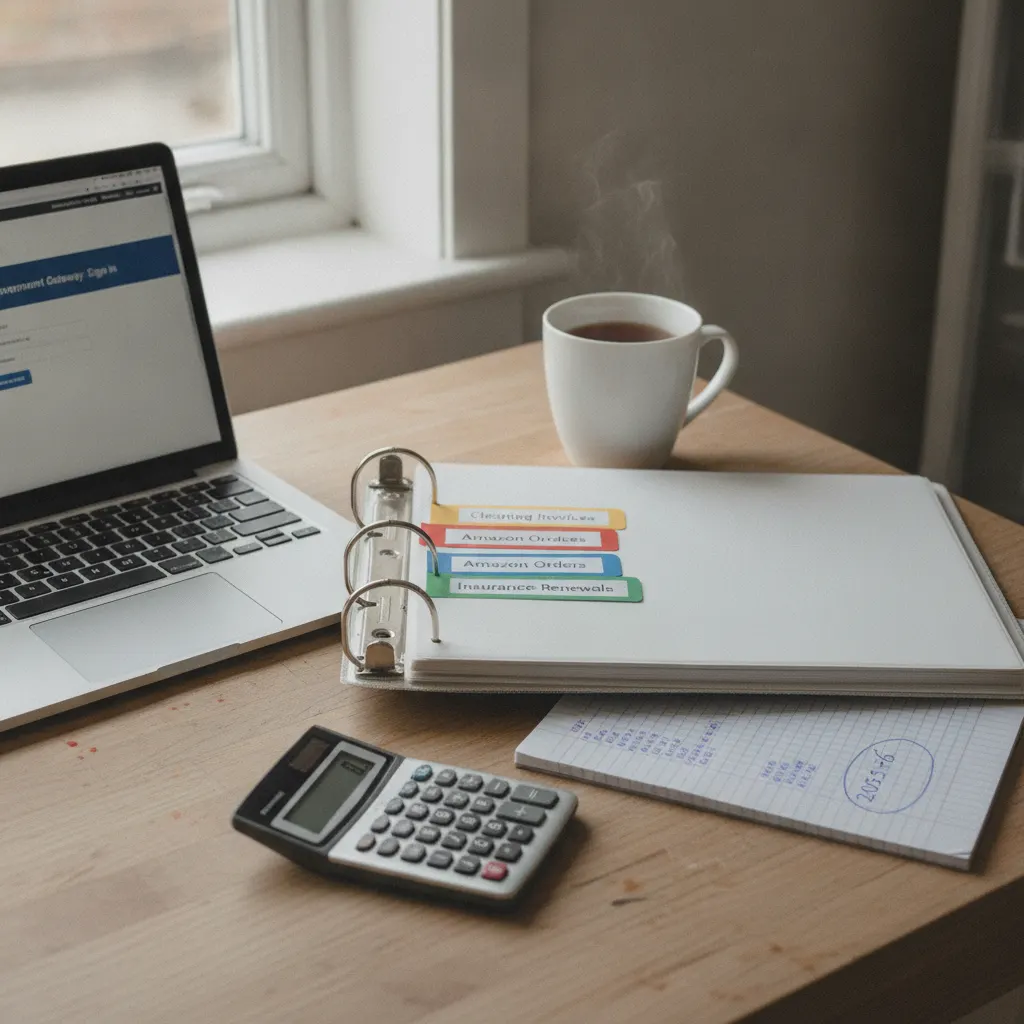
The January ritual I now actually have under control
My first year of hosting I filed my self-assessment on 28 January. That's three days before the online deadline and about five months of procrastination after I probably should have started. I had a bin bag of receipts, a rough total from the Airbnb payout history, and a deep, ambient sense of dread about whether I'd done it right.
I had not done it right. I'd missed three categories of expenses I could have claimed and declared a number that was about £800 higher than it needed to be. My accountant — who I hired the following year — pointed this out with the kind of diplomatic patience that costs £120 an hour and is absolutely worth it.
These days the January return takes me about four hours and I know exactly what I'm doing. Here's how it actually works for STR income in the UK, post the FHL changes of April 2025.
The deadlines, because people always mix these up
Two separate deadlines. Paper returns: HMRC needs them by 31 October. So for the 2025–26 tax year (which ran 6 April 2025 to 5 April 2026), a paper return is due 31 October 2026. Most people file online, which gives you until 31 January 2027 at 11:59pm. Miss that and there's an automatic £100 penalty, even if you don't owe any tax.
One option most hosts don't know: if you want HMRC to collect what you owe through your PAYE tax code (if you have other employment), you need to submit your online return by 30 December 2026 instead. That's worth knowing if you're employed and also hosting on the side — it avoids you having to make a separate payment in January.
How short-term rental income is reported now
Since 6 April 2025, Furnished Holiday Letting income is no longer its own special category. The FHL regime ended and your STR income now sits in the same box as any other UK property rental income — you report it on the SA105 supplementary pages (UK Property). If you were previously claiming the FHL tax advantages, those are gone. No more capital allowances on furniture and equipment, no more claiming full mortgage interest as a business expense.
The Property Income Allowance still applies: the first £1,000 of property income in a tax year is tax-free. If your total rental income (before expenses) is under £1,000, you don't need to report it at all. Most active short-term let hosts will be well above this, but it's worth knowing.
If your income from property is between £1,000 and £2,500 after allowable expenses — or under £10,000 before expenses — you might be able to contact HMRC directly to report it without a full self-assessment return. In practice, if you're turning over more than a few thousand pounds a year through Airbnb, you'll be filing the full return.
What you can still claim (the useful bit)
Post-FHL, the allowable expenses for STR income are the same as any residential rental property. Here's what I claim across my five properties:
- Cleaning costs — every invoice from my cleaning agency or individual cleaners. This is cleanly deductible (pun unavoidable). Keep invoices or bank transfer records.
- Supplies and consumables — toilet roll, toiletries, coffee pods, dishwasher tablets, bin bags, washing-up liquid. The stuff that gets used and replaced each turnover. I keep a running total on a simple spreadsheet and reconcile against Amazon Business orders quarterly.
- Linen and towels — the cost of replacing items through wear. This is "replacement of domestic items relief" rather than capital expenditure. Beds, sofas, towels, crockery — when you replace like-for-like, it's deductible. When you upgrade (replacing a standard bed with a higher-spec one), you can claim the equivalent cost of like-for-like replacement and the difference is capital expenditure (not deductible).
- Insurance — STR-specific insurance premiums are fully deductible.
- Property management fees — if you use a management agent or a co-hosting arrangement, their fees are deductible.
- Repairs and maintenance — fixing what's broken, not improving what's there. A new boiler to replace a failed one is deductible. A boiler upgrade with additional features is partly capital. My accountant draws this line for me and I'm genuinely grateful for that.
- Utilities, if you pay them — if the utility bills are in your name and you pay them (not recovered from guests), a proportion is deductible. The proportion should reflect the fraction of the year the property is occupied and the proportion of use that's lettings-related rather than personal.
- Accountancy fees — yes, you can claim the cost of your accountant. I find this pleasingly circular.
- Platform fees — Airbnb, Vrbo, Booking.com commissions come off your gross rental income automatically when Airbnb pays you. The payouts you receive are already net of fees. Check your Airbnb earnings summary — it breaks out gross income and host fees separately. The host fees are deductible, but since Airbnb deducts them before paying you, your payout is the net figure. Don't accidentally under-report by using only payout data — use gross income minus host fees = taxable income before other expenses.
What you can no longer claim
Mortgage interest — this is the big one. Individual landlords lost the right to deduct mortgage interest as an expense back in 2017, replaced by a 20% tax credit on finance costs. Post-FHL, if you had an FHL property, you now lose even that specific advantage, because FHL used to allow full interest deduction as a business expense. Now you get the same 20% basic rate tax credit that residential landlords get. If you pay higher-rate tax and you have a significant mortgage, this is worth understanding carefully — ideally with an accountant.
Capital expenditure — buying new furniture, refitting a bathroom, replacing windows. These are capital costs and don't go on your property income section. There may be other reliefs available, but standard property income expenses they are not.
Records my accountant actually wants
After my first fumbling attempt, I now keep the following, year-round:
- Airbnb annual earnings statement (download from host account — shows gross income, service fees, and payouts by tax year)
- Bank statements with rental income marked
- All cleaning invoices (I ask cleaners for a monthly summary)
- Amazon Business order history (I export annually)
- Receipts or invoices for any repair over £50
- Insurance renewal confirmation
- Any professional fees (accountant, solicitor for leases, etc.)
I use a dedicated current account for STR income and expenses. Not essential but it makes the January reconciliation about half as painful. All Airbnb payouts go in, all supplies and cleaning come out. The statement tells most of the story.
When to get an accountant
If you have more than two properties or you're a higher-rate taxpayer, the £120/hour cost of a good accountant will almost certainly save you more than it costs. Mine found expenses I'd missed and caught a categorisation error that would have created a problem in an enquiry. One hour of their time. Worth it every year.
If you have one property and straightforward income, the GOV.UK guidance is actually pretty clear, and the HMRC helpline is more useful than people give it credit for. But keep your receipts. All of them. Even the ones that feel too small to matter.
Ready to streamline your inventory?
Start managing your rental inventory smarter with automated stock tracking.
Start Free Trial