Self check-in for Airbnb: the full setup across five properties, from key safe to smart lock to the voice note I stopped recording
Hoststock Team
23 July 2026
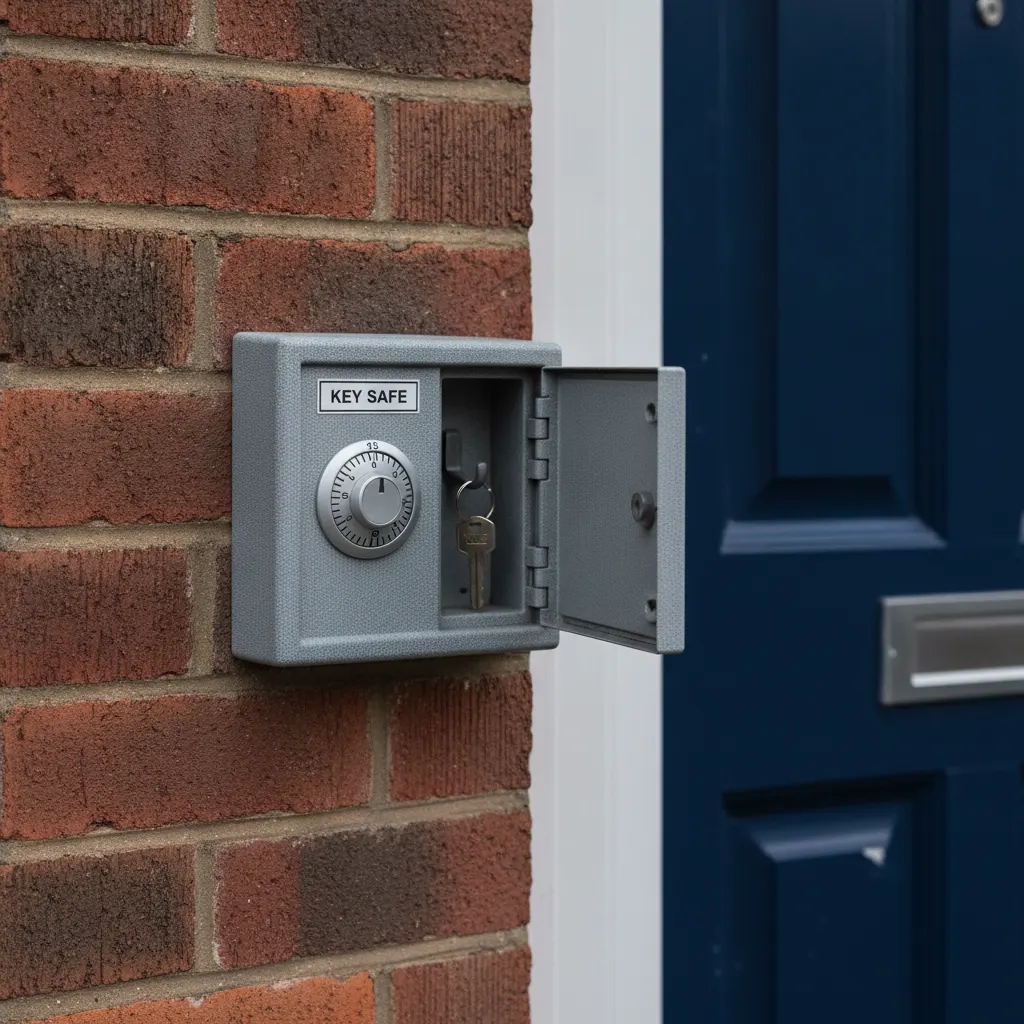
I used to meet every guest. First year of hosting, that was part of the charm — I'd hand over the keys, show them around, answer questions. Then I got my second property in Edinburgh, which is a four-hour drive from my Brighton base, and the whole model fell apart instantly. Keysafe went in that weekend. I haven't met a guest in person since, except by accident.
Self check-in is the only way to run more than one property without losing your mind. But it takes more setting up than people think — not the hardware, which is the easy part, but the instruction flow. Here's everything I've changed since the early days, and what I use now across five properties.
Hardware: what I actually use
Key safes (the cheap option that works). Three of my five properties still use combination key safes — the wall-mounted ones with a four-digit code, around £15–25 from Amazon. The code changes between every booking. I set it manually via Hoststock's workflow, which updates the code as part of the checkout process. It's not glamorous but it's robust: no batteries, no Bluetooth, no connectivity requirement. A Yale key safe has been on the side wall of my Brighton flat for three years and it's never failed.
The place people go wrong with key safes: they put them somewhere that guests can't find at 11pm. It needs to be visible from the street, labelled, and the instructions need to say exactly where it is. 'On the wall next to the front door' is not enough. 'Mounted on the right-hand side of the door frame at roughly chest height, you'll see the grey metal box with a yellow label' is closer to enough. I give GPS coordinates in the arrival message for the rural Lake District property, which sounds ridiculous until you've had a guest standing in someone else's farm lane in the dark.
Smart locks (the better option, with caveats). Two of my five properties have Nuki Smart Lock 3.0 Pro units. The Pro version matters — it has Wi-Fi built in, so you don't need a separate bridge. The bridge-dependent versions need a bridge plugged in nearby, and if that bridge loses power or connection, your lock goes offline and guests can't get in. I learned this at 10pm on a Friday in Edinburgh. Bridge-dependent Nuki is a single point of failure I've removed from my setup.
The Nuki 3.0 Pro sits over the existing euro cylinder on the inside of the door. No new cylinder needed — it just covers the inside thumb-turn. That matters for leasehold properties where your lease may restrict what you do to the external door hardware. Check your lease before installing anything that touches the exterior cylinder.
Smart locks give you per-booking access codes, entry logs, and the ability to let yourself or a cleaner in remotely. The log part is underrated — I can see exactly when a guest first entered, which is useful when there's a dispute about damage (was it already there, or did it happen during their stay?). The codes are generated automatically via my check-in workflow and delivered in the arrival message without me doing anything manually.
Battery life on the Nuki is roughly 6–8 weeks of regular use before I get a low battery alert. The alert is reliable — I've never had a dead battery catch me out, though I keep a pack of AA batteries in each property's cleaning supplies for the cleaner to swap if needed.
The instruction flow: where most hosts go wrong
Hardware is the easy part. Instructions are where self check-in fails.
My first version of check-in instructions was 600 words in the Airbnb message thread. Nobody read it. Guests would arrive and send me the questions the instructions answered. Then I cut it to 200 words and put a link to a PDF. Nobody clicked the link. Then I tried a voice note. Guests liked it conceptually but it was hard to reference while you're standing outside a door in the rain trying to remember what step four was.
What I use now: a structured check-in message sent 24 hours before arrival (automated via Hoststock), formatted as numbered steps, maximum 15 words per step, no prose, every directional reference a specific physical description. Sent again 2 hours before the earliest check-in time.
The message structure that gets zero follow-up questions at my Brighton flat:
- Find the grey key safe on the right side of the front door, chest height. Code: [CODE]
- Take the Yale key from the safe.
- Key safe stays open — your cleaner will retrieve the key at checkout.
- Enter the building, take the stairs to floor 2 (there's no lift).
- Flat 2B — same key opens the flat door.
- Leave key on the kitchen hook at checkout.
Six steps. Two of the steps are about what to do with the key, not where to go. Guests follow this without messaging me. I verified it by watching message rates before and after — they dropped from roughly one pre-check-in message per three bookings to one per fifteen.
What guests get wrong regardless
Even with perfect instructions, some things generate questions. The top three across all five properties:
Parking. Where to park, whether it's free, whether a blue badge applies, whether the resident permit zone applies to them. I now include a separate parking note in every check-in message, even when it's obvious. It's obvious to me. It's not obvious to someone arriving from Bristol who's never been to Edinburgh.
Wifi password. I put it on a card on the kitchen counter, in the Airbnb guest portal, in the check-in message, and I still get asked. This one I've given up trying to fix. The card on the kitchen counter is the answer — I just accept that some guests will message first.
The door that sticks. The Edinburgh Old Town flat has a front door that swells in cold weather and requires a firm push while turning the key. I describe this explicitly ('the door requires a firm push at the bottom while turning — not a gentle lean, an actual push') and still get two messages a winter from guests who've been too polite to push hard enough. Nothing you can do about this except fix the door, which I haven't got around to.
Emergency access
For each property I have two backup plans. First: my cleaner has a permanent spare key. She's local to each property and available for a £20 emergency call-out to let someone in if everything else fails. Second: I keep a second key safe code known only to me for genuine emergencies.
I've used the emergency cleaner call-out twice in four years. Once when a Nuki battery died unexpectedly (a faulty unit — the alert didn't trigger). Once when a guest locked themselves out after checkout and needed back in to retrieve a passport. Both times, having someone local solved it in under an hour.
The cost side of things
Key safe per property: £20–25 fitted. Smart lock per property: around £130 for a Nuki 3.0 Pro. The question isn't the upfront cost — it's the hours you get back. I was spending roughly 8–10 hours a month on in-person check-ins across two properties. At any reasonable hourly valuation of my time, two smart locks paid back in three months.
The better metric is review scores. My check-in rating across five properties averages 4.97. I think that's mostly down to the instructions being clear, not the hardware being fancy. A key safe with six-step instructions beats a smart lock with a rambling paragraph every time.
Ready to streamline your inventory?
Start managing your rental inventory smarter with automated stock tracking.
Start Free Trial