Tea and coffee station in an Airbnb without a pod machine: what I put out and what guests actually use
Hoststock Team
17 September 2026
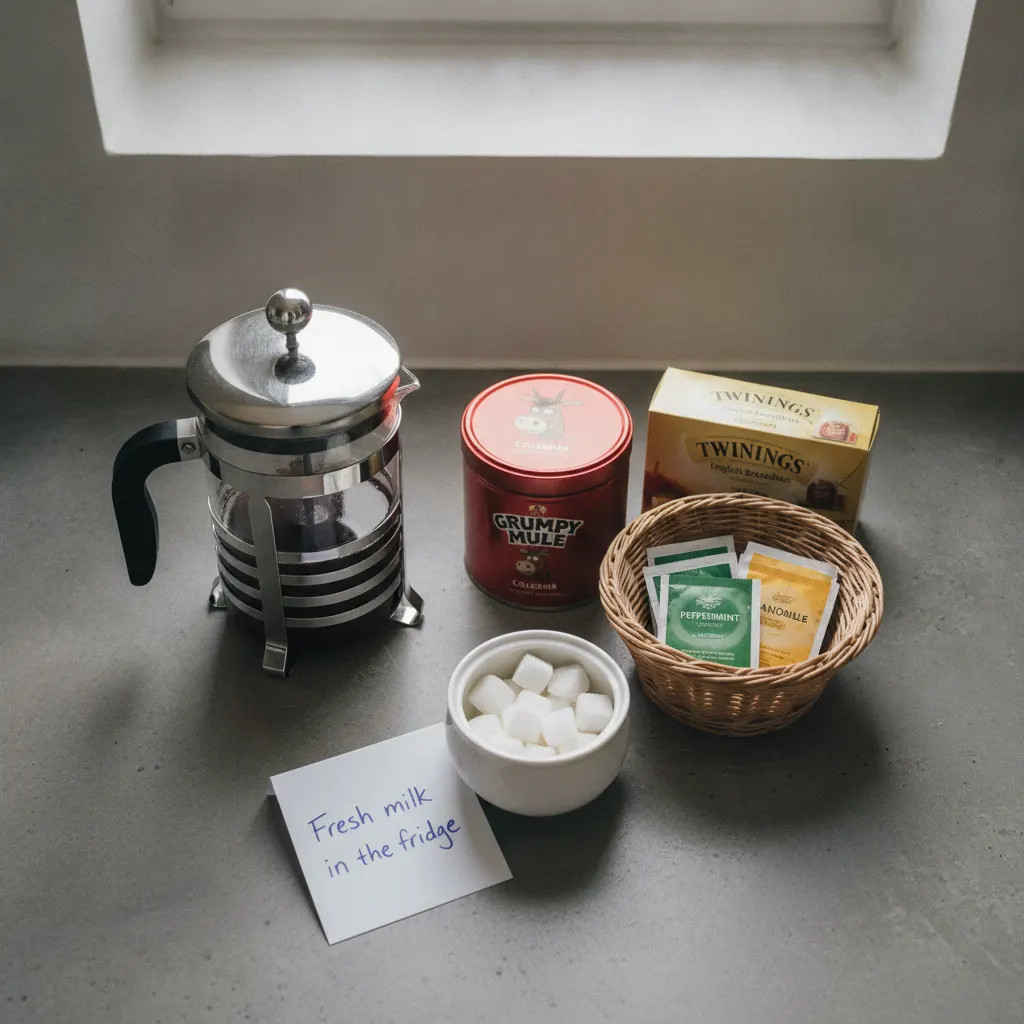
I've written elsewhere about Nespresso pods and bulk buying and per-pod costs. I stand by all of it. But I've got two properties — my Edinburgh studio and the Lake District cottage — where a capsule machine doesn't make sense, and I want to talk about what I do there instead.
The Edinburgh studio is tiny. A proper one-room flat with a galley kitchen, about 28 square metres. There's no counter space to spare. A Nespresso machine would take up roughly a fifth of the available kitchen surface, which is not a trade-off I'm willing to make. The Lake District cottage is the opposite problem — it's a rural barn conversion, sleeps six, and has that back-to-basics aesthetic where a Nespresso machine looks slightly wrong next to slate worktops and mismatched mugs from the local charity shop. So. Neither property has a pod machine. Both have a tea and coffee station that works well.
What I actually put out
Filter coffee, not instant. This was the most important decision. Instant coffee — and I mean the standard supermarket stuff, not the slightly posher freeze-dried kind — is what you put in a budget B&B with a kettle and a paper sachet. It's what guests expect to tolerate, not enjoy. I'm not trying to be a specialty coffee shop. But I don't want a three-star 'coffee was terrible' comment in a review either.
What I use: Grumpy Mule Colombia ground filter coffee (red tin, widely available) in a cafetière. A Bodum 8-cup cafetière in both properties — the glass one, not the travel version. Costs about £20. Lasts surprisingly well in an STR context if you leave a note about not putting it in the dishwasher (I do, they still do, I've replaced three).
For the coffee itself: I buy the Grumpy Mule in 340g tins. Price is roughly £6–7 from most stockists. For the cottage which gets heavier use, I get through about one tin a month in peak season. For the studio, it's slower — maybe one tin every six weeks. I replenish on my monthly property check.
Decaf option. Always include a decaf option. The number of guests who specifically message asking about decaf before they arrive surprised me. I use Taylors of Harrogate Decaffe ground — similar price point, similar tin format, sits next to the Grumpy Mule. Nobody's complained about either.
The tea situation
Tea is more complicated than coffee, in a British context. Yorkshires want Yorkshire Tea. Southerners will accept PG Tips or Tetley. People from Devon will drink builders' tea cheerfully from any brand. A guest from the Highlands once left a review that mentioned the tea specifically — positively, thankfully — because I'd put out Twinings Breakfast.
My setup: I buy Twinings English Breakfast teabags in the 100-bag box. It's broadly acceptable to almost everyone. I also put out two or three other options — Peppermint, Chamomile, and a green tea. Not a full herbal pharmacy. Just enough that a non-caffeinated guest doesn't feel like they've been left out.
The Lake District cottage gets Earl Grey too, because somehow it fits. Don't ask me to explain that.
For the Edinburgh studio, I keep it simpler: Twinings Breakfast, Peppermint, one herbal. Three options. The studio guests are mostly solo or couple stays, often work trips, they're not holding a dinner party and offering a tea selection. They want a decent cup in the morning.
What I don't put out
Flavoured syrups. Guests don't use them and they get sticky and weird. I tried it in the cottage. Gone by month three.
Individual coffee sachets. The little things you get in a hotel room that make about 150ml of something beige. Not doing it.
Long-life milk portions. Guests hate them. They almost always leave them untouched and feel slightly judged by their presence. I leave a note in the listing and the guidebook that the fridge will have a fresh pint of semi-skimmed on arrival. That's it. If they want oat milk or whatever, they're adults who can pop to a shop.
The fresh milk arrangement
This is actually more important than it sounds. A pint of semi-skimmed milk on arrival is in my welcome pack. My cleaner picks it up on the way to the turnover. I add £1.20 to the cost of her run. Guests consistently mention it — not always in reviews, but in the arrival message when they check in. 'Just made a coffee, the fresh milk was a lovely touch, thank you.'
It costs me £1.20 and takes my cleaner about thirty seconds. It's one of those small things that signals someone thought about the guest's arrival rather than just cleaning the flat and leaving.
What I keep stocked
For both properties, I keep a small cupboard section dedicated to the coffee and tea station. A tin of filter coffee (and one of decaf), a box of English Breakfast teabags (100s), and two or three herbal options in smaller boxes. Sugar cubes rather than loose sugar — less mess, easier for guests to portion. Sweetener sachets for the one in ten guests who wants them.
I check and top up on my monthly property visit. The filter coffee is the thing that depletes fastest. The herbal teas barely move — I've had the same box of camomile at the Edinburgh studio for four months and it's not finished. Which is fine; they don't expire quickly.
Does it matter?
Honestly — yes, but not in the way that makes or breaks a stay. A good tea and coffee setup won't get a standalone mention in most reviews unless it's exceptional or terrible. What it does is contribute to the overall impression that the property is looked-after and that someone thought about the guest. Which is the point. Five-star reviews aren't built on one big wow moment; they're built on twenty small things that are all just right.
The cafetière and the Grumpy Mule and the fresh pint of milk are three of those twenty things. Worth doing properly.
Ready to streamline your inventory?
Start managing your rental inventory smarter with automated stock tracking.
Start Free Trial