Winter heating in UK Airbnbs: how I cap the thermostat and what a 4-night stay costs me in January
Hoststock Team
21 August 2026
The January bill that focused my attention
My second winter running the Brighton flat, I did something I should have done in year one: I printed out the electricity and gas bills side by side for the previous twelve months and worked out what each month actually cost per booking night, adjusting for occupancy. January was the number that stopped me.
The flat was at around 55% occupancy that month — not bad for January in Brighton. But my utility cost per occupied night was nearly four times what it was in July. Some of that is standing charges, which are fixed regardless of guest use. But a significant chunk of it was heating — guests keeping the flat warm in a way that summer guests simply don't, and keeping it on while they went out for hours because they didn't think about it or couldn't figure out the thermostat.
That was the point I started thinking seriously about thermostat management in STRs.
What guests actually do with thermostats
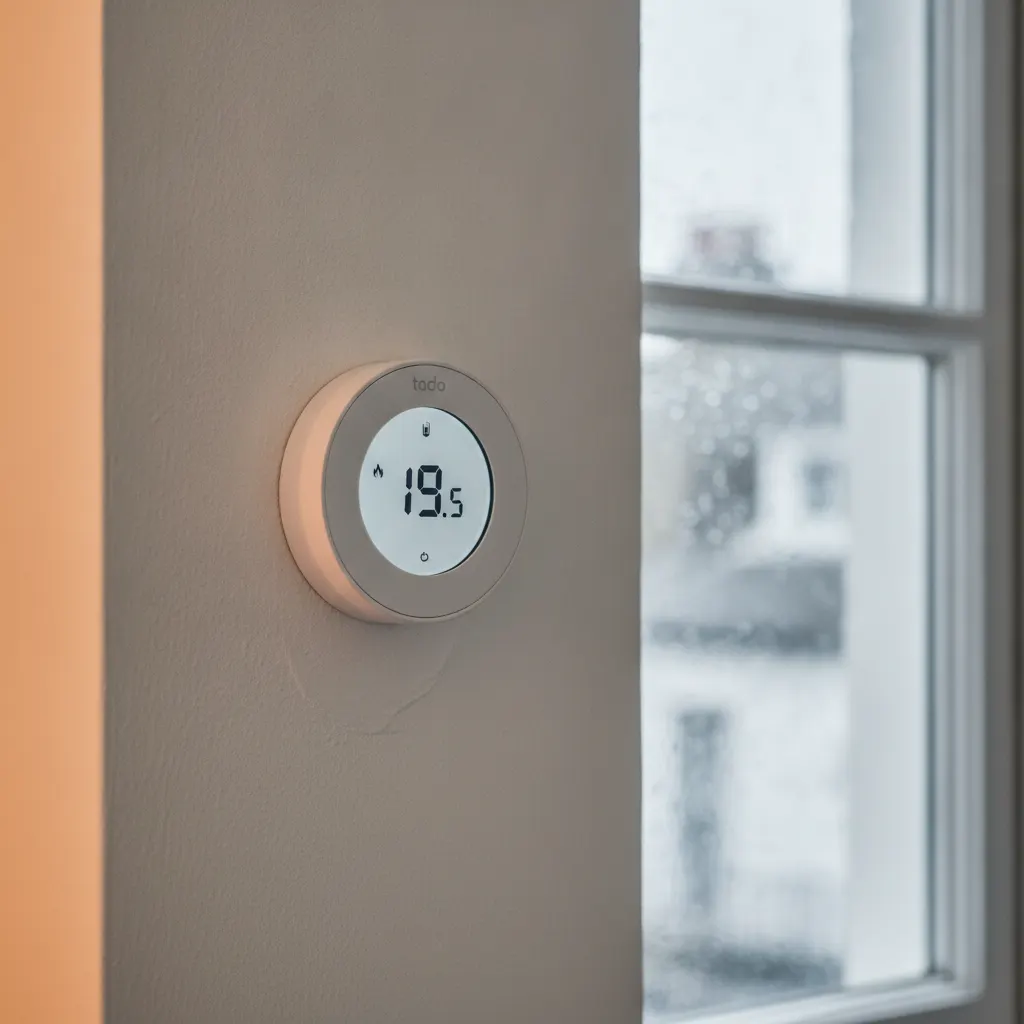
I've got smart thermostats in four of my five properties — Tado in three, Hive in one, which I'd switch to Tado if I were buying again. The data logs from Tado are illuminating. Guests in summer barely touch the thermostat. Guests arriving in November or December will typically turn the heating up within the first hour — sometimes to 25°C or above, which in a well-insulated flat means the boiler is running continuously. They then go out. The flat heats to whatever temperature the thermostat is targeting. The boiler cycles on and off all evening trying to maintain it. They come back at 10pm, turn it down to sleep, leave in the morning, forget to turn it down when they check out.
None of this is unreasonable guest behaviour. They want to be warm, they've paid for the flat, they're not thinking about your gas bill. It's just what happens. The question is how you manage it without making guests feel like they're being rationed.
The thermostat cap I run
Through Tado's scheduling and temperature limit features, I cap my thermostats at 22°C in all properties from October through March. This isn't the lowest the temperature will go — it's the highest the thermostat will allow, regardless of what a guest sets. Below 22°C, guests can control the heating freely. Above that, the system quietly doesn't respond.
22°C is warm. Genuinely warm. I checked this after setting the cap — I stayed a night in my Edinburgh Newington flat in November just to test how it felt. 22°C in a 1970s-build Edinburgh tenement with decent insulation is genuinely comfortable. You don't feel cold. You don't feel rationed. I've had one guest comment in eighteen months of running the cap that the flat "didn't get quite warm enough" — a guest who came from somewhere with a very different climate baseline and who also mentioned it was 23°C where they were from in the same message.
I also use Tado's away detection to drop the temperature to 16°C when no devices are connected to the flat's WiFi — a proxy for nobody being home. It's not perfect, guests sometimes leave a phone on the charger, but it reduces the "heating the empty flat at 22°C while everyone's at lunch" scenario substantially.
What a 4-night January stay actually costs
I track this per booking now using a simple spreadsheet — utility bills divided by occupied nights, per month, per property. For a 4-night January stay in my Brighton 2-bed flat at typical winter usage:
- Gas: typically £12-16 for a cold week, depending on outdoor temperature. Brighton is considerably milder than Edinburgh — the Lake District barn with oil heating is a different calculation entirely.
- Electricity: typically £8-12, including lighting, cooking, TV, washing machine use by guests, and the boiler's electrical components.
- Total utility cost per 4-night winter stay: roughly £20-28.
I'm deliberately hedging these numbers because UK energy prices change quarterly under Ofgem's price cap and I don't want to publish figures that are out of date before anyone reads them. The methodology matters more than the specific pence per kWh: take your annual utility spend, subtract standing charges, divide by occupied nights per season, and you'll have your actual seasonal cost per night. Mine is about 3-4x higher in January than July.
How this changed my pricing
I now run a seasonal utility surcharge baked into my winter nightly rates rather than a blanket annual average. My Brighton flat is priced roughly 15% higher in December through February than in May through September at the same occupancy level — not all of that is utility costs, some of it is simply lower demand that I'm offsetting — but about half of that differential is the genuine higher operating cost per night in winter.
I don't advertise this to guests. It's just the nightly rate. Dynamic pricing tools like PriceLabs will adjust for seasonality automatically but they don't know your specific heating costs — they're working from market rate data. The sensible move is to set a winter floor price that covers your actual costs and let PriceLabs adjust above that, rather than letting PriceLabs set a rock-bottom January rate that costs you money on heating before you've factored in any profit.
The Lake District problem
The barn is on oil central heating. Oil prices in rural areas follow their own pattern, and a cold February week when the barn is at full occupancy — four guests, roaring log burner, oil boiler running constantly — can cost me significantly more than my urban gas-heated properties. I keep a 1,000-litre tank and get it filled in October before the winter rush. Even so, the per-night utility cost in January at the barn is the highest of any of my five properties by a considerable margin.
I've been looking at a wood-pellet boiler replacement for the barn — the capital cost is significant (around £12-15,000 for a system that would replace the oil boiler) but the running cost difference over ten years of operation makes it viable if I can maintain current occupancy rates. Not a decision I'm rushing into, but it's on the list for 2027.
One thing I've tried that didn't work
Guest information cards about "please turn down the heating when you go out." Tried it in two properties for a full winter. Did absolutely nothing measurable. Guests are on holiday, they don't want to think about energy conservation. The cards felt slightly passive-aggressive and I removed them. Automated thermostat management is the answer — not hoping guests will be considerate.
What I'd do if starting fresh
Fit a Tado smart thermostat in every property before the first winter booking. It costs around £130 per property for the starter kit. The installation is DIY-able if you're comfortable with the wiring — I've done three myself, and it took about 45 minutes per property including setup in the Tado app. The data you get from it in the first winter justifies the cost on its own, even before you start using the temperature cap features.
The second thing I'd do is actually read my utility bills and convert them to a cost-per-occupied-night figure by month. It sounds basic. I didn't do it for the first two years. The minute you see the January number next to the July number, the seasonal pricing question answers itself.
Ready to streamline your inventory?
Start managing your rental inventory smarter with automated stock tracking.
Start Free Trial