Smart thermostats in short-term lets: Tado vs Hive and why I stopped letting guests near the thermostat
Hoststock Team
19 June 2026
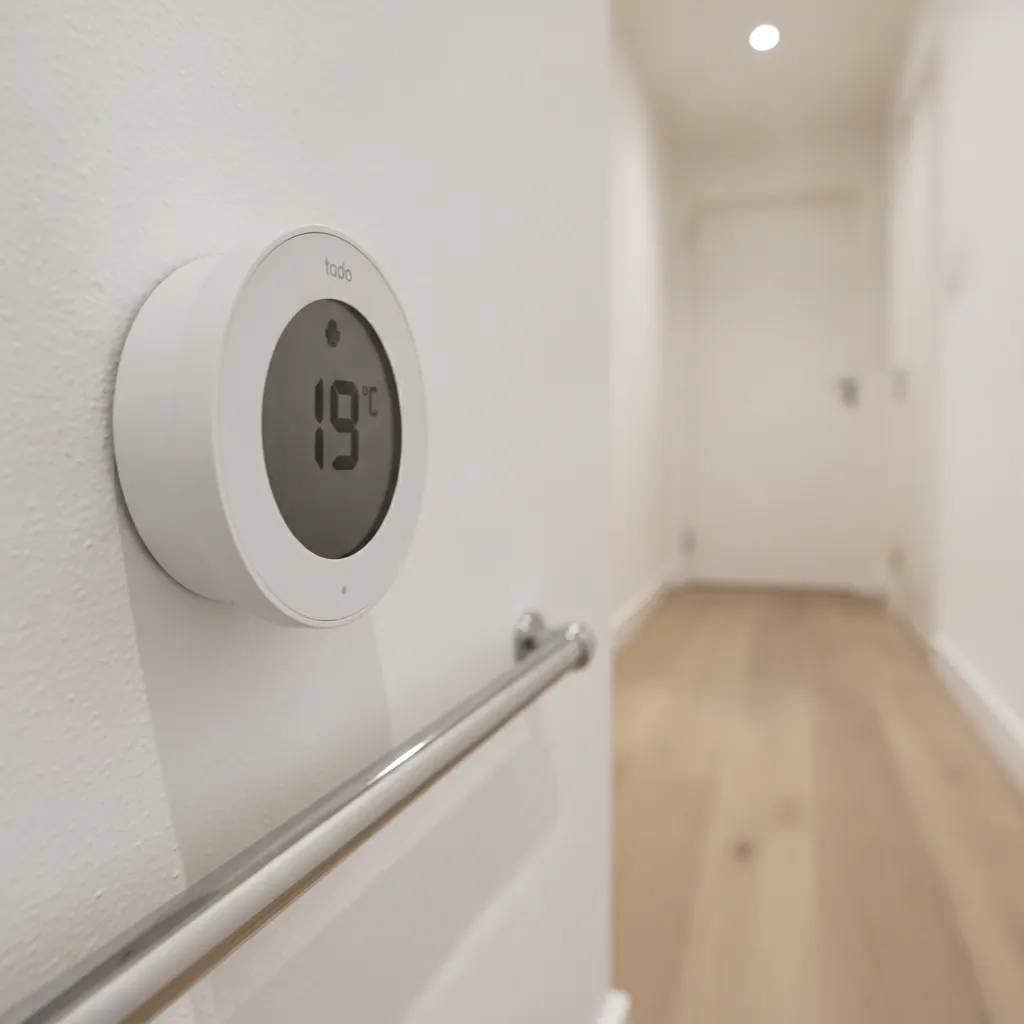
For the first two years I ran Airbnbs, I had standard manual thermostats in every property. Guests would arrive, find the boiler, and do whatever they did. I'd check energy bills quarterly, wince, and assume it was just the cost of the product. Short-term lets use more energy than owner-occupied homes. Fair enough.
Then I started tracking it properly.
The Edinburgh studio — a one-bed flat with good insulation and a 2021 boiler — was averaging £148/month on gas across the winter of 2022/23. The comparable unoccupied period: £31/month. Guests were running the heating on full between checkout and the next check-in, heating an empty flat for up to 72 hours at a stretch. In one extreme case, a guest in the Brighton flat turned the thermostat to 28°C on a Thursday checkout and the next guest didn't arrive until Sunday. I didn't know until the bill arrived.
I fitted Tado in January 2024. I've been comparing notes with Hive ever since — two of my properties run Tado, one runs Hive, and one still has a manual stat that I haven't got round to replacing. Here's what I've learned.
The core problem smart thermostats solve for STRs
It's not just about remote control, though that's part of it. The bigger issue is what I'd call the checkout gap — the heating left running for hours or days between one guest leaving and the next arriving. In a four-property portfolio with an average gap of 22 hours between checkout and next check-in, across a six-month heating season, that's a meaningful energy cost.
Both Tado and Hive let you set a schedule that drops the heating to a frost-protection setpoint (typically 7°C) at checkout time and then pre-heats the property before the next arrival. You manage this from the app, or you can link it to your booking calendar if you're willing to spend an hour on the integration. I haven't done the calendar integration — I just update the schedule manually when bookings come in, which takes about three minutes per property per week.
Tado: what I like about it
I fitted a Tado Smart Thermostat starter kit in the Edinburgh studio and the Lake District cottage. Kit cost at the time was around £100 per property (starter kit including the thermostat and bridge). There's an optional Auto-Assist subscription for around £3.99/month or £30/year that adds geofencing and weather adaptation — I pay for this on one property, not both. The free tier is functional enough for STR use without it.
The energy reporting in the Tado app is genuinely useful. You can see heating hours per day, temperature reached versus target, and time-to-target for each room. That last one matters for pre-arrival scheduling: my Lake District cottage takes about 45 minutes to get from 7°C to 20°C in January. Tado shows me that directly, so I set my pre-arrival heating to start 45 minutes before check-in time and it arrives at the right temperature reliably.
Tado also has multi-zone support, which I use in the Lake District cottage — the bedroom has its own smart radiator valve that stays cooler during the day and warms to 18°C at 9pm. Guests like this without knowing why; they just find the bedroom at a comfortable temperature when they go to bed.
Hive: what I like about it
One of my Brighton properties runs Hive, installed by a previous owner before I bought it. I've kept it because it works and switching costs aren't worth it.
Hive is slightly easier to configure than Tado for basic scheduling, in my experience. The app is less granular but more approachable. There's no required subscription — all the remote control and scheduling features work without paying monthly. If you're fitting one property and want a set-it-and-check-occasionally system, Hive is probably the lower-friction option.
The reporting is less detailed than Tado — you get weekly energy summaries rather than hour-by-hour data. For a single property where you're not doing obsessive analysis, that's fine. For someone trying to squeeze 5% more efficiency from a multi-property portfolio, the Tado data depth is useful.
What I actually saved
Post-Tado installation: the Edinburgh studio's average monthly gas bill over winter 2024/25 dropped from £148 to £94. A 36% reduction. The Lake District cottage dropped from £190/month to £127/month over the same period, a 33% reduction.
The Hive-equipped Brighton flat dropped about 22% over the same comparison period — though I'd argue Hive was already semi-optimised before I started this experiment, so the baseline was less wasteful to begin with.
Across three properties with smart thermostats over a six-month heating season: roughly £460 saved on energy compared to the prior year's equivalent period. Tado setup cost: around £200 total. Payback period: five months.
The thing I got wrong
I left guest control enabled for the first six months. Meaning: guests could adjust the thermostat manually through the Tado app on their phone, if they downloaded it, or they could adjust it physically on the wall unit.
That defeats the purpose almost entirely. I had one guest in Edinburgh who found the Tado app, added the property to her account (I hadn't thought to disable this), set a schedule of her own, and left the heating running on a custom schedule for three days after checkout. The system had no way of knowing she wasn't still there.
I now lock out guest access. Physical thermostat: wall-mounted out of reach in the hallway (legally you have to leave guests with some method of adjusting temperature, so I keep a single on/off button accessible but restrict the temperature range to 16–22°C). App access: disabled. Pre-arrival heating set from my end, via the schedule I control. Guests can turn the heating on or off within the allowed band; they can't set it to 28°C and forget it on checkout day.
The property I haven't fitted yet
The second Edinburgh flat still has a manual thermostat. It's a slightly awkward boiler setup — a 2003 combi that the plumber quoted £240 to make Tado-compatible, which I haven't got around to booking. Last winter that property's heating bills were noticeably higher than the Tado-equipped one, and I keep meaning to sort it before next heating season. This paragraph is partly writing it into my to-do list publicly.
Worth doing or not?
For a single property with a regular boiler: yes, with Hive if you want simple, Tado if you want data and multi-zone potential. Setup cost £80–120, payback inside the first heating season for most UK properties.
For multi-property portfolios: Tado's app lets you manage multiple properties in one account, which Hive doesn't do as cleanly. That's the deciding factor for me above two properties.
The one scenario where I'd hesitate: properties with underfloor heating, electric heaters, or unusual systems. Both Tado and Hive work primarily with wet central heating and standard combi or system boilers. If your property has something different, check compatibility before you buy — both brands list compatible systems on their websites and compatibility checking takes about two minutes.
Don't leave guests in charge of the thermostat. That's the main thing I'd tell a host who hasn't made this change yet. You're not their home. Set the temperature, maintain the comfort, recover the bill savings. Everyone's happier, except possibly the energy company.
Ready to streamline your inventory?
Start managing your rental inventory smarter with automated stock tracking.
Start Free Trial