Cleaning Airbnb mattresses quarterly: the process that stopped my musty-smell reviews
Hoststock Team
8 October 2026
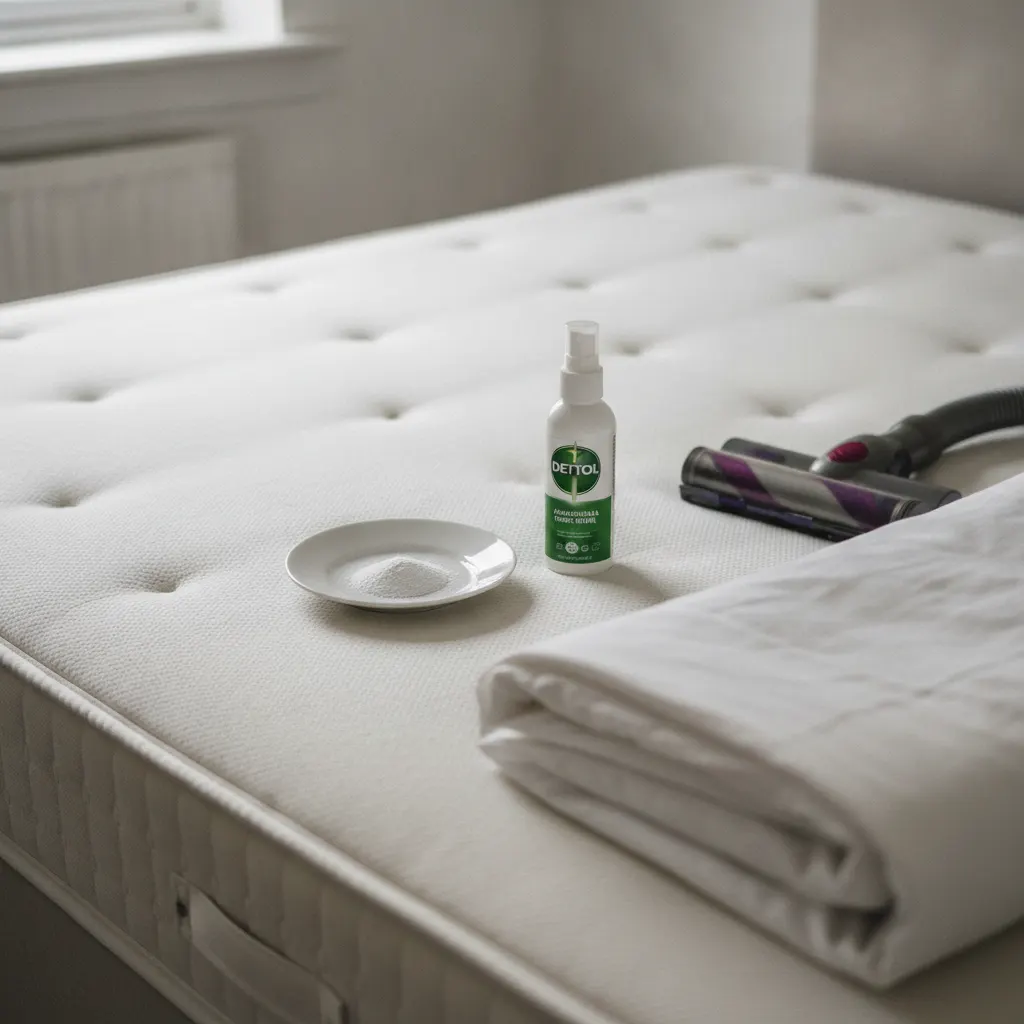
The first time a guest mentioned a 'slightly musty smell' in a review, I blamed the dehumidifier. I'd just installed a Meaco in my Edinburgh Bruntsfield flat and assumed it needed calibrating. It was fine. The smell was coming from the mattress.
I'd been hosing that mattress for eighteen months across — I worked it out later — about 140 guest stays. I'd had mattress protectors on it. They'd gone through the wash. The mattress itself had never been touched. When I finally pulled back the protector, the foam layer had a yellowy tinge that had nothing to do with sunlight.
Since then I've built a quarterly deep-clean into the maintenance schedule across five properties. It takes about 45 minutes per mattress. It's not complicated, but the products matter, and the order matters, and most hosts I talk to have never done it at all.
Why mattress protectors aren't enough
Protectors are essential. I'm not arguing against them. But they're not impermeable. Spills, sweat, body oils, and moisture from breathing penetrate a fabric protector over time — especially at 3+ stays a week for a year. The protector catches most of it. The mattress absorbs the rest.
The smell comes from bacteria and moisture in the foam or spring core. It's not visible. It doesn't always smell bad to a nose accustomed to the property, which is why it turns up in reviews written by people smelling it fresh. By the time it's noticeable on entry, it's been building for months.
Vacuuming alone doesn't fix this. Neither does leaving the window open. You need something that actually sanitises the surface and draws out the residual moisture.
The quarterly deep-clean process
I do this every three months — typically January, April, July, and October — which aligns roughly with seasonal changeovers and means I'm catching the mattress between heavy-use periods.
Step 1: Strip everything and vacuum (10 minutes)
Remove the mattress protector, mattress topper if there is one, and both sides of the duvet cover. Run a handheld vacuum over the entire mattress surface, paying particular attention to the seams and tufting where debris collects. A Henry or Dyson V-series with an upholstery attachment does this well. Both sides of the mattress.
Step 2: Baking soda treatment (30 minutes passive)
Shake a generous layer of bicarbonate of soda across the top surface of the mattress. Baking soda is mildly alkaline, and it absorbs odours and draws moisture to the surface. This is not a myth — it's simple chemistry. Leave it for at least 30 minutes. I usually do the rest of the property's quarterly maintenance while I wait.
Vacuum the soda off thoroughly. Don't rush this — you want the soda out before the next step.
Step 3: Sanitising spray (5 minutes + drying)
I use a fabric sanitiser spray — Febreze Fabric or Dettol Antibacterial Fabric Spray, both work — across the surface. Not saturated. A light, even layer. Then open the window and leave the mattress to air-dry for at least two hours before replacing protectors. In Edinburgh in January, two hours near a radiator with the window cracked is usually enough.
Don't use wet steam cleaners on foam mattresses. Steam drives moisture into the foam and that moisture doesn't come out quickly — you can create the smell problem you're trying to solve. Pocket spring mattresses handle a brief steam pass better, but I still prefer the spray approach because the drying time is predictable.
Step 4: UV wand pass (5 minutes, optional but useful)
A UV-C sanitising wand — there are several models in the £30–60 range — doesn't replace the baking soda and spray process, but it's a useful addition to the quarterly clean for killing surface bacteria. Run it slowly across the mattress in overlapping strokes, about 2–3cm from the surface. Don't look at the wand when it's active.
Worth noting: UV-C wands vary significantly in efficacy, and many cheap ones lack sufficient irradiance to be meaningfully effective. Models with a quoted UVC output and an FDA device code are more reliable than generic no-brand imports. I use a PhoneSoap UV Sanitizer wand, which is at the higher end but has documented efficacy data.
Mattress protectors: what to run after cleaning
After the quarterly clean, I replace the protector with one that's come out of a fresh wash. I run two protectors per mattress across each property: one on, one in the linen cupboard. They rotate — the in-use one gets washed when the mattress is cleaned. At 60°C with an antibacterial laundry detergent (Ariel Platinum works, Dettol Laundry Cleanser added to any wash also works).
Waterproof protectors are the right call for an STR — you want a full spill barrier, not just fabric. The Terry towelling ones with a waterproof backing are comfortable enough that guests don't notice them and actually impermeable enough to protect the mattress. The cheap ones from Amazon aren't — the waterproof layer delaminates after about forty washes, which is roughly three months at STR wash frequency.
When to replace, not clean
Cleaning extends a mattress's useful life but doesn't reverse wear. Three signs I replace rather than clean:
- Persistent smell that returns within two weeks of a clean — the bacteria are too deep in the foam to surface-treat
- Visible yellowing that baking soda doesn't lift after three cycles
- Any guest mention of comfort in reviews — if someone's noticed the mattress, it's time
In my properties, pocket spring mattresses in the mid-range (Emma Original, Silentnight Miracoil) last around three years at STR intensity with quarterly cleaning. Memory foam wears faster — mine have needed replacing at about two years. Both cheaper and more expensive than this range show similar lifespans in my experience; it's more about the internal construction than the price point.
The thing nobody tells you
When you flip a mattress for the first time in 18 months and the underside smells fine but the top smells musty — that's the ventilation under the bed. Check it. A solid divan base with no ventilation slots creates a humid microclimate under the mattress that accelerates degradation. My Edinburgh Bruntsfield flat had exactly this problem. I drilled four 25mm ventilation holes in the side panels of the divan, the moisture dissipated, and the quarterly cleans have worked much better since. It took twenty minutes and a spade bit.
Quarterly cleaning is just maintenance. Like descaling the kettle. Like checking the silicone seal in the shower. The things you do so guests don't notice them.
Ready to streamline your inventory?
Start managing your rental inventory smarter with automated stock tracking.
Start Free Trial