Restocking an Airbnb after a 28-day guest: the full supply audit I run before the next check-in
Hoststock Team
20 October 2026
Restocking an Airbnb after a 28-day guest: the full supply audit I run before the next check-in
My first 28-day booking was at the Brighton flat, back when I was about eighteen months into hosting. A contractor renovation project in the area, sensible guest, no complaints during the stay. Left the place clean-ish.
But I walked in to do the post-stay check and found the kitchen cupboard essentially bare. Half a roll of kitchen paper. One dishwasher tablet. The toilet roll stash — normally kept at eight rolls per bathroom — was down to a single roll. The bin bags were gone. The washing-up liquid was a dribble at the bottom of the bottle. Even the spare lightbulbs I keep in the bathroom cabinet were missing (presumably the bathroom bulb had gone and the guest helped themselves, which is fine — that's what they're there for).
Nothing unusual had happened. The guest had simply lived there for a month. Four weeks of daily use gets through an amount of supplies that my normal turnover process isn't sized to handle. I'd budgeted for a turnover clean and hadn't thought beyond that.
What changes with a 28-night stay
Airbnb treats bookings of 28 nights or more as monthly stays. Payment works differently — instead of getting paid per booking after check-in, Airbnb pays hosts monthly during the stay. The cancellation terms are different too: a specific long-term cancellation policy applies, and refund calculations change. I'd known all that going in.
What I hadn't thought about was the supplies maths. A typical three or four night booking uses maybe 6-8 toilet rolls, half a bottle of washing-up liquid, a few dishwasher tablets, a roll of kitchen paper. A 28-day stay multiplies that by roughly seven. That's a fundamentally different scale of consumption — and if you're not set up for it, you'll either run out during the stay (which generates messages and potentially bad reviews) or you'll arrive at checkout to a property that needs a full restock, not just a clean.
My normal turnover model is built around the assumption that every booking leaves me starting from a reasonably stocked baseline. The 28-day stay broke that assumption.
The mid-stay restock I now offer
After the Brighton experience, I changed my approach for any booking over ten nights. I now contact the guest around the halfway point — day 14 for a 28-night stay — and ask if anything needs topping up. Not in a hovering way. A single short message saying I'd arranged a restock bag for them and asking if they want me to drop it off or send it via my cleaner.
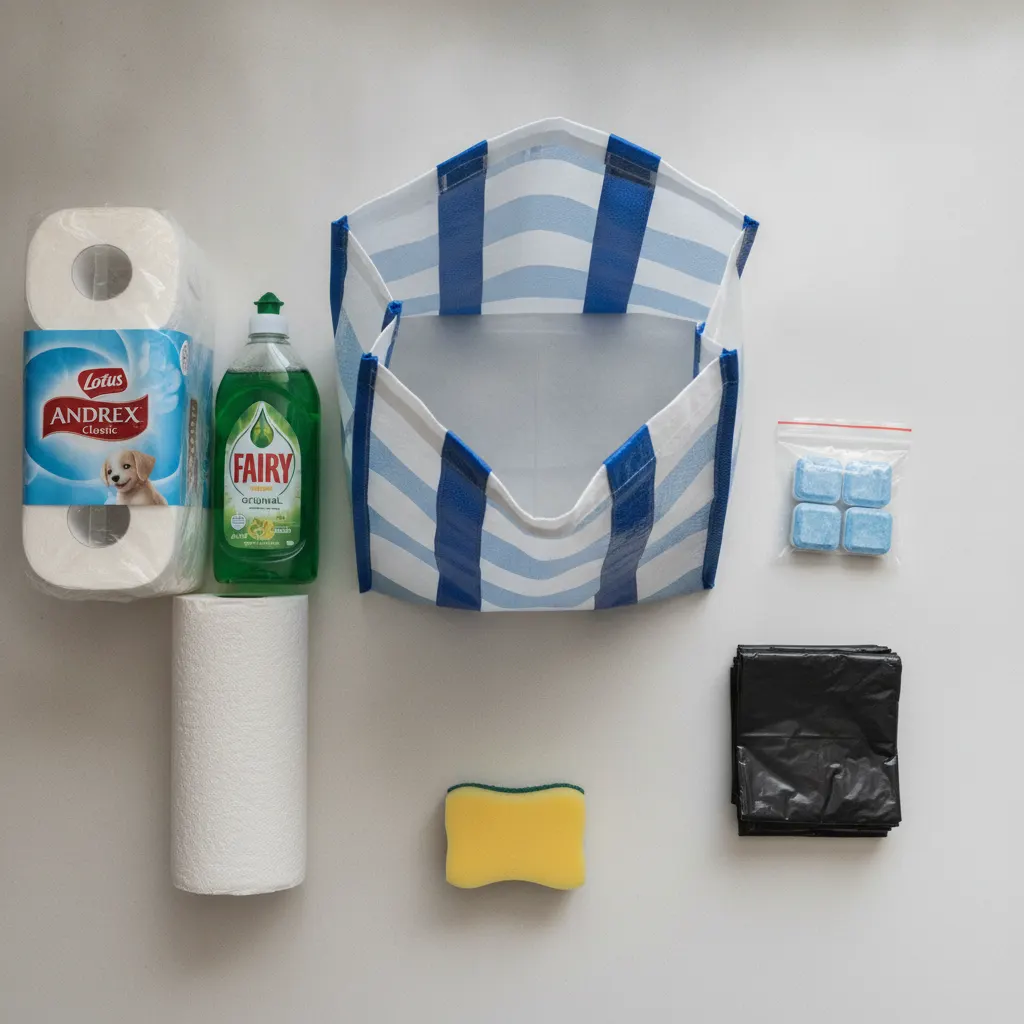
The restock bag is a resealable carrier bag with: four toilet rolls, a new bottle of washing-up liquid, a roll of kitchen paper, a small bottle of washing machine liquid, six dishwasher tablets, and a new sponge. That's the standard. If they say they need more of something specific, I add it.
Most guests have said yes. Some have said they're fine. Only one in eighteen months has asked me to leave them entirely alone, which I respected. The ones who accept it have mentioned it positively in reviews twice. Nobody has complained about being offered it.
The full post-stay audit
Whatever happens during the stay, the checkout process for a 28-day booking is substantially longer than a normal turnover. I now allow an extra 90 minutes on top of my standard turnover time when I book my cleaner.
Here's the full audit I run room by room.
Kitchen
Dishwasher tablets — I keep a box of 30 under the sink. Anything under 12 gets replaced. Washing-up liquid counted: if under a third of the bottle, swap. Kitchen roll — new roll, regardless. Bin bags: any partial roll gets topped up to a full new roll. Sponges replaced automatically. Oven cleaner: check the bottle, replace if under half. Foil and cling film checked against par — both get a new roll if under half the roll remaining.
I also check the spice rack and condiments. A 28-day guest will have used cooking oil, salt, maybe ketchup. These aren't like toilet roll — I don't provide a full restock of everything. But I do top up the oil if it's low, and I keep two small salt sachets as backup.
Bathrooms
Toilet rolls: back to eight per bathroom. Shower gel and shampoo: I refill from the bulk bottles I keep in the supply box. Body lotion, if I put it out, back to a full tube. Spare toothbrush: check there's one still sealed in the cabinet — long-stay guests sometimes use it if theirs breaks. Hand soap: refill or replace. Bath mat: goes into the wash automatically after a 28-day stay.
The bathroom cabinet itself gets a proper check. Plasters: top up if below five. Cotton pads. A 28-day guest will have used this stuff properly.
Bedroom
Everything goes into the wash — duvet, pillows, protectors, all of it. Not just the sheets and covers. A four-week stay means the duvet has had genuine use. I can't guarantee it's going to smell fine with just a cover change. On a normal turnover I only wash the outer linen; after a month I wash everything.
Hangers: count them. Long-stay guests sometimes lose hangers to suitcases. I always start back at twelve hangers per bedroom.
Living room
Cushion covers into the wash. Throw blanket too — laundered and re-folded, not just straightened. Check the remote control batteries: a month of daily TV use eats AA cells. Check the candle if I leave one — replace if more than half burned.
Utility cupboard
Check cleaning sprays — kitchen, bathroom, glass. All need to be at least half full before the next guest. Mop heads: look at it honestly. After a month of a single guest, the floor cleaning was probably irregular. A new mop head costs around £2 and sets the right standard for the next guest.
The supplies bill for a post-long-stay restock
I track supply costs per booking. For a three-night stay, I typically spend around £8-12 in consumables. For a 28-day stay, the post-checkout restock typically runs £35-45. That's toilet rolls, washing products, bathroom toiletries, kitchen paper, plus the full linen wash (which adds time rather than cost, mostly).
I now build this into the pricing calculation for long stays. I offer a weekly discount on Airbnb for stays of seven or more nights, and a monthly discount for 28+. But before I set those discount levels, I calculated the actual cost of a month-long occupancy including the deeper supply spend, higher utility use, and extra cleaner time. The 28-day discount I offer is lower than the default Airbnb suggests — around 12% rather than 20% — because the cost savings from fewer turnovers are partly offset by higher per-stay supply costs.
One thing I got wrong at first
I assumed long-stay guests would be tidier and use less. They're staying for a month, so surely they're more invested in the place, right?
Wrong. Or rather, it doesn't really matter. A guest staying for 28 nights isn't being careless with your supplies. They're just living there. A person living in a property for a month uses the same amount of toilet roll as a person living in any other property for a month. The tidiness has nothing to do with it.
The lesson is to stop thinking about long-stay guests as different-tier turnover customers. They're a different product entirely. Lower management overhead, lower cleaner cost per occupied night, but higher supply cost and more involved post-stay restock. Price accordingly. Set up your restock system in advance. And check in at the halfway point.
Ready to streamline your inventory?
Start managing your rental inventory smarter with automated stock tracking.
Start Free Trial