Rugs in short-term lets: what I stopped buying after the second replacement and what's lasted three seasons
Hoststock Team
19 July 2026
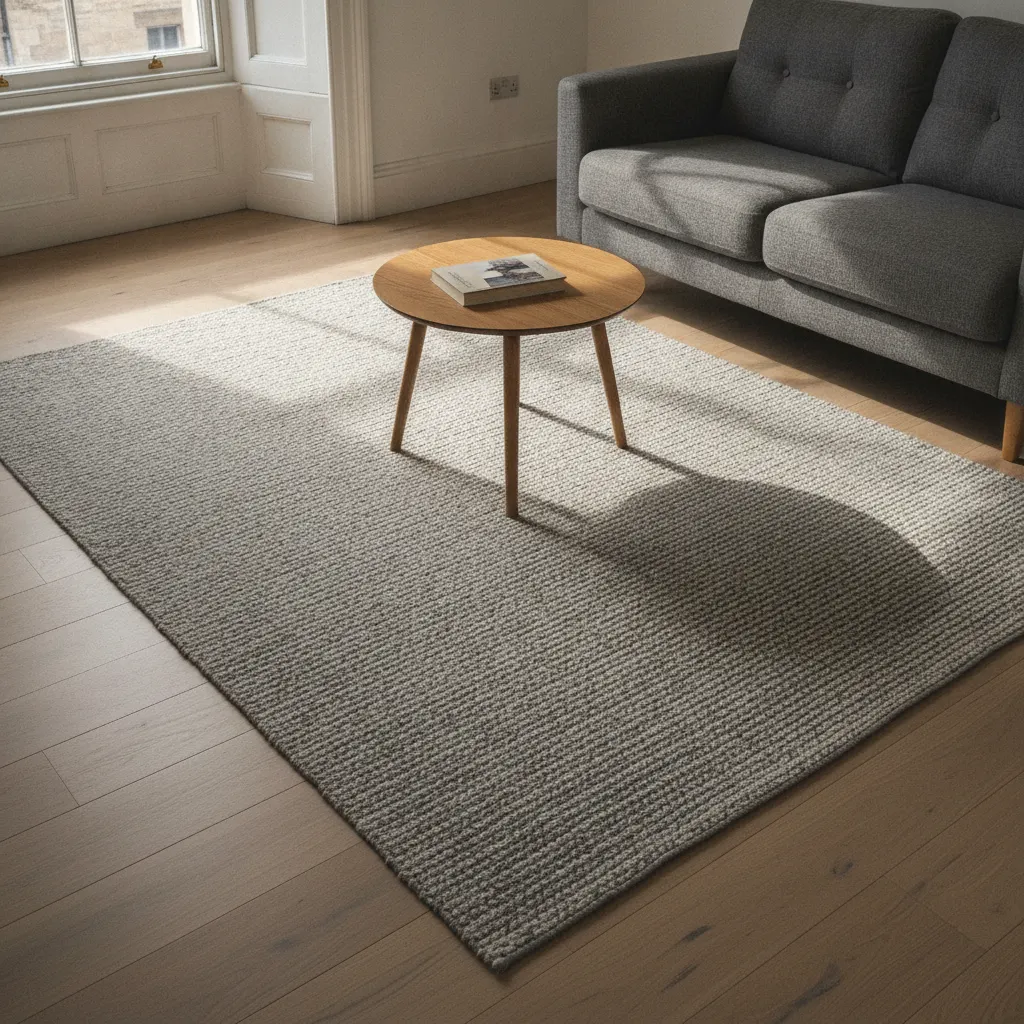
I've bought eight rugs for Airbnb properties in four years. Three are still in use. Five are gone — one is in my own house, two went to charity shops, one disintegrated slowly enough that I kept hoping it would recover, and one I binned after six weeks because the pile had flattened so badly it looked like a damp doormat in the listing photos.
Rugs in short-term lets are a specific challenge. They're not a decorative afterthought — in a lot of properties they're one of the most photographed elements of the main space, and guests notice them before they notice most other things. But they're also one of the fastest-degrading items in a heavily used property, and most rug advice is written for people who will vacuum them gently once a week and never have strangers pulling wheeled suitcases across them at speed.
Here's what I've found actually works, and what I'd tell myself four years ago.
Why rugs in STRs are harder than homeowner rugs
Three things happen to rugs in short-term lets that don't happen at home:
Suitcase traffic. Guests arrive with hard-sided luggage on wheels and drag it directly across the rug, repeatedly. That kind of concentrated point pressure across a small wheel area destroys pile structure in ways that normal foot traffic doesn't. I've had rugs that were fine after six months of normal use but looked destroyed after a week of guests with Rimowa cases.
Incorrect vacuuming. Cleaners use upright vacuums at high power across the full rug, which is fine for short-pile or flatweave but will pull tufts from any shaggy or long-pile rug. I once had a cleaner vacuum a jute rug with the beater bar on. It came apart at the backing within two months.
Spills. Not frequent, but they happen. And unlike a homeowner who addresses a red wine spill the moment it happens, a guest may not tell you, the cleaner finds it during a fast turnover, and the rug goes through a spot clean that may or may not be the right method for that specific material.
What doesn't work
Jute and sisal. Natural fibre rugs look great in photos and feel nice underfoot and degrade catastrophically in short-term let conditions. Jute is particularly vulnerable: it absorbs moisture, the fibres break down with prolonged damp, and it doesn't survive much vacuuming. I bought a jute rug for my Edinburgh flat — an IKEA LOHALS, around £40 — and it was visibly tired within four months. Natural fibre rugs are for people who carefully maintain them. Not for this.
Long-pile and shaggy rugs. They photograph beautifully, they feel luxurious underfoot, and guests like them in theory. In practice: they trap debris, are very hard to clean properly on a 3-hour turnover, and the pile flattens under repeated suitcase traffic and furniture weight in ways you can't recover. I replaced a long-pile rug in my Brighton flat after two seasons; the replacement went after eighteen months. I don't use long-pile anymore.
Anything with a tufted construction and a latex backing. The tufts work loose under heavy vacuuming, the latex backing degrades and eventually crumbles, and you get shedding that guests complain about in reviews. These are usually the rugs in the £40–£80 price range from Amazon. They look adequate in photos and feel inadequate in use.
What has actually lasted
Flatweave polypropylene
The IKEA SÖNDERÖD range — a flatweave geometric rug, around £50–£70 depending on size — is the single most durable rug I've found for a high-turnover property. Flatweave means no pile to flatten or pull. Polypropylene is stain-resistant, colourfast, and machine-cleanable for smaller sizes. I have two of these across my properties and both are on their second and third year respectively.
They're not the most characterful rugs. The pattern is clean and fairly neutral, and they work better in minimal or Scandi-influenced interiors than in something more traditional. But they're indestructible by short-term let standards and they clean in minutes.
Woven cotton flatweave (specific ones)
Cotton flatweaves — the kind without a pile, woven like a fabric rather than tufted — can work well if the construction is tight enough. The ones I've had luck with are from independent rug stockists rather than mass-market brands. A tightly woven cotton rug survives vacuuming well, washes relatively easily, and doesn't shed. The challenge: finding one that's visually interesting enough to photograph well without the texture that usually comes with more delicate constructions.
I've had a woven cotton rug from a small Welsh supplier (bought at a craft fair, not available online) in my Lake District cottage for two years. It's been washed twice and vacuumed 200 times and looks essentially unchanged. I'd buy it again but I can't tell you where to get one because I don't know — and that's a problem with this category generally. The good ones are harder to find.
Machine-washable wool blends, with caveats
A wool-blend flatweave from Hay — the PEAS rug, around £180 for a 140×200cm — is in my Edinburgh Old Town flat and has survived three seasons without any notable degradation. Hay's construction quality is genuinely better than the mid-market alternatives: denser weave, more stable backing, colourfast.
The caveat: £180 is a significant spend on a rug that's going to get guest luggage dragged across it weekly. I can justify it in the Edinburgh property because the nightly rate is high enough that a rug that photographs well and lasts five years is worth the cost. At a lower-priced property, I'd go polypropylene flatweave and not think twice.
Anti-slip underlays: don't skip this
Every rug I have now sits on a non-slip underlay. This matters for two reasons: guest safety (a rug that slides on a hard floor is a trip hazard and a liability) and rug longevity (a rug that stays flat and doesn't bunch extends its life noticeably).
I use a basic mesh-type rubber underlay cut to size — the kind from IKEA's STOPP range, around £8–£10 per 60×90cm piece. You can cut it with scissors to fit any rug. Change it when it starts to degrade (roughly every two years) because old rubber underlay crumbles and sticks to the floor in ways that are both unpleasant and difficult to clean.
What I tell my cleaners
Two instructions that have made a measurable difference. First: no beater bar on any rug. Suction only. The beater bar is what kills pile structure and pulls tufts — for hard floors and carpets it's fine, but it's the wrong tool for an area rug. Second: vacuum with the pile direction, not against it. This sounds pedantic and maybe is, but it matters for longer-pile rugs and it only takes a moment to establish the habit.
I also leave a small cleaning instruction card in the utility cupboard at each property with rug-specific notes. It reads: "Hoover with suction only (turn off brush bar). Spot clean with warm water and a small amount of washing-up liquid. Do not saturate. If a spill soaks through to the underlay, note it in the condition report." Three sentences. Most cleaners follow it once you've explained why.
The replacement cycle reality
Accept that rugs are a consumable in short-term let properties — it just happens more slowly than cleaning supplies or crockery. Build a replacement budget. For a mid-market property where you're using a £50–£70 polypropylene flatweave, assume you'll replace it every two to three years. That's £20–£35 per year. For a higher-end property where you've invested in a wool blend at £150–£200, assume three to five years with proper care — £30–£65 per year.
Neither number is a disaster. The issue comes when you've bought a rug that looks like it should last a decade, watch it fail in a year, and then buy another one on the same reasoning. That's the expensive cycle I was in. Two quick replacements at £80 each in eighteen months — and I had nothing to show for it but worse photos and a slightly defeated feeling every time someone mentioned the living room rug in their checkout message.
Ready to streamline your inventory?
Start managing your rental inventory smarter with automated stock tracking.
Start Free Trial