Crockery and glasses for Airbnb: what breaks first and what I buy in batches of 24
Hoststock Team
14 July 2026
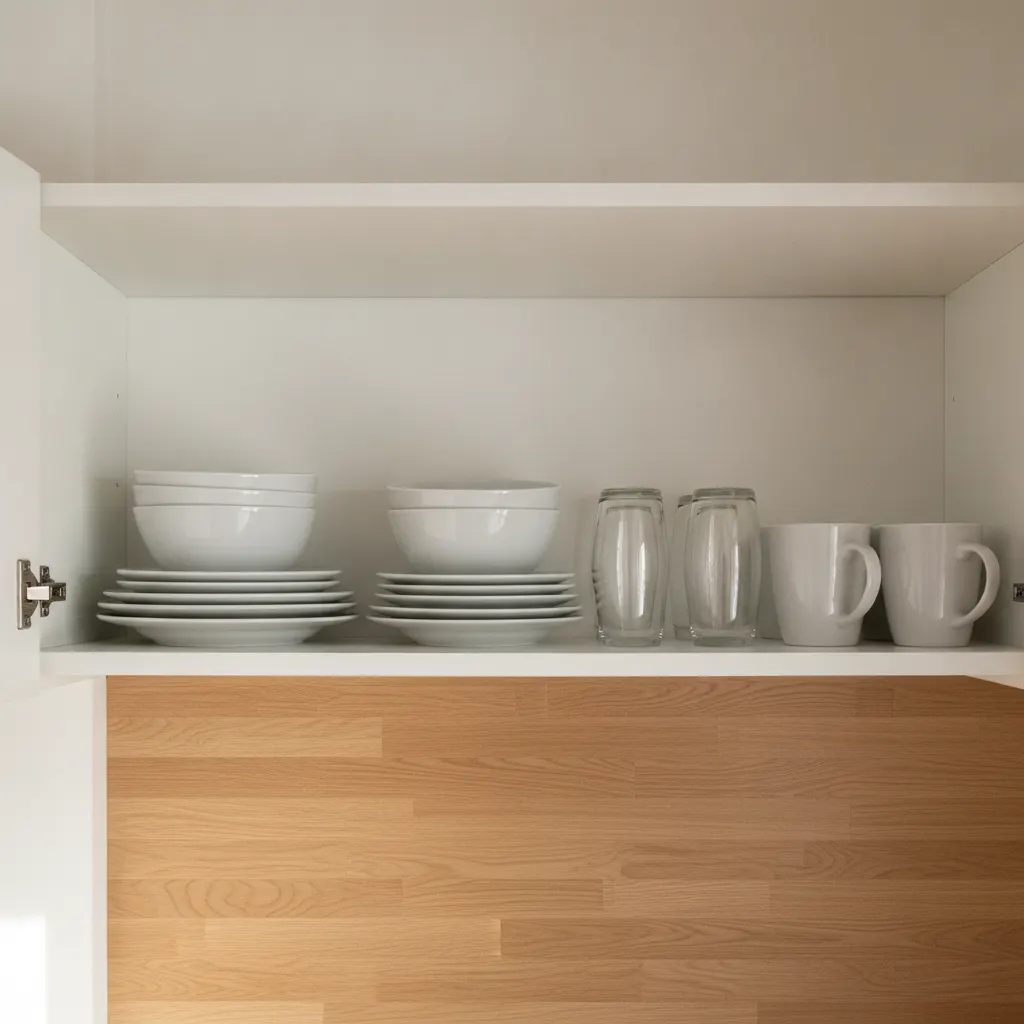
I started tracking breakages in early 2024 because I was spending money on crockery every other month with no idea of the pattern. Five properties, weekly turnovers, and an increasing stack of orders for individual replacement mugs — none of it made sense until I started writing it down.
Twelve months of data. Here's what it actually showed.
What breaks, and in what order
Glasses go first. Every time. Across five properties over twelve months, I logged 34 breakages — 18 of them were glasses. Side plates came second at seven. Mugs third at five. Dinner plates: two. Bowls: two. Everything else: zero.
This makes sense when you think about how guests use these things. Glasses get picked up by the rim, put in the dishwasher rim-down, stacked in cupboards by people who don't know where the second shelf is, knocked over on hard kitchen surfaces. A wine glass has the structural stability of a flower stem. Of course it breaks constantly.
Side plates go because guests treat them as cutting boards, soap dishes, and catch-all surfaces. They slide off counters more easily than dinner plates because they're lighter. And nobody's particularly careful with a side plate.
Mugs survive longer than you'd expect. Mine go in the dishwasher 180 times a year. The ones that break tend to have handles that were already stressed — a knock on the edge of a dishwasher rack, repeated thermal cycling. Enamel and stoneware hold up better than fine ceramic. I've learned this through a fair bit of inconvenient evidence.
What I actually buy
I standardised on IKEA 365+ for mugs, dinner plates, side plates, and bowls about two years ago. It's plain white, dishwasher safe, sold in packs, stackable, and cheap enough that I don't have feelings about replacing it. A 4-pack of mugs runs around £8. Dinner plates 4-pack is roughly £10. None of it lasts forever — but it doesn't need to. It just needs to survive two or three years of heavy turnover use, which the 365+ range manages reasonably well.
What I don't do: buy matching sets from Amazon. You'll end up with a "12-piece set" containing items you don't need and no pathway to replacing individual pieces when they break. The IKEA approach means I can order six side plates and two mugs specifically, which is exactly what the data tells me I need after three months.
Glasses are different. The IKEA POKAL tumbler — a straight-sided stackable glass, around £4 for 6 — has been my standard for two years. I don't use wine glasses in most properties. Wine glasses break constantly, they're awkward to store, and most guests who bring wine either use a glass on the first night and drink from the bottle after that, or they're experienced enough to have noticed that Airbnb wine glasses are inevitably a random assortment of whatever survived the last six months. Switched all five properties to tumblers only and my glass replacement bill dropped noticeably.
For two of my higher-rate properties, I do stock wine glasses — IKEA STORSINT, a simple stemmed glass at around £5 for 6. They're not thin-walled enough to shatter at the first dishwasher cycle and they look fine for the price. I accept roughly one broken wine glass a month per property and build that into quarterly orders.
How often I restock
Quarterly crockery audit. Not weekly — unsustainable. Instead: when a cleaner messages to say something's broken, I log it in a notes app. End of each quarter, I count what's gone, compare to minimum quantities (par levels per property), and place one order to top everything up.
This cut my crockery spend by roughly 40% compared to ordering as I went. Mainly because I'm buying in bulk rather than paying individual postage on four mugs at a time, and because I'm making one decision four times a year instead of twelve small panicked decisions scattered throughout.
Par levels for a 2-bed property
- Mugs: 6 (target). Reorder when below 4.
- Dinner plates: 8. Reorder below 6.
- Side plates: 8. Reorder below 6.
- Bowls: 6. Reorder below 4.
- Tumblers/water glasses: 10. Reorder below 7.
- Wine glasses (where stocked): 6. Reorder below 4.
I go slightly over par on tumblers because they break more than the numbers suggest they should. Guests bring them into bedrooms, they get set on uneven surfaces, they fall.
The thing that actually makes crockery last longer
Dishwasher loading instructions. I know how that sounds. But the single biggest driver of glass and mug breakage in my properties is either being loaded rim-down at an angle that causes cracking, or being placed loosely in the rack where they knock against each other through a cycle. I put a small laminated card on the inside of each dishwasher door — one line each for glasses, mugs, and knives. Cleaners use the dishwasher after every turnover. Guests use it throughout their stay.
Since I added the cards at two properties, breakages at those two are down about a third. It took me twenty minutes to make five laminated cards and I've not replaced them once. Probably the best return on twenty minutes I've had this year.
What not to do
Don't buy anything with a specific pattern. Floral edges, coloured rims, anything branded or designed — it becomes impossible to replace individual pieces. You'll have a mismatched set within eighteen months, which is fine functionally but looks a bit sad in listing photos.
Don't buy from the short-term rental supplies companies that pitch on Instagram. I've tried two of them. Quality roughly the same as IKEA at two to three times the price. The aesthetic is "generic hospitality supply warehouse" with a brand label on it.
Don't keep chipped crockery going out of frugality. Chipped ceramic cuts fingers and cracked glazing harbours bacteria in ways a dishwasher doesn't reliably fix. If it's visibly damaged, it goes. My cleaner instructions say this explicitly: anything chipped or cracked goes in the bin, not back in the cupboard.
A note on cutlery
Cutlery doesn't break in the way crockery does — but it disappears. I lose roughly four to six pieces per property per year. Forks and teaspoons mostly — into guest bags, into the bin with food packaging, who knows. I stock the IKEA MOPSIG range (plain, dishwasher safe, around £3 for 6 pieces) and reorder twice a year whether I think I need to or not. Simple enough that it barely registers as a decision.
Setting up a new property
Don't buy a matching set. Pick one range — IKEA 365+ is my honest recommendation — and buy the pieces you need individually. For a 1-bed: six mugs, six dinner plates, six side plates, six bowls, eight glasses. Enough for four guests with headroom for breakage. For a 2-bed, add two of everything. For a 3-bed, add four.
It sounds like a lot of crockery. Until you've hosted a week with four guests and the dishwasher's run five times and you find yourself one clean mug short on checkout morning and there's a new booking in six hours.
Budget around £80–£120 to fully kit out a 2-bed from scratch. Build in £20–£30 a year for replacements from the start — because the first year especially, things break more than you expect as the items get their first serious use.
The actual year-end numbers
Five properties. Twelve months. Total crockery replacement cost: £84. Per property, per month: about £1.40. Had I been ordering individual replacement pieces every time something broke, I'd estimate it would have come to around £160 — same functional result, more boxes, more packaging waste, more of my time making small decisions.
The saving isn't enormous. But the point isn't only the money. It's the system. When I know what breaks, I know what to stock. When I stock proactively, nothing's ever actually missing. And crockery is one of those things you only hear about in reviews when it's wrong — which means the goal is to never have a guest think about it at all.
Ready to streamline your inventory?
Start managing your rental inventory smarter with automated stock tracking.
Start Free Trial