Short-term let licensing in Scotland: what Airbnb hosts in Edinburgh and beyond need now
Hoststock Team
11 July 2026
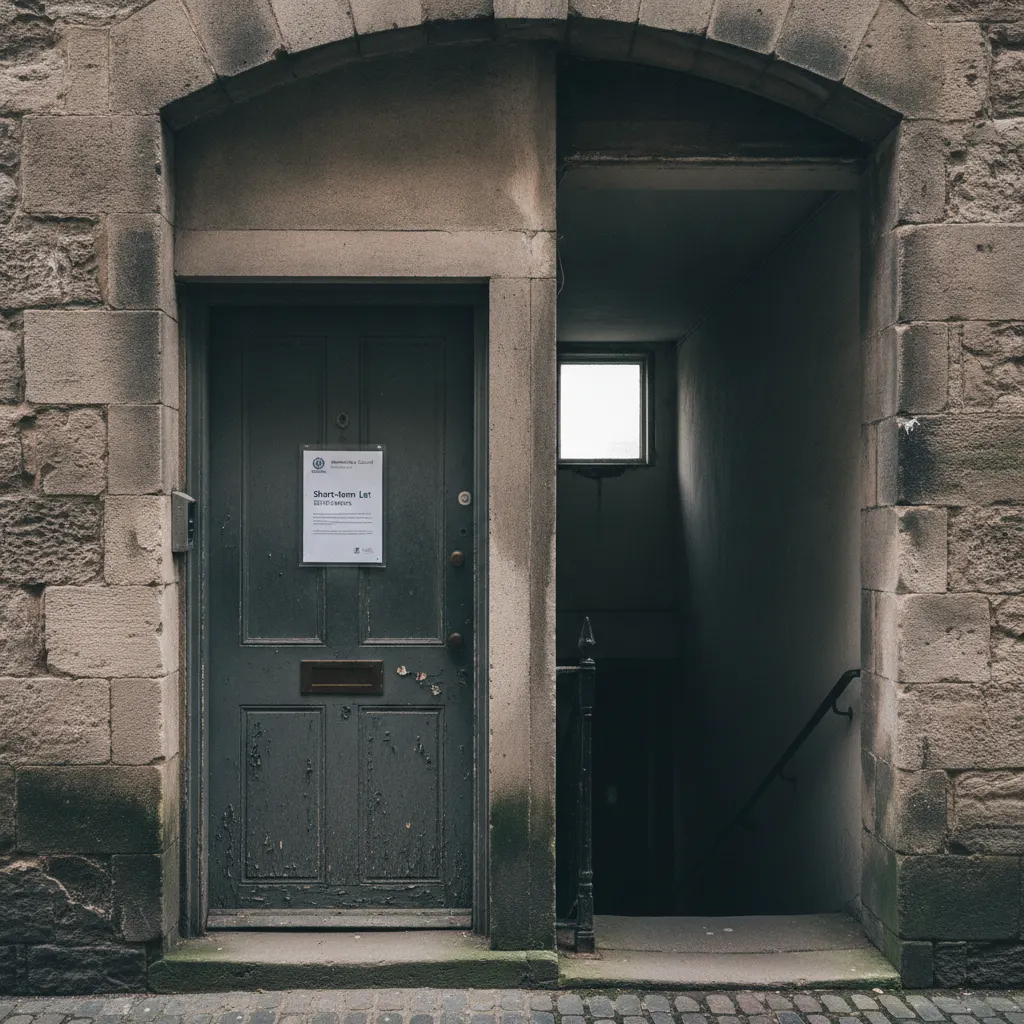
I've been running an Airbnb in Edinburgh Old Town since 2021. And I'll be honest: when the Scottish Government first announced short-term let licensing, my reaction was a version of 'I'll deal with that when it gets close.' That attitude nearly cost me a lot more than the licence fee.
Here's everything you actually need to know, whether you're already licensed, haven't started yet, or — like I was for longer than I care to admit — somewhere in between.
How the licensing regime works
The Civic Government (Scotland) Act 1982 Licensing of Short-term Lets Order 2022 created a mandatory licensing requirement for all short-term let operators in Scotland. Not some operators. All of them. Including people who let out a spare room while they're living there.
The regime has two components: a licence (administered by local councils) and, in designated control areas, a planning change of use before the licence can be issued for secondary lettings. Secondary letting means renting out a property that isn't your primary residence — i.e., most investment Airbnbs.
Edinburgh City Council designated the entire city as a Short-term Let Control Area on 5 September 2022. That's the whole city. Not just Old Town or New Town — everywhere. Other Scottish councils have taken different approaches, and not all of Scotland is a control area, but Edinburgh is entirely covered.
The key deadlines (and what they mean now)
The licensing scheme launched in October 2022. Existing hosts were given until 1 October 2023 to submit a licence application. New hosts entering the market after that date had to be licensed before they started operating.
Then came the universal deadline: 1 January 2025. After that date, any short-term let operating in Scotland without a licence was operating illegally, regardless of when they started or whether they'd applied. The grace period was over.
We're now in June 2026. If you're running a property in Scotland without a licence, you're on the wrong side of that deadline by eighteen months. That's not a technicality — councils have enforcement powers and they're using them.
What happens if you don't have one
Penalties for operating without a licence can run up to £2,500 per offence. There's also a provision for a one-year ban from applying, which would effectively shut down the property for a year. Edinburgh City Council has taken a phased approach to enforcement but they are enforcing, and the more visible your listing (a busy Airbnb property in a tourist area), the more exposure you have.
I had my licence application in by September 2023, so I was within the window. But I know hosts in Edinburgh who left it until December 2024 and had a genuinely stressful few weeks getting everything together. Don't do that to yourself.
What you need to apply
Edinburgh's application process involves several requirements that take time to gather. Start early. Here's what's needed for a secondary letting (i.e., an investment property — not your home):
Planning permission (Edinburgh only, secondary lettings). Because Edinburgh is a control area, you need to apply to Edinburgh City Council for change of use planning permission before your licence can be granted. This is a separate application from the licence itself. Planning decisions can take several months. This was the biggest surprise for most hosts I know — they assumed licensing was one step. In Edinburgh, it's two for secondary lettings.
Gas safety certificate. A current Gas Safe registered engineer certificate. Annual. Keep a copy digitally and a hard copy at the property.
Electrical Installation Condition Report (EICR). Must be carried out by a registered electrician. Valid for five years for short-term lets. If you've never had one, assume it'll cost £150-£300 depending on property size and age.
Legionella risk assessment. Required. Usually a desktop assessment for smaller properties — your existing gas safe engineer may offer this, or a specialist can do it for £80-150.
Buildings insurance. Must include cover appropriate for short-term letting. Standard buy-to-let buildings insurance doesn't always cover STL use — check your policy wording. STR-specific insurance (from providers like Guardhog or SuperCover) generally does.
Maximum occupancy confirmation. Edinburgh sets this based on the property layout and fire safety assessment.
The licence fees (Edinburgh, 2025-2026)
For a secondary letting — the most common type for investment Airbnbs:
- New licence (1 year): £653 for properties with 1-3 occupants
- Renewal licence (3 years): £1,053 for properties with 1-3 occupants
- Larger properties with more occupancy are on a different scale — the fee goes up significantly for 21+ occupancy properties
Edinburgh also charges a planning application fee separately (typically £206 for a householder change of use application). So the first-year total is roughly £860 between the planning application and the licence fee. Annoying. But for a property generating £2,000/month, it's less than half a week's revenue.
What other Scottish councils are doing
Not every council has designated a control area. Glasgow hasn't (as of mid-2026), which means secondary letting there doesn't require planning permission — just the licence. The licence application requirements are the same across Scotland (set by the national legislation), but the planning requirement varies. If you're operating outside Edinburgh, check your local council's position on control areas before assuming you need planning permission.
Licence fees vary significantly by council. Edinburgh's fees are among the higher ones nationally, reflecting the local authority's view of the tourism pressure on housing stock. Smaller councils in rural Scotland are cheaper.
What I'd tell a host starting today
If you're new to Scotland: don't list on Airbnb until you have a licence in hand, or at minimum a licence application submitted and a planning permission application in process. The grace periods are gone. Edinburgh is enforcing. Your neighbours can and do report unlicensed properties.
If you're existing and unlicensed: apply now. Don't wait. The planning application in Edinburgh takes the longest — that's the one to start first. The safety certificates (gas, electrical) take a week or two to arrange. Start those simultaneously.
If you're licensed: set a reminder for renewal. Edinburgh's three-year renewal cycle means this can sneak up on you. Put it in the calendar eighteen months before expiry so you're not scrambling to get a fresh EICR in the same month your licence lapses.
The licensing regime feels onerous when you first encounter it. The safety requirements — gas certificates, EICR, legionella assessment — are things any responsible host should have anyway. The planning permission requirement in Edinburgh is the genuinely additional burden, and it's a significant one. But it's the reality of operating in a city that has decided to regulate short-term lettings closely. Get the paperwork right and it's a straightforward operating condition. Ignore it and the penalties are real.
Ready to streamline your inventory?
Start managing your rental inventory smarter with automated stock tracking.
Start Free Trial