October supply prep for UK Airbnbs: the winter swap I do across five properties before November
Hoststock Team
21 October 2026
October supply prep for UK Airbnbs: the winter swap I do across five properties before November
I started doing a proper seasonal supply swap after getting a three-star review in November that mentioned the flat felt cold and there was nothing to warm up with. The central heating was working fine. The thermostat was set to Tado and guests could control it. What they meant was: there was no hot water bottle, the throw blanket on the sofa was a thin cotton thing I'd bought for summer, and the coffee setup had iced oat milk but no hot chocolate.
Small things. But in an Edinburgh flat in November, small things add up fast.
I now do a full October swap across five properties — Edinburgh New Town, Edinburgh Old Town, Brighton, the Lake District cottage, and my Brighton 2-bed. Takes about two hours per property over two weekends. The seasonal stock I'm rotating in costs around £35-45 per property, most of which I reuse across multiple years once I've bought the initial items.
What comes out in October
Summer items that aren't needed November through March: portable fans (I pull these and store them in the utility cupboard rather than taking them offsite — they just come down from bedroom windowsills and shelves). Lightweight cotton throw blankets replace themselves with heavier alternatives. Iced coffee pods and oat milk sachets come out of the welcome drinks station. The garden furniture at Brighton gets its covers on and the outdoor sofa cushions come inside.
I also remove: the pack of ten napkins I put out as a summer picnic amenity, the anti-insect window clips on the Edinburgh sash windows (they're a summer Edinburgh thing — the flat gets midges in July), and any sun cream or after-sun that I've left as a guest courtesy in the bathroom cabinet at the Lake District.
What goes in
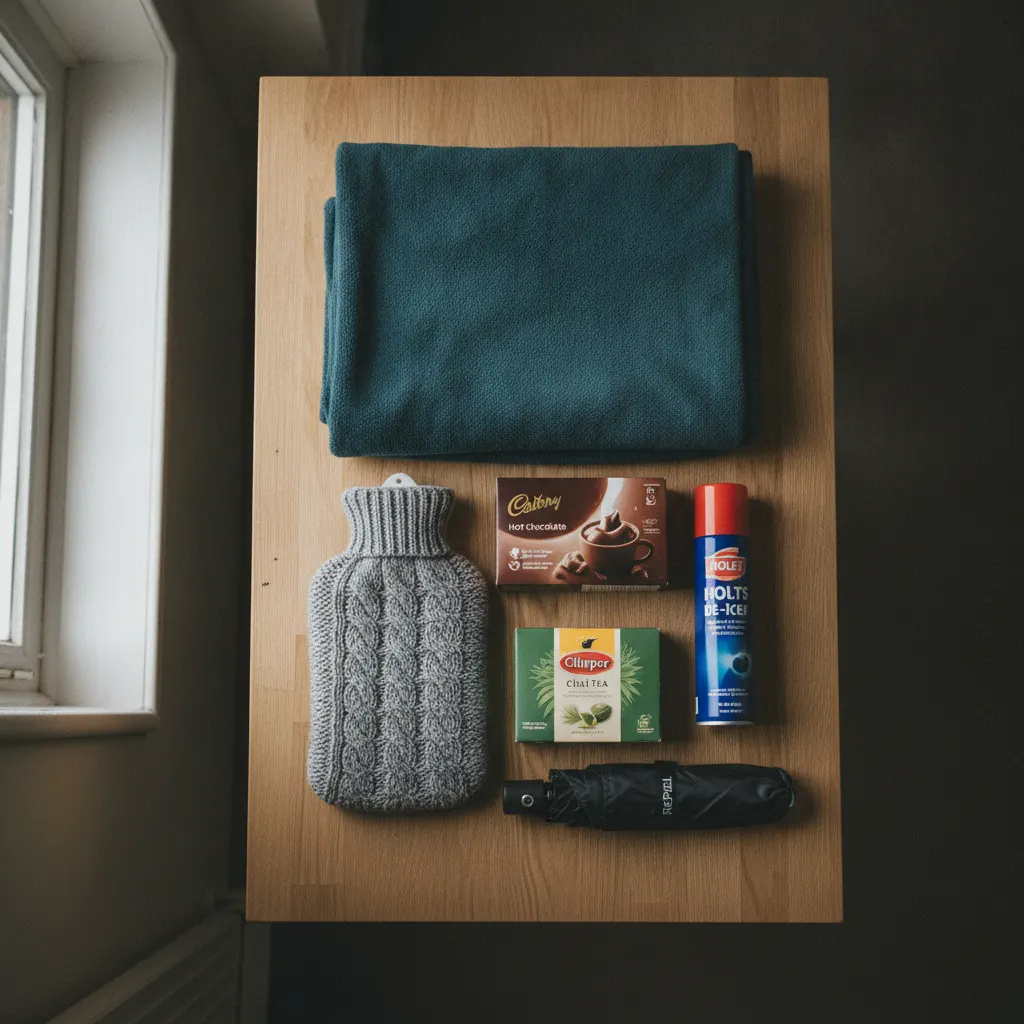
Hot water bottles
One per bedroom, plus one spare. I use the standard rubber ones with a knitted cover — not the cheap coverless ones that guests always seem to burn themselves with. The knitted cover matters. I've tried four brands over three years. The ones I've had fewest problems with are the Fashy ones from Amazon, around £12 each. The cheap unbranded ones split at the seam within a season.
Important: I include a small laminated card with the hot water bottle. Two sentences: fill with hot (not boiling) water, screw cap firmly, test for leaks over the sink before use. I've had exactly one scalding incident across five properties in four years of doing this — an elderly guest who filled the bottle with boiling water directly from a kettle without waiting, no cover in use. The card is partly CYA, but it's also genuinely useful for guests who haven't used a hot water bottle in a while.
Winter throw blankets
The summer throws I use are a 130x180cm cotton-acrylic mix that I buy from Dunelm, around £14 each. They wash well, don't shrink, photograph nicely folded on the sofa. In October these come off and I replace them with a heavier 400g-ish fleece throw — same Dunelm own-brand range, winter weight, around £18-22. Two per living space. One on the sofa, one in the bedroom if it's a cottage or a flat with a reading nook.
Extra blankets
I add one extra blanket to each bed — a single 7.5 tog folded at the foot of the bed. Not visible in listing photos, not part of the main bedding. Just there if a guest gets cold at 2am and doesn't want to adjust the thermostat. I keep a note in the welcome guide about it: extra blanket folded at the foot of each bed, help yourself.
This gets mentioned in reviews more than I expect. Three times in the last year. Once a guest said it was what tipped their stay into five stars. A folded 7.5 tog blanket from The Linen Depot (around £8-11 delivered) is doing more for review scores than some things I've spent forty times that on.
Hot drinks station update
The coffee setup stays — pods and machine unchanged. But I add three things to the drinks station in October: a box of Cadbury hot chocolate sachets (guests use these; I know because the box is always part-depleted at checkout), a box of Clipper organic chai tea bags, and some Bournville cocoa for guests who want to make the real thing.
I also add two packets of Twinings Lemon & Ginger to the herbal tea selection. Winter guests drink more herbal tea than summer ones. I have no statistical proof of this. But I do have the evidence of empty boxes vs full ones across seasons, and it correlates clearly.
Umbrella
One per property, hanging behind the front door. A cheap but not embarrassing one — I use the Repel Windproof Travel Umbrella from Amazon (around £18-20) rather than a £5 supermarket one. The cheap ones turn inside out and guests leave them broken in the hallway. The Repel ones last at least three winters per property before I replace them.
This sounds like a small thing. But in Edinburgh in November, walking out to find rain and having a functional umbrella in the hallway is one of those low-cost, high-impression guest amenities. I've had it mentioned in five reviews across two years.
Door draught excluder
The Edinburgh Old Town flat has a period front door that leaks cold air all winter. I'd had complaints about draughts in year one before I fixed it permanently. But the Lake District cottage has a similar problem with the utility door. October is when I check these and replace the excluder if it's worn. A proper fabric draught excluder costs around £12-18 and lasts two or three winters. Foam strip ones last one season if you're lucky.
De-icer
At the Lake District cottage only. One can of Holts de-icer in the boot room with a note: car de-icer, help yourself. Cost per can: around £3-5. The first winter I didn't leave one, a guest messaged me at 7:30am asking if I had one. I didn't. They left an otherwise fine four-star review with a note about the morning — a single avoidable friction point on what was apparently a good stay otherwise.
Leaving a de-icer in the boot room at the Lake District is one of the highest-ROI things I do per pound spent. Three quid, prevents one potential bad review mention per winter season.
The heating setup check
This isn't exactly a supplies issue but it fits naturally into the October check. I verify Tado is working properly at each property — the geofencing is set up, the heating schedule is appropriate for winter (I'm running a 16°C background temperature when unoccupied, rising to 21°C when guests are expected). I check that the smart thermostat app is correctly paired to the property's guest account if I use one.
I also check the boiler pressure at each property in October. Not a technical thing — just look at the pressure gauge on the boiler and make sure it's between 1 and 1.5 bar. It often drops slightly over summer. Topping it up is a two-minute job that prevents boiler fault messages in January.
What I got wrong the first two years
Year one: I thought winter prep was about heating and nothing else. Sorted the thermostat, confirmed the boiler worked. Didn't think about the tactile comfort stuff — hot water bottles, heavier throws, the umbrella. Got two review mentions about the flat feeling a bit bare in winter despite being objectively warm. The warmth isn't the only thing.
Year two: I bought cheap hot water bottles without covers. Had a minor scalding incident. Replaced all of them with covered versions mid-season. Now I only buy covered ones.
Year three onwards: the process has been basically the same. Two weekends in October, two properties per Saturday. It's now a routine that takes less thought every year because the same things go in and the same things come out.
Cost summary
Per property, first-year setup (buying everything new): approximately £80-120, depending on how many bedrooms and what you already have. This includes hot water bottles (£12-15 each), throw blankets (£18-22 each), the umbrella (£18-20), blankets (£8-11 each), seasonal consumables (hot chocolate, chai, etc. — about £15-20 per property initial stock).
Per property, ongoing years: roughly £35-45 to replace consumables and anything that's worn out. The hot water bottles and umbrellas last multiple seasons. The throws get replaced every two or three years if they're washed frequently.
The review impact is real. My November-March review score across the five properties is slightly higher than my July-August score, which I find counterintuitive but can trace directly to the work of making winter stays feel genuinely comfortable rather than just adequately heated.
Ready to streamline your inventory?
Start managing your rental inventory smarter with automated stock tracking.
Start Free Trial