Annual compliance schedule for UK Airbnb hosts: gas safety, EICR, Legionella, and the inspection I kept forgetting until I stopped forgetting it
Hoststock Team
24 July 2026
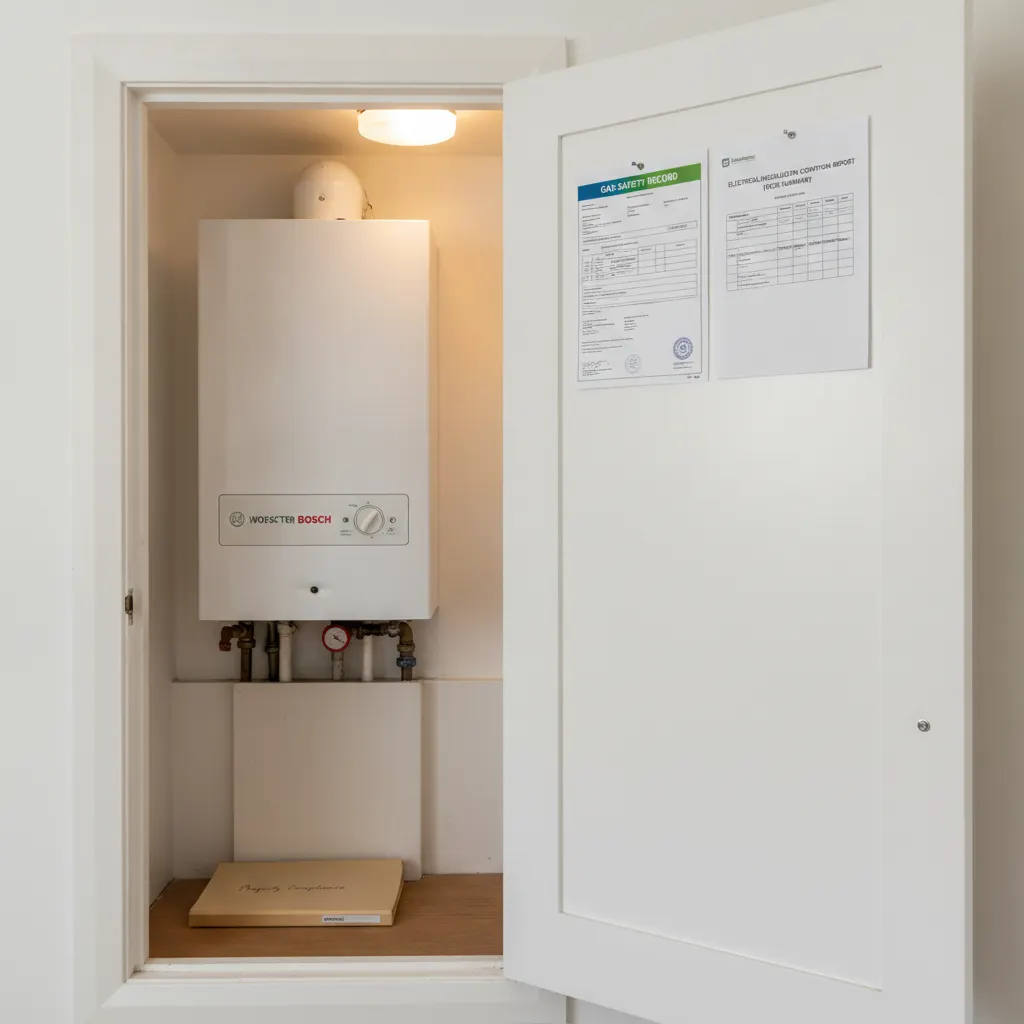
I missed a gas safety renewal. Not by years — by about six weeks. The Gas Safe engineer was booked, cancelled due to illness, I didn't chase it, and in the meantime I had a guest who was a retired HSE inspector who asked to see the certificate. I couldn't produce a current one. He gave me four stars.
That was enough. I built a compliance calendar after that and I've used it across five properties ever since. Here's what's on it and why.
Gas safety: legally required annually
Under the Gas Safety (Installation and Use) Regulations 1998, landlords — including short-term let hosts with gas appliances — must have a Gas Safety check carried out by a Gas Safe registered engineer every twelve months. The engineer issues a Gas Safety Record (sometimes called a CP12). You're required to provide a copy to new tenants or, for STRs, to make it available on request and have it clearly accessible in the property.
The engineer checks every gas appliance in the property — boiler, gas hob if you have one, gas fire if applicable — and tests flues and pipework. It takes around an hour typically and costs anywhere from £60 to £120 depending on location and how many appliances you have. In Brighton I pay around £80. In Edinburgh it's been between £70 and £95 depending on who I use.
Book it with a reminder set at 10 months, not 11. That gives you two months to rebook if the first engineer cancels. The cancellation margin is where compliance lapses. Engineers get busy, especially in autumn when everyone realises their boiler needs a service before winter.
One thing worth knowing: the Regulations also require working carbon monoxide alarms in rooms with a gas boiler. Since October 2022, carbon monoxide alarms have been legally required in any room with a gas appliance in England (extended from just solid fuel burning appliances). If you don't have one, you're non-compliant on two counts.
EICR: every five years
The Electrical Safety Standards in the Private Rented Sector (England) Regulations 2020 require landlords to have an Electrical Installation Condition Report (EICR) carried out every five years by a qualified electrician. The regulations technically apply to 'specified tenancies' — primarily assured shorthold tenancies — and their application to short-term holiday lets is a nuance that has been debated.
However: most STR insurance policies now explicitly require a valid EICR as a condition of cover. If you don't have one and something goes wrong, your insurer may decline the claim. And practically speaking, if a guest is injured due to an electrical fault in a property that hasn't had a safety inspection in five years, the absence of an EICR is exactly the kind of thing that comes up in any subsequent legal action.
Get the EICR. It costs £150–300 depending on property size and electrician. It tells you if any wiring needs remedial work before it becomes a problem. On one of my Edinburgh flats, the first EICR flagged a C2 (potentially dangerous) observation around the consumer unit that I hadn't known about. Getting that fixed cost £400. Not having known about it could have cost rather more.
The EICR expiry date goes in my compliance calendar with a reminder 12 months before it expires, so I can plan and budget for it.
Legionella risk assessment
Under the Health and Safety at Work etc. Act 1974 and the associated Approved Code of Practice (L8), landlords have a duty to assess and, where necessary, manage Legionella risk in water systems. This applies to STR properties.
In practice, for a typical domestic STR property, a Legionella risk assessment is relatively straightforward. The risk is low if: hot water is stored and delivered above 50°C, cold water is stored and delivered below 20°C, there are no dead legs (sections of pipework where water sits stagnant), and the system is used regularly. Most STR properties meet these criteria naturally because they're regularly occupied and the hot water systems are domestic scale.
You can self-assess for Legionella in domestic premises under HSE guidance, and many landlords do. I do a brief written assessment for each property annually — it takes about thirty minutes and covers the water temperature checks, condition of the hot water cylinder if applicable, and confirmation that water isn't sitting stagnant in any section of the system. I date it, sign it, and keep it in each property's compliance folder.
If you have a more complex system — a hot tub, a commercial-scale water heater, a property that sits empty for weeks at a time — get a professional assessment. The Legionella risk is genuinely higher in those cases and the self-assessment route isn't appropriate.
Smoke alarms
Since October 2022, the Smoke and Carbon Monoxide Alarm (Amendment) Regulations 2022 require at least one working smoke alarm on every storey of a property and a carbon monoxide alarm in any room with a fixed combustion appliance (gas boiler, gas fire, open fireplace, wood-burning stove). The smoke alarms must be tested at the start of each new tenancy.
For STRs, I interpret 'start of each new tenancy' as meaning each booking, which is impractical for a self-managed property. In practice I test smoke alarms monthly as part of my property inspection routine, and I record the test date. The CO alarm I replace annually rather than rely on the test button — a single CO detector is around £20–30 and the cost of getting this wrong is not one I'm willing to gamble on.
I use interconnected smoke alarms in two of my larger properties — if one triggers, they all go. It's not a legal requirement for domestic STRs but it's better practice, especially in multi-storey properties where a guest might not hear an alarm from a different floor.
PAT testing
Portable Appliance Testing (PAT) is not a legal requirement for residential landlords in England. There is no law that says you must PAT test your kettles, toasters, and lamps. What does exist is a general duty of care — if a guest is injured by a faulty electrical appliance in your property, you could face civil liability if you can't demonstrate the appliance was maintained to a reasonable standard.
I have five properties PAT tested every two years. It costs around £80–120 per property. Anything that fails the test gets replaced immediately. The paperwork goes in the compliance folder. My insurance broker recommended it when I renewed last year and at £80 every two years per property, it's not a decision I agonise over.
The actual calendar
Here's what I actually schedule for each property, per year:
- Gas safety check: annually, booked at 10-month mark
- Boiler service: annually, same visit as gas safety where possible (some engineers do both)
- EICR: every five years, booked 12 months before expiry
- PAT testing: every two years
- Legionella self-assessment: annually, done by me
- Smoke alarm test: monthly, logged in property notes
- CO alarm replacement: annually
- Emergency lighting test (Lake District cottage only — it has emergency exit lighting): 6-monthly
Everything goes into a single shared calendar with the property name and type of check. I get reminders 30 days and 7 days before each one. The 7-day reminder is for booking the engineer if I haven't done it yet.
The folder for each property holds: current Gas Safety Record, current EICR or its date, PAT test certificate, Legionella assessment, insurance certificate, and proof of alarm testing. If a guest, a council officer, or an insurance assessor asks to see something, I can produce it within two minutes.
That folder has made me money — specifically, one guest on a 28-night booking asked to see the gas safety certificate before confirming. I sent it in ten minutes. They booked. Long-stay guests at a premium nightly rate tend to be the kind of people who want to know the property is compliant. Being the host who can prove it is worth something.
Ready to streamline your inventory?
Start managing your rental inventory smarter with automated stock tracking.
Start Free Trial