Dynamic pricing for Airbnb: I tested PriceLabs, Wheelhouse and manual adjustments for a year
Hoststock Team
15 June 2026
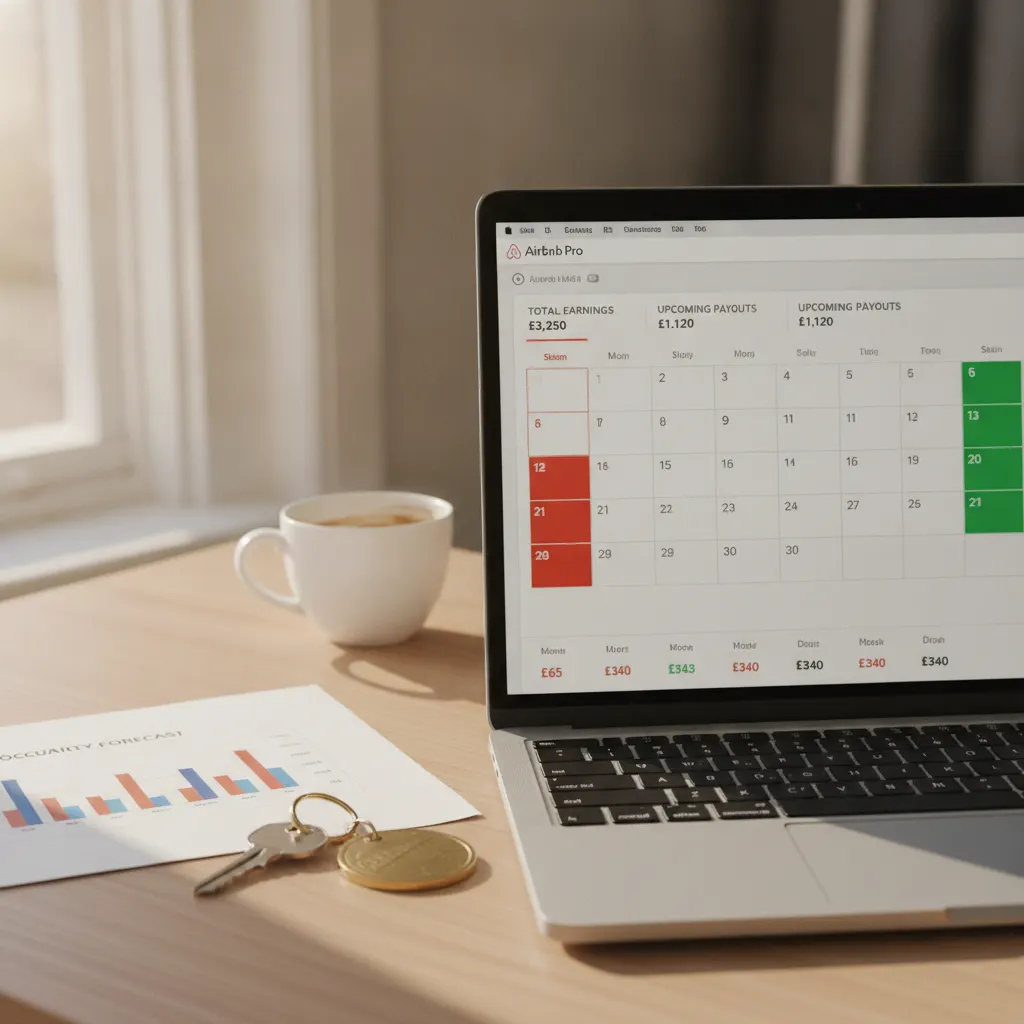
Three years. That's how long I adjusted nightly rates by hand across five properties — a Brighton flat, an Edinburgh studio, a Lake District cottage, and two more between them. Every Sunday evening, I'd open the Airbnb app, squint at the calendar, and nudge prices around by gut feel. Add £20 for a bank holiday. Drop £15 for a quiet November Tuesday. It felt like control.
It wasn't.
In January 2025 I finally set up dynamic pricing tools properly. By year end I'd tried three approaches across the same five properties: PriceLabs from January to April, Wheelhouse from May to August, and a deliberate return to manual pricing from September to December. I tracked revenue per available night, occupancy, and average daily rate throughout.
Here's what I found.
Manual pricing: faster than you'd think, blinder than you'd like
Manual isn't stubbornness. It's fine for two properties in a slow market where you know your competitors by name. I did mine on Sunday evenings — maybe twenty minutes per property if I was being thorough. Check the calendar, see what's empty over the next six weeks, react.
The problem is reaction speed. By the time I noticed a local event in Brighton — a marathon, a conference at the Brighton Centre — the faster operators had already priced up three weeks before I'd heard about it. I was leaving money on specific high-demand nights because I simply didn't know those nights existed until it was too late.
My Q4 2025 manual pricing data (September–December across five properties): RevPAR averaged £78.40. Occupancy 71%. ADR £110.48.
PriceLabs: the one that made me feel stupid in a good way
I started PriceLabs in January 2025. It costs around $20 per listing per month — roughly £15–16 at mid-2025 exchange rates — so about £80/month across five properties. The first couple of weeks, I kept overriding it. It would set my Lake District cottage at £340 for a random Wednesday in February and I'd drop it back to £180 because that felt more reasonable.
That was a mistake.
The moment I stopped second-guessing it and let the algorithm run — with my minimum price floors and maximum caps locked in — things shifted. PriceLabs is pulling from a broad comp set. It knows when an Edinburgh school has half-term, when the Brighton Fringe is drawing audiences, when Sunday nights across the Lake District are suddenly worth 40% more because a bank holiday Monday means guests can extend. I don't know any of that until it's already happened.
January through April: RevPAR averaged £92.10. Occupancy 74%. ADR £124.46. Against the same four months in 2024, that's a 17% RevPAR improvement. I can't attribute all of that to PriceLabs — January 2025 was a stronger travel market — but the gap was hard to ignore.
The setup takes about two hours per property the first time: think carefully about minimum prices, seasonal adjustments, and how you want the algorithm to handle gap nights. The defaults are actually reasonable for UK STR operators.
Wheelhouse: same premise, different feel
I switched to Wheelhouse in May, partly out of curiosity and partly because a host in my Edinburgh WhatsApp group swore by it. Pricing is roughly comparable — around $19–20 per listing per month.
Wheelhouse's interface is cleaner. The market report tab became something I actually read on Sunday evenings instead of staring at the raw calendar. You get a real sense of local supply and demand shifts in your comp set — PriceLabs buries that data a bit deeper.
Revenue May to August: RevPAR averaged £104.30. Occupancy 76%. ADR £137.24. Summer is always higher, so direct comparison with Q1 isn't fair — but these numbers sat about 8% above my 2024 equivalent summer period.
Where Wheelhouse fell short, in my experience: it was slightly more conservative filling gaps. My Edinburgh studio had several empty Tuesday/Wednesday nights in June that I'd have expected to fill at £80–90. Wheelhouse held at £95 and they stayed empty. Whether that was the right call, I can't say definitively — but it frustrated me at the time.
Airbnb Smart Pricing: why I don't use it
Both PriceLabs and Wheelhouse are third-party tools. Airbnb has its own Smart Pricing feature built in. I tried it in 2023 and turned it off after six weeks.
The incentive problem: Airbnb Smart Pricing optimises for bookings, not your revenue. More bookings means more service fee income for Airbnb — fine for them, not great for you if your flat fills at £75 when it could reasonably hold £100. On the Brighton flat during my testing period, Smart Pricing ran my average nightly rate about 12% below my manual prices while achieving similar occupancy. That's roughly £8–10 per night, or close to £2,000/year on that one property alone.
I haven't done a rigorous controlled study on this. But the hosts I know who use Smart Pricing long-term tend to be the ones who can't quite explain why their occupancy looks fine while their income doesn't match it.
Setting your floors — the decision that matters more than the tool
Both tools are only as good as the inputs you give them. The minimum price you set is the most important decision in the whole system.
Mine are property-specific. Edinburgh studio: £65 minimum (all-in cost per turnover is about £55, so below £65 I'm losing money). Brighton flat: £95. Lake District cottage: £140. These came from actual cost tracking — cleaning, consumables restock, Airbnb's 3% host fee on the split-fee model, linen service, utilities estimate per stay.
Set your floor too low and the algorithm books you out at a loss during slow periods, chasing occupancy. Set it too high and you'll have calendar gaps that never fill. Mine took six months to calibrate properly. I still adjust them in February for the new season.
Lead time changes I didn't expect
One surprise: dynamic pricing tools change your booking lead time. When I priced manually, I'd often drop prices aggressively for dates 2–3 weeks out to fill gaps. PriceLabs does that too — but it does it surgically, and it holds prices higher for dates 6–8 weeks out where it can see demand starting to cluster.
Result: average booking lead time extended from about 18 days (manual) to 28 days (PriceLabs). That might not sound like much, but knowing 28 days out that a week in the Edinburgh studio is already 80% booked changes how I manage supply replenishment, my cleaner's schedule, and my own anxiety levels.
What I'd do differently
First mistake: I started PriceLabs in January with minimal historical data loaded. It spent the first four weeks calibrating from essentially nothing. The smarter move is to spend 30 minutes before launch loading historical pricing and occupancy — most tools can pull it via the Airbnb API integration or a manual import.
Second: pick one tool and stick with it for at least three months before judging it. I tweaked settings constantly in the early weeks, which interferes with calibration. These algorithms learn from booking behaviour over time. Constant overrides slow them down.
Third: tell your cleaner before you switch. Dynamic pricing shifts booking patterns — more short stays clustered around high-demand weekends, fewer mid-week fills. My Brighton cleaner had to adjust her availability because the turnover spread changed. A ten-minute conversation would have saved a slightly awkward one about scheduling conflicts three months later.
The year in numbers
Full-year RevPAR, all five properties combined:
- 2024 (manual throughout): £83.40 average RevPAR
- 2025 (PriceLabs/Wheelhouse Q1–Q2, manual Q3–Q4): £91.70 average RevPAR
A 10% improvement in revenue per available night — roughly £8.30 per night. Across five properties at around 250 available nights each, that's an additional £10,375 in annual revenue. Tool costs across the year: approximately £960. Net gain somewhere around £9,400.
These are my numbers, my markets, my property types. They won't map exactly to yours. But the direction is consistent with what other multi-property hosts I know report: dynamic pricing earns back its subscription within a few months on most portfolios above three properties.
Which tool for which type of host
One or two properties, hands-on approach: Wheelhouse. The market insight dashboard will teach you your market faster than pure intuition, and the interface doesn't require a configuration weekend to understand.
Three or more properties, want to mostly set it and trust it: PriceLabs. The customisation depth is greater, the market data feeds are broader, and integration with channel managers like Guesty, Hostaway, and Lodgify is more reliable in my experience.
Tight margin, reluctant to add another monthly subscription: do the maths first. Take your last twelve months of revenue per available night. Add 8–10%. Compare to the monthly subscription cost times twelve. If the upside is at least 3x the cost, the tool pays for itself — especially in year two once you're past the configuration phase.
Still using Airbnb Smart Pricing and finding that occupancy looks fine but income feels lower than it should? Yes, that's probably what's happening. Check your ADR against comparable listings in your market. You'll have your answer fairly quickly.
Ready to streamline your inventory?
Start managing your rental inventory smarter with automated stock tracking.
Start Free Trial