Pillow replacements for Airbnb: how often I swap them and what I buy in batches of 20
Hoststock Team
6 June 2026
Pillows were the last thing on my hosting priority list for about two years. New mattresses, good duvets, decent protectors — yes. Pillows? Fine. Whatever. I bought a batch at the start, shoved them in white pillowcases, and got on with my life.
Then a guest — polite, lovely person, four-star review, Brighton flat — mentioned in passing that one of the pillows smelled a bit. Not badly. Just slightly musty. I pulled every pillow out of every flat that weekend and went through them. Half of them were, if I'm honest, a bit grim. Not visibly so, but the kind of grim that lives inside foam and synthetic fill and doesn't come out in a normal machine wash.
That started a more systematic approach to pillows. Here's where I've landed.
How long do pillows actually last in a short-term rental?
In a normal household, pillow manufacturers say replace every one to two years. For a lightly used spare bedroom, maybe every three years. But an Airbnb property is not a normal household — it might do 80-120 turnovers in a year, with different guests every few days, heads against pillows every single night.
My rule now: every 12-18 months, across the board. Not when they fail visually — they'll look fine long after they've stopped doing their job and started harbouring whatever it is pillows harbour when they're used constantly. Just on a schedule.
The practical version: I do a full pillow audit twice a year, in January and July. January because it's quiet and I have time. July because summer is peak season and I want everything at its best going in. Any pillow that's over 18 months old gets replaced, full stop.
What I actually buy
I buy synthetic-fill pillows almost exclusively. The reasons:
Machine washable at 60°C. Goose down and feather pillows generally need specialist cleaning — some can go in a machine, but the drying time is long and doing them properly at turnover pace is impractical. Synthetic fills wash at 60°C, tumble dry on medium, done in two hours. At turnover frequency, that matters.
Cheaper to replace at scale. I'm running 10 beds across five properties. Two pillows per bed, 20 pillows total, replacing every 18 months means roughly 13-14 pillows per year. At £8-12 per synthetic pillow in bulk, that's £110-170 per year in pillow costs. The equivalent down pillow at £25-35 each would be three times that.
Consistent feel. I want all my pillows across all properties to feel the same, so I'm not getting differential reviews based on which flat happened to have the firmer batch. Buying the same SKU repeatedly, in cases of 10 or 20, gives me that consistency.
The brand question
I've been through several brands. The ones I've used over the past three years:
Ikea Fjädrar — goose feather, not suitable for my wash-at-60°C requirement, but I mention it because it's what I started with and many new hosts default to Ikea. Fine as a home pillow. Not the right call for high-turnover STR use.
Ikea Sömnig — their mid-range synthetic. Decent for the price, holds up reasonably well, but the fill tends to clump after about 30 washes. I moved away from these after a year.
Amazon Basics synthetic firm — reliable, boring, functional. I've had good results over about two years. Not soft enough for some guests — I've had a couple of reviews mentioning the pillows being on the firm side, which is personal preference territory, but worth noting.
Catherine Lansfield hotel-collection pillows from wholesale — this is what I use now for most properties. Medium firmness, washable at 60°C, hold their shape well through multiple washes. I order through Amazon Business or occasionally direct from a hotel supplies wholesaler when I'm buying 20+ at once. Price comes out at around £9-11 per pillow at that volume.
Pillow protectors — don't skip these
Every pillow gets a pillow protector under the pillowcase. Zippered, washable at 60°C. They extend the life of the pillow significantly by keeping body oils and moisture from getting into the fill. I change them every turnover along with the pillowcase.
The protectors I use cost about £4-6 each. A set of 20 is £80-120 and lasts two to three years even at high turnover. That's cheap insurance against a pillow dying early. The smell issue I mentioned at the top — a guest mentioning a stale pillow — would not have happened if the pillow had a protector from day one. Worth getting this right from the start rather than retrofitting.
Storage and rotation
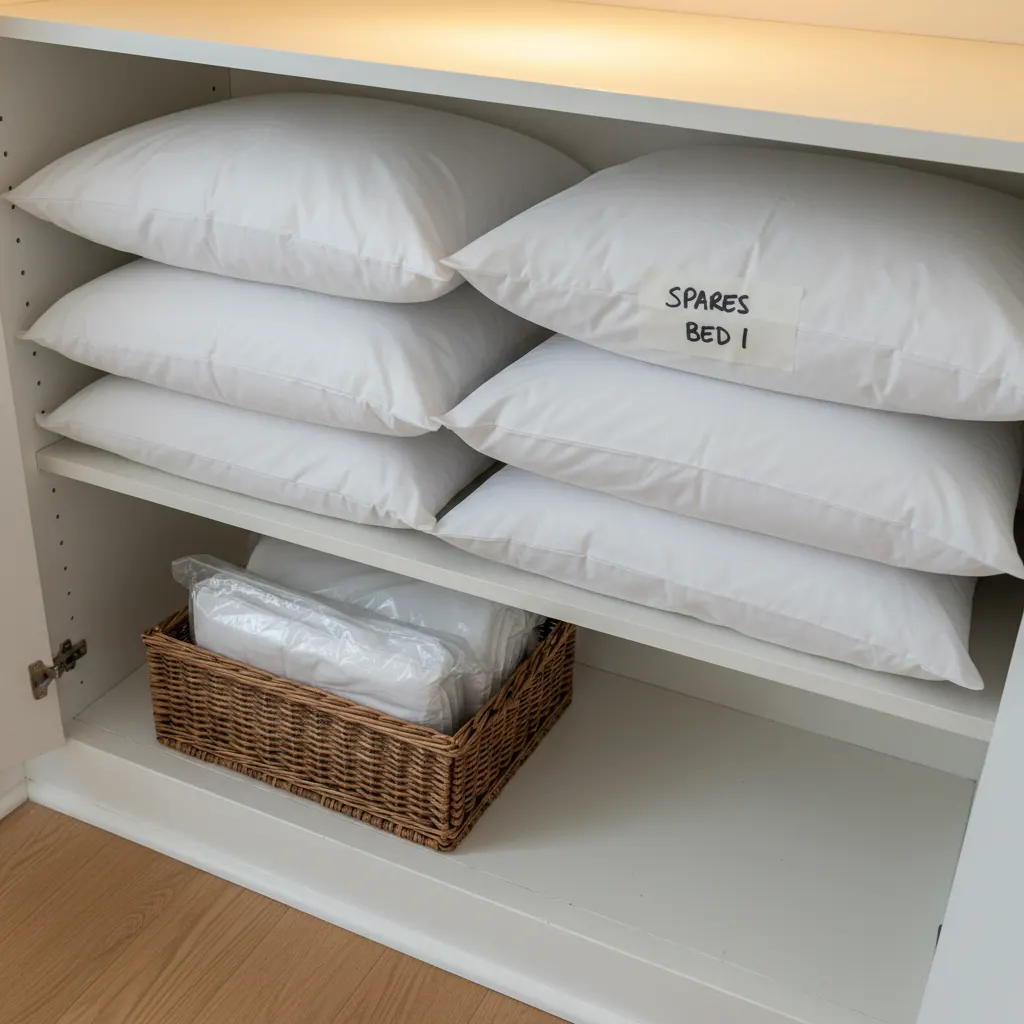
I keep two spare pillows per bed at each property — double what's on the beds. When something gets replaced in the audit, the spares rotate in and a new batch of spares goes into the cupboard. This means I'm never in a position where a washed pillow needs to go on a bed still damp, and any mid-stay emergency (a guest with a heavy nosebleed, for example — it happens) can be handled without scrambling.
The Edinburgh flat has a small airing cupboard. The Brighton flat has a storage unit in the hallway. The cottage has a dedicated linen room that I'm embarrassingly proud of. Whatever space you've got, make sure the spare pillows are accessible to your cleaner, clearly labelled, and stored in pillow protectors even when not in use.
The boring summary
Replace every 12-18 months. Use synthetic-fill, washable at 60°C. Put a protector on every pillow. Keep two spares per bed. Buy in batches through Amazon Business or a hotel supplies wholesaler and the per-unit cost drops into single figures. The whole operation across five properties costs me about £200-250 per year, which is less than one bad review costs me in lost bookings.
The stale pillow review cost me one booking that I can trace — someone who saw the review and messaged asking about the beds before not booking. That's a conservative estimate of £70-90 of lost revenue from a problem that a £10 pillow protector and a regular replacement schedule would have prevented.
Ready to streamline your inventory?
Start managing your rental inventory smarter with automated stock tracking.
Start Free Trial