Amazon Business vs Costco vs trade wholesalers: the real maths for a 5-property Airbnb portfolio
Hoststock Team
29 April 2026
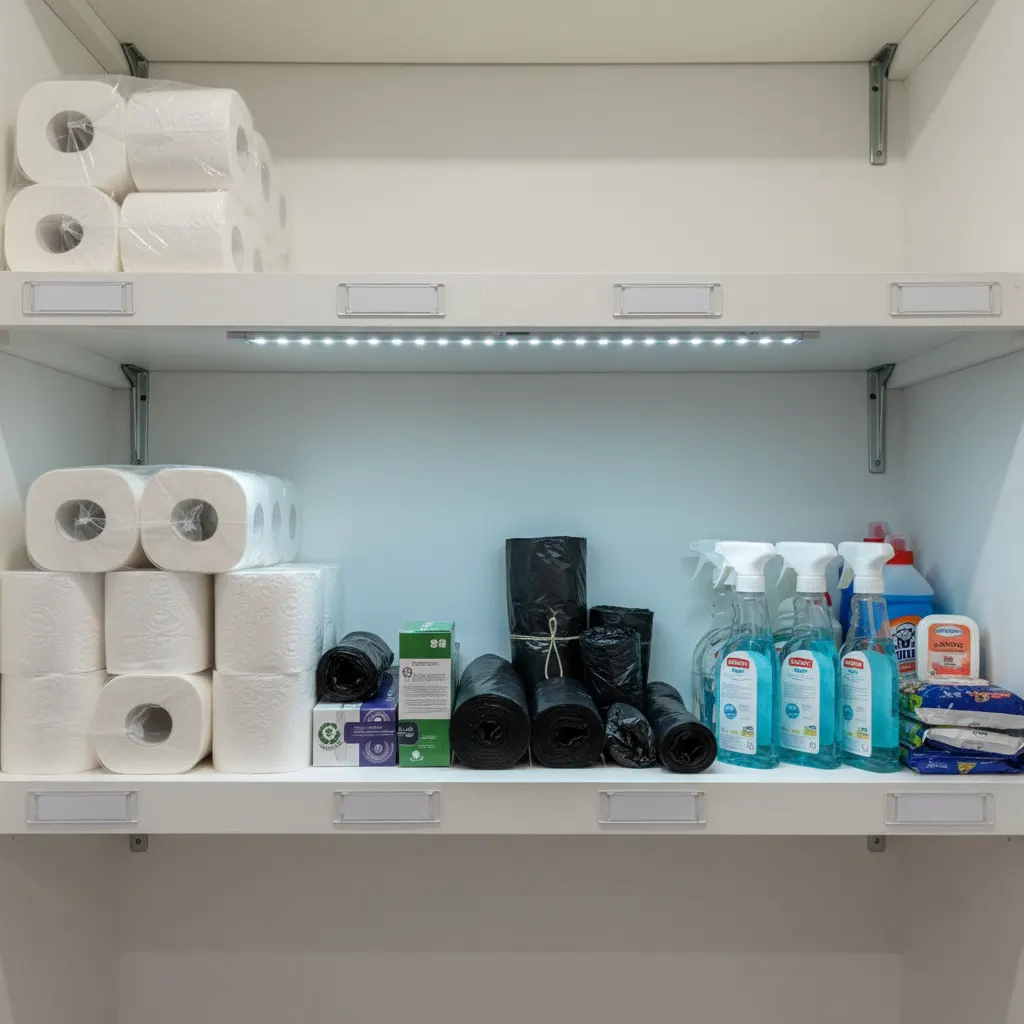
For about eighteen months I was buying supplies from wherever was cheapest on a given Tuesday morning. Amazon Prime, Costco runs twice a month, a trade wholesaler in Portslade for cleaning stuff, and the occasional emergency trip to Tesco when I'd miscounted toilet roll.
It wasn't a strategy. It was chaos with receipts.
Last January I got a grip. Split one calendar year's supply buying across three channels, logged every line item into the spreadsheet I've been meaning to throw out, and at the end of the year ran the numbers. The winner wasn't the one I was expecting. Neither was the loser.
Here's what I actually found across five properties — two Brighton flats, two Edinburgh flats, one Lake District cottage.
The three channels
Amazon Business UK. Free to join if you've got a VAT number or a Ltd company. VAT-exclusive pricing on most items, plus business-only deals that don't show up on the consumer site. Prime counts toward your business account, delivery is generally next-day or two-day.
Costco UK Trade membership. Annual fee (ballpark £30 a year, ex VAT — check the current figure because it creeps up). You need a trade qualification — a VAT number or business certificate. Warehouse-only until a few years ago; now has online delivery too, though the cheapest prices are still in-store.
Trade wholesaler. Mine's a janitorial supplier in Portslade, name redacted because I'm not plugging them. Cash-and-carry model. No membership, but you need a business reference to open an account. Minimum order £100, free delivery on anything over £250.
What I bought, and where it ended up being cheapest
I tracked 34 line items across the year. Everything from toilet roll to bin bags to shower gel to cleaning cloths. Let me group them.
Bathroom amenities (shampoo, shower gel, conditioner, soap)
Trade wholesaler won by a lot. My wholesaler stocks a 5L refill format of a decent own-brand toiletries range — not Molton Brown, obviously, but a step up from the standard hotel glop. Per-ml cost is about 45% cheaper than the same volume bought as individual 30ml miniatures on Amazon Business. But here's the catch: I had to buy refillable dispenser bottles, which was a one-off hit of about £80 for my five properties. Paid back in three months. Still paying dividends two years later.
Amazon Business was close on branded miniatures (Rituals, Faith in Nature, etc.) if I caught a business deal. Costco was no good for this category — too consumer-facing.
Toilet roll and kitchen roll
Costco. Not close. Costco's Kirkland 2-ply toilet roll is about 30% cheaper than any equivalent Amazon Business offering when you're buying 30-pack boxes. The kitchen roll equivalent is similar. You just have to have somewhere to store eight packs of 30.
My Brighton flats share a storage cupboard in one of the buildings. The Edinburgh flats do not, and I've had to rent a small lockup — £45/month — for the bulk stock. That changes the maths. If you're doing this for fewer than four properties, you might not break even on storage costs.
Tea, coffee, sugar, condiments
Mixed. Costco is brilliant on Yorkshire Tea 240-bag boxes and on PG Tips in bulk. Terrible on anything fancy — their coffee pod selection is limited and often not compatible with the machines I'm using. Amazon Business won on L'OR and Café Royal compatibles, usually within 5% of Costco pricing but with more range.
Trade wholesaler had the cheapest condiments. Heinz ketchup, HP sauce, Colman's mustard — all in catering-size bottles I had to decant into small jars for guest use. I stopped doing the decanting because it was boring, and Amazon Business won overall for condiments once labour's factored in.
Cleaning supplies
Trade wholesaler. Not even close. Bulk laundry detergent, commercial-grade surface cleaner, bleach in 5L, cleaning cloths in boxes of 200, bin bags in rolls of 200. The per-unit cost is a fraction of Amazon Business, and the quality is better — these are the products commercial cleaners actually use.
My cleaner refused to use Amazon Business's own-brand cleaning products after three months. "This stuff is for someone's kitchen, not a rental." She was right. The wholesale equivalents cut through ground-in food better and left less residue.
Electrical / replacement hardware
Amazon Business. Obviously. Lightbulbs, USB chargers, kettle replacements, the little bits and pieces you need same-day when something breaks. Costco doesn't stock much of this, and the wholesaler has it but with a £100 minimum order which is useless for a single lightbulb.
Amazon Business also won on HDMI cables, remote control batteries, and all the fiddly items that go missing between stays. I keep a running list and order once a month.
Kitchenware and soft furnishings
Mixed, but Costco surprised me here. Bed linen in particular — their 500 thread count cotton sheets, when they're in stock, were cheaper per set than anything comparable on Amazon Business. The catch is availability: Costco rotates ranges, and I've been burnt twice by committing to a sheet range that disappeared six months later. Now I only buy from Costco if the item is a staple (glassware, cutlery, white towels) that'll still be there in a year.
Trade wholesaler had the cheapest bath towels but only in institutional-grade (thin, scratchy, 380 GSM). Fine for gym towels, not for Airbnb.
Amazon Business was the default for coloured towels, kitchen storage, and anything where I needed specific dimensions.
The total I actually spent
Across the year, supply spend across five properties came to roughly £11,400. Here's the rough split:
- Amazon Business: £4,600 (40%)
- Trade wholesaler: £4,100 (36%)
- Costco: £2,700 (24%)
For comparison, my previous year — pre-strategy — was about £13,800 across the same properties on roughly the same stuff. So disciplined channel choice saved me about £2,400 a year, or £40 per property per month. Not a revolution. But not nothing.
The channel I thought would win
I had Costco pencilled in as the champion before I started. It isn't. It's third, by a decent margin, and the reason is storage and waste.
Costco's pricing model only works if you buy in their pack sizes and use every unit. I spent most of year one throwing out food items that had gone past date because I'd overbought. The toilet roll is fine — it doesn't expire. The kitchen roll is fine. The Yorkshire Tea is fine. But the biscuits, the jams, the little condiment jars, the welcome-pack filler items — all of those went stale in my cupboard because I'd bought a pack of 48 when I needed 20 a year.
Trade wholesaler has the same problem on paper (big minimums, bulk sizes) but most of my wholesale items are cleaning products that last two years in the cupboard.
The channel I underestimated
Amazon Business. I had it pegged as overpriced convenience. It's not — not for our volume. Next-day delivery to five different postcodes, business-only pricing on about 30% of items, VAT-exclusive invoicing that my accountant actually thanked me for, and the occasional genuinely good deal.
The hidden advantage is the returns. If something's rubbish, it goes back. Costco returns mean a warehouse trip. Trade wholesaler returns mean a phone call and a delivery pickup and a lot of paperwork. Amazon Business is a button.
And the subscribe-and-save equivalent for businesses has got better. I've got standing monthly orders for bin bags, shampoo refills, and cleaning cloths that just turn up. Used to be I'd forget to reorder and run out, and then have to do a Tesco emergency run at 8am on a turnover day.
What I'd tell a host with three properties
Don't bother with Costco unless you have dedicated storage. The membership is cheap but you need to clear at least £500 a year to make the trip time worth it, and you need somewhere to put the stock.
Do join Amazon Business. It's free, it costs you nothing, and even if you only use it for the VAT-exclusive pricing you'll save on your tax bill.
Do find a local trade wholesaler for cleaning supplies. Ask your cleaner — she'll know where the commercial cleaners buy their stuff. It's always cheaper than anything you can find online. It just requires an account, which requires a business reference, which takes ten minutes to set up and a week to be approved.
And keep a one-page spreadsheet of what you buy, where you buy it, and what it costs per unit. Review it every six months. Prices drift. I had one shampoo supplier put their price up 18% in a single year and I didn't notice for four months.
The bit I'm still wrong about
I've been meaning to get an order up with a proper linen wholesaler — Saat, Richard Haworth, Mitchell and Bright, that calibre — for eighteen months. Keep putting it off because the minimums look scary. But every host I know who's made the switch reckons they've saved 20-30% on linen over a year.
Next quarter, promise.
Ready to streamline your inventory?
Start managing your rental inventory smarter with automated stock tracking.
Start Free Trial