Smart locks for Airbnb: Yale Linus vs Nuki Smart Lock after 18 months across four properties
Hoststock Team
4 June 2026
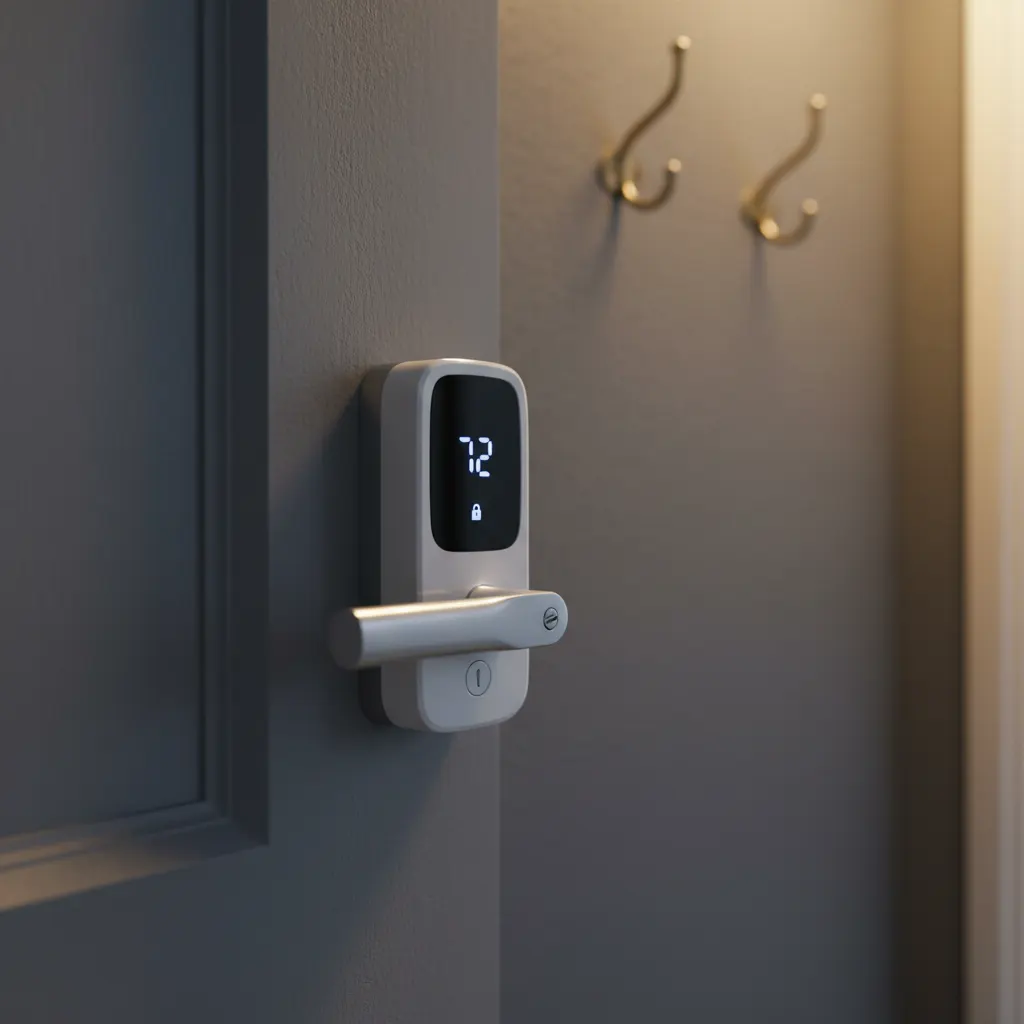
I used to manage check-ins with a key safe. A small combination box screwed to the wall beside the front door, the code in the booking message, replaced every few months when I remembered to change it. It worked, mostly. Then I had a guest who couldn't figure out how to open it at 11pm in January and spent 45 minutes on the phone to me while I tried to explain, over the phone, how a key safe works. I replaced all four of my smart-lock-capable front doors within the following six weeks.
That was early 2024. I've been running a split setup since then — two properties on Yale Linus, two on Nuki Smart Lock Pro — partly by accident, partly because I wanted to compare them properly before committing fully. Eighteen months in, I have actual opinions.
The basics of both
Both are retrofit smart locks — you fit them over your existing cylinder, so no locksmith, no new lock, no changing your keys. Both connect via Bluetooth to an app on your phone. Both let you issue time-limited digital keys to guests that expire automatically at checkout. Both keep an access log so you can see exactly when the lock was used.
That's the common ground. The differences are where it gets interesting.
Yale Linus
The Yale Linus replaces the inside half of a euro cylinder lock with a motorised turn. It's a UK company, so the product was designed for the UK market — specifically for the euro profile cylinders that are standard on most UK UPVC doors. Installation took me about 20 minutes on the first one, 12 on the second once I knew what I was doing.
What I like: the Yale Access app is genuinely good. Issuing a guest a time-limited code or key is about four taps. The lock integrates with Google Home and Amazon Alexa if that matters to you. It's reliable — I have had one lock-out incident across 18 months, and that turned out to be the guest using the wrong code.
Battery life is advertised at about a year. My real-world experience: the two Yale properties go through a set of AA batteries every seven to eight months at around two to three turnover uses per week. That's better than expected. I get a low-battery notification in the app before it becomes critical, which I appreciate enormously — nothing worse than a lock dying mid-stay.
Price point is roughly £100-130 for the lock itself. You can add a Yale Smart Keypad for external PIN entry (an extra £60-80), which I have on both Yale properties — it's the equivalent of a key safe but integrated with the app, so codes are issued automatically via the booking and expire when they should.
Nuki Smart Lock Pro
The Nuki is a German product with a strong following in mainland Europe and a solid UK presence. It works differently from the Yale: rather than replacing the cylinder, it attaches to the thumb-turn on the inside of your existing door lock and rotates it. More adaptable — it works on more door types and doesn't require a euro cylinder profile — but the installation is slightly fiddlier because you need to configure it to your specific turn angle.
Nuki's big advantage over Yale is that the Smart Lock Pro has a built-in Wi-Fi bridge, so you don't need a separate bridge unit to manage the lock remotely when you're not on Bluetooth range. The Yale requires either your phone to be present or a separate Smart Hub (~£50) for full remote operation. The Nuki Pro just works over Wi-Fi from the start.
I've had one Nuki intermittently fail to turn on the first push — a known issue with some door configurations where the lock mechanism has significant resistance. Nuki's workaround is a motor strength calibration in the app, which mostly sorts it. But it's happened twice in 18 months with a guest waiting outside, and that's once too many.
Battery life is worse than Yale in my experience — CR2 lithium batteries, and I'm replacing them every five to six months at similar usage. The batteries are more expensive than AAs. Nuki sells a rechargeable power pack accessory that bypasses the battery problem entirely, which I should probably just buy and be done with it.
What I've actually kept
If I were fitting fresh locks today, I'd go all-Yale for UK properties with standard euro cylinder UPVC doors. The app is better, the battery life is better in practice, the keypad integration works cleanly, and I haven't had a lockout from a mechanical glitch. The Nuki is a good product — I'm not taking them out, I'm just not ordering more of them.
For anyone with non-standard doors — older properties without euro cylinders, some older Scottish tenement flats with rim locks — Nuki is often the only retrofit option that will physically fit. In that case, the choice is made for you.
What neither of them does
Neither automatically pushes access codes to Airbnb guests at booking. You need to build that workflow yourself — either manually issuing codes when a booking comes in, or through an integration layer like Hostfully, Lodgify, or a simple automation via Zapier or Make. It's not difficult but it is a setup step that some hosts miss, then wonder why the access management isn't seamless.
I use a property management system that handles the guest messaging and code dispatch automatically. The lock just executes whatever the PMS sends it. Once that's running it's effectively invisible — I haven't physically touched a key for any of the smart-lock properties since April last year.
The bit about battery failure
Get the low-battery notification set up before anything else. Both locks will drain a battery faster than expected in cold weather — my Lake District cottage, unheated between stays in winter, can go through batteries in four months rather than seven. If the battery dies with a guest arriving that evening, you've got a problem that takes a physical key to solve.
I keep a physical emergency key in a separate, well-hidden location at each property, known to me and my cleaner. Smart locks are reliable. They're not infallible. The physical backup costs nothing and has saved me once — a Nuki that went flat overnight between a battery change and a guest arrival. One time in 18 months. But once is enough.
Ready to streamline your inventory?
Start managing your rental inventory smarter with automated stock tracking.
Start Free Trial