Short-term rental insurance in the UK: what I pay, what's covered, and what I found out the hard way
Hoststock Team
17 June 2026
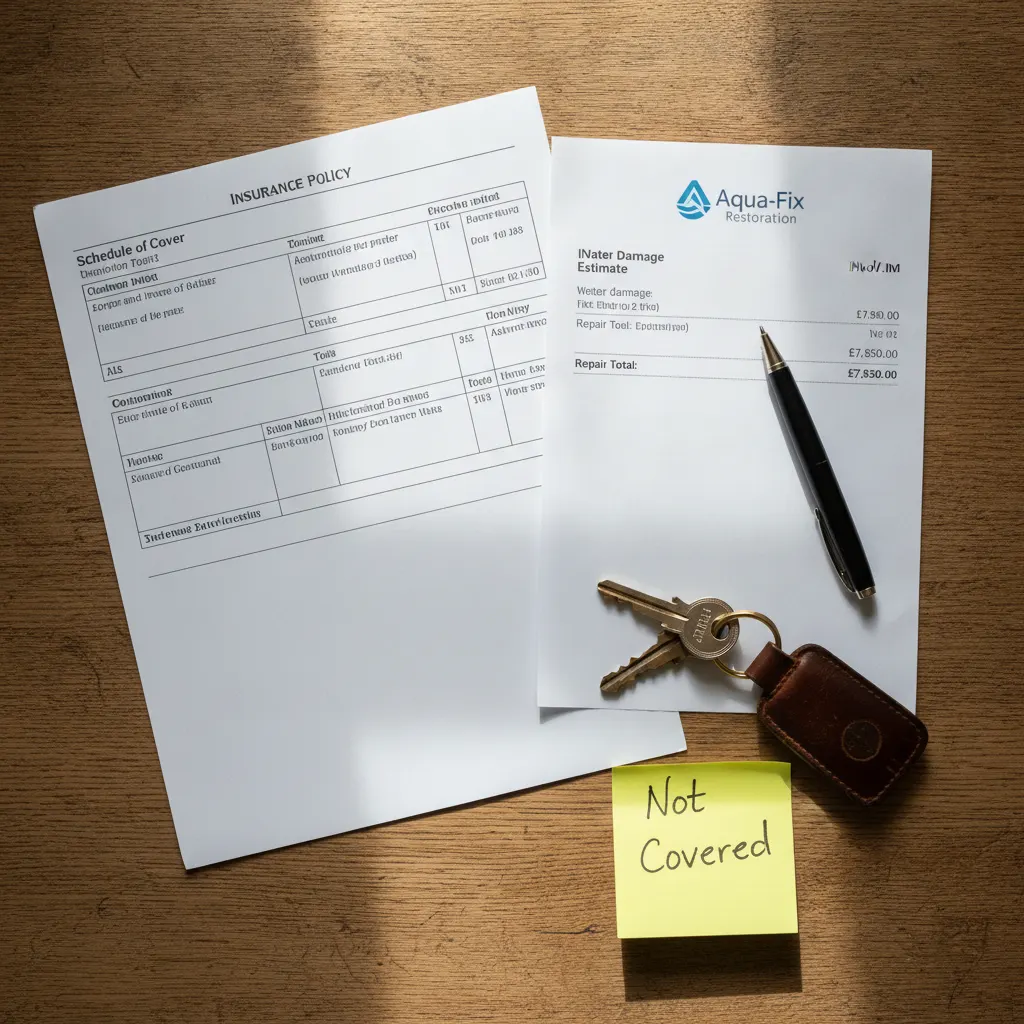
For the first two years I ran Airbnb properties, I had standard home insurance with a "short-term let" add-on from my existing provider. I told myself it was fine. I'd read the policy summary, not the full document, and assumed that because short-term lets were mentioned somewhere in the paperwork, I was covered.
I wasn't, for most things that actually matter.
I found this out in March 2024, when a guest left a bath tap running and walked out to dinner. £2,100 in water damage to the flat below mine in Brighton. My standard add-on covered the structural damage — eventually. It didn't cover loss of rental income for the six weeks the flat was uninhabitable during repair. It didn't cover the guest's personal property claim when she said the flood "damaged her laptop bag." And it had an excess of £1,000, which I'd genuinely forgotten.
That was the moment I read my policy properly. Then I read four others. Then I switched.
Why standard home insurance usually isn't enough
Most standard home insurance policies don't cover commercial activity. Running an Airbnb is commercial activity. Some insurers will sell you an add-on; others void the policy entirely if they find out you're letting commercially and haven't declared it. The key question to ask any insurer is whether the policy covers:
- Public liability for paying guests (not just visitors)
- Loss of rental income following an insured event
- Malicious damage by guests
- Contents cover that applies to a short-term let use
If any of those is blank or excluded in the small print, you've got a gap.
What I'm using now and what it costs
I moved to dedicated STR insurance in April 2024 across four of my five properties (the fifth is a managed lease where the freeholder provides building cover separately). I'll avoid naming a specific insurer since premiums vary significantly by property type, location, and claims history — but specialist STR providers in the UK include names like Pikl, Guardhog, and certain Lloyds-backed products sold through commercial letting brokers.
What I pay, as a rough guide: for a two-bed Edinburgh flat valued at around £280,000 with £25,000 contents cover, public liability up to £2m, and loss of rental income included, I'm currently paying around £520/year. The Brighton flat (slightly higher property value, coastal area, higher flood risk) runs to around £640/year. The Lake District cottage — rural, standalone, higher contents value — comes in at roughly £780/year.
Combined across four properties: approximately £2,300/year. I was paying around £1,400 for the standard add-on policies before. So yes, it's more — about £900 more per year. But the coverage differential isn't even close.
AirCover: what it does and doesn't replace
Airbnb has its own host protection product called AirCover. It covers damage to property caused by guests up to £2.5m, and liability protection up to £1m (amounts correct as of 2025 — Airbnb updates these periodically, so check the current policy terms before relying on any figure here).
AirCover is genuinely useful and I've made two successful claims under it. But it's not insurance. It's a host guarantee scheme — the distinction matters when it comes to loss of rental income, the claims process timeline, and what happens when Airbnb disputes whether the guest caused the damage.
My March 2024 claim under AirCover for the water damage: approved, but it took eleven weeks to receive payment. In the meantime, I paid for repairs out of pocket and had six weeks of lost bookings. AirCover reimbursed the repair cost. It didn't reimburse the lost income. A proper STR insurance policy would have covered both under the loss of income clause.
So AirCover and STR insurance aren't alternatives. They're different things. AirCover is a bonus that sits on top. STR insurance is what you actually need.
What to check when comparing policies
A few things that caught me out when I read policies properly:
Excess on different claim types. Some policies have a standard £250 excess for structural damage but a £1,000 excess for contents. Know your excesses by category before you sign.
Occupancy limits. Some policies won't pay out on loss of income claims if the property was booked for more than a certain number of nights per year. This is relevant if you're running at high occupancy — some policies cap at 90 nights/year, others at 180, and dedicated STR policies typically have no occupancy cap.
Malicious damage exclusions. Some policies exclude damage caused by paying guests entirely. Others include it. For short-term lets this matters — the risk profile is different from owner-occupied or long-term tenanted property.
Public liability sub-limits for business use. General home liability policies typically cover £1m–£2m for personal liability. Make sure that limit applies to your hosting activity, not just to you and your family. Some policies require a separate commercial liability endorsement.
The claim experience
I've now made two claims under my specialist STR policy — one for the water damage (before I switched, under the old policy) and one in October 2025 for malicious damage to a bathroom mirror and a broken chest of drawers at the Edinburgh flat. The October 2025 claim under my new policy took three weeks from first contact to payment. The excess was £200. The payout was £840. That's what a functional claims process looks like.
The contrast with my 2024 experience — eleven weeks, £1,000 excess, two disputes about what was covered — was significant enough that I'll pay the extra £900/year without complaint.
VRBO and Booking.com bookings: check your policy covers them
One thing I didn't check when I first switched: whether my new STR policy covered guests booked through channels other than Airbnb. AirCover only applies to Airbnb bookings. My STR insurer confirmed that my policy covers paying guests regardless of booking channel, which is what I needed — I run properties on three platforms and I'd have had an ugly gap otherwise.
If you're multi-platform: ask your insurer explicitly. Don't assume.
The short version
Dedicated STR insurance costs more than a home insurance add-on. In my case, about £900/year more. What you get for that: actual loss of rental income cover, malicious damage protection, a claims process that works, and the knowledge that your insurer knows what a short-term let is and hasn't buried an exclusion for it in the small print on page fourteen.
If you're running more than two properties, or if you've had any kind of incident that required a claim, the upgrade is worth the arithmetic. If you're just starting out on one property — read your current policy properly first. You might be fine. Or you might find what I found in March 2024, and prefer to know that before the water starts running.
Ready to streamline your inventory?
Start managing your rental inventory smarter with automated stock tracking.
Start Free Trial