Short-term vs long-term let in the UK: the break-even point I actually calculated for my 2-bed Brighton flat
Hoststock Team
24 August 2026
The letting agent argument
I had this argument with my letting agent three years ago. She was pressing me to move my Brighton flat back onto the long-term market. 'More predictable,' she said. 'Less wear and tear.' I nodded, went away, and actually ran the numbers.
Here's what I found. And why the answer is more complicated than either of us wanted it to be.
What a long-term let on my 2-bed Brighton flat would earn
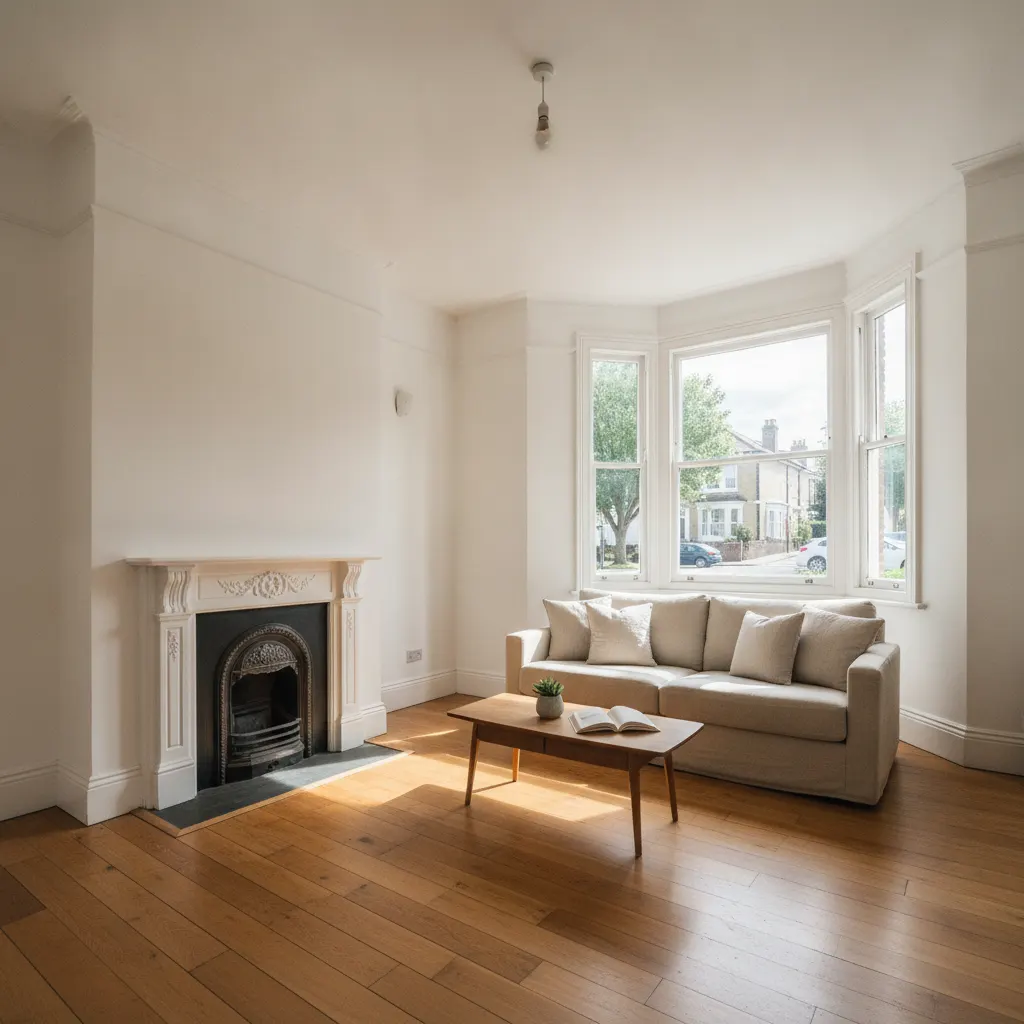
The Kemptown property is a 2-bed mid-terrace. Bay windows, original fireplaces, the kind of flat that photographs well and gets a lot of interest. Comparable long-term lets in the BN2 postcode were sitting at around £1,450–1,600/month in 2024, depending on the street. Call it £1,525/month — or £18,300/year before costs.
From that, my letting agent would take a management fee. In Brighton, full management typically runs 10–15%. She quoted 12%. So after agent fees, roughly £16,100/year. Then insurance, maintenance, letting agent renewal fees.
Net, after reasonable landlord costs: around £14,500–15,000 a year. No utility bills to worry about. No cleaning between tenants unless they cause damage. The property income allowance covers the first £1,000 of rental income tax-free — above that, it goes on my self-assessment.
What short-term actually earns on the same flat
I hit £31,200 gross last year on that property. Occupancy averaged 73% across twelve months, with some brutal Januarys pulling that down. Peak pricing in August pushed ADR to around £175/night. December dropped to £89. Average across the year came in at about £138/night.
From £31,200 gross, I paid Airbnb's host fee — 3% under the split-fee structure. That's about £936. Platform fees can climb significantly higher if you're on single-fee structures (some property management software users end up paying 15–16% through Airbnb), but I'm on the standard split-fee arrangement.
Then there's cleaning. I pay £68 per turnover for a 2-bed in Kemptown. Last year that was 93 turnovers. So £6,324 in cleaning costs. Linen costs me roughly £850/year on that property. Consumables — toiletries, cleaning products, coffee pods — another £640.
Utilities. This one surprises new hosts. My electricity and gas on that flat run about £2,200/year at current rates. In a long-term tenancy, I'd normally charge this to the tenant. As an STR, I wear it all.
STR-specific insurance: £620/year. A standard landlord policy would be roughly half that.
Add it up:
- Host fee: £936
- Cleaning (93 turnovers × £68): £6,324
- Linen and supplies: £1,490
- Utilities: £2,200
- Insurance: £620
- Maintenance and misc: £800
- Total costs: £12,370
Net STR income: £18,830. Against the long-term net of £14,750, that's a difference of about £4,080/year in favour of short-term. Or roughly £340/month.
The bit nobody mentions: time
Running 93 turnovers a year isn't passive. My cleaner handles the physical work, but I spend time on booking management, guest messages, restocking, reviewing supplies, and dealing with the inevitable weird situation. I reckon I put in 6–8 hours a month on that one property. Roughly 84 hours a year.
At £4,080 extra versus the long-term alternative, I'm paying myself about £49/hour for that time. Which isn't nothing. But it's also not the passive-income dream.
Where the maths tips the other way
If occupancy drops below 60%, the case for short-term shifts fast. On my Edinburgh property — which has two strong summer months and a solid Fringe period but a quieter November through January — the year-round average is closer to 63%. On that flat, the long-term vs short-term gap comes out within £1,800/year. Around £150/month, for 84 hours of operational work.
That's a harder case to make.
Business rates vs council tax in England
One thing the Airbnb forums don't always explain clearly: in England, once your property is let for short periods (28 nights or fewer), and it's available for at least 140 nights per year and actually let for at least 70 nights, it gets valued for business rates rather than council tax. You apply to the Valuation Office.
That sounds alarming until you realise most STR properties in England fall under the Small Business Rate Relief threshold and pay zero business rates. But you do need to apply, and if your rateable value comes in above the threshold, you'll owe something. Worth checking with your local council before assuming you're covered.
Stay under 70 nights let per year and you remain on council tax — which is less painful, but also means your STR case against long-term isn't very strong to begin with.
The honest answer
Short-term let is worth it on my Brighton flat. It isn't a slam-dunk on my Edinburgh property, and I'm still running the numbers on the Lake District cottage, where the seasonality is more extreme.
The real question isn't 'short-term or long-term'. It's 'what occupancy do I actually expect, over a full twelve months, accounting for voids, maintenance gaps, and slow Januarys?' If your honest answer is below 55–60%, the comparison gets tight very fast.
Run the actual numbers. Don't use best-case occupancy. Use last year's occupancy if you have it, or be conservative if you're projecting. The argument for short-term is real. It's just not as strong as the YouTube hosting videos make it look.
One more thing on the post-FHL world
What changed from April 2025 — and what the long-term let world noticed first — is that the Furnished Holiday Letting preferential tax regime is gone. Capital gains reliefs, pension contribution basis, full mortgage interest relief: all abolished. The long-term vs short-term tax comparison has flattened considerably since then.
The STR maths still works for me on Brighton. Just not by as much as it did in 2023.
Ready to streamline your inventory?
Start managing your rental inventory smarter with automated stock tracking.
Start Free Trial